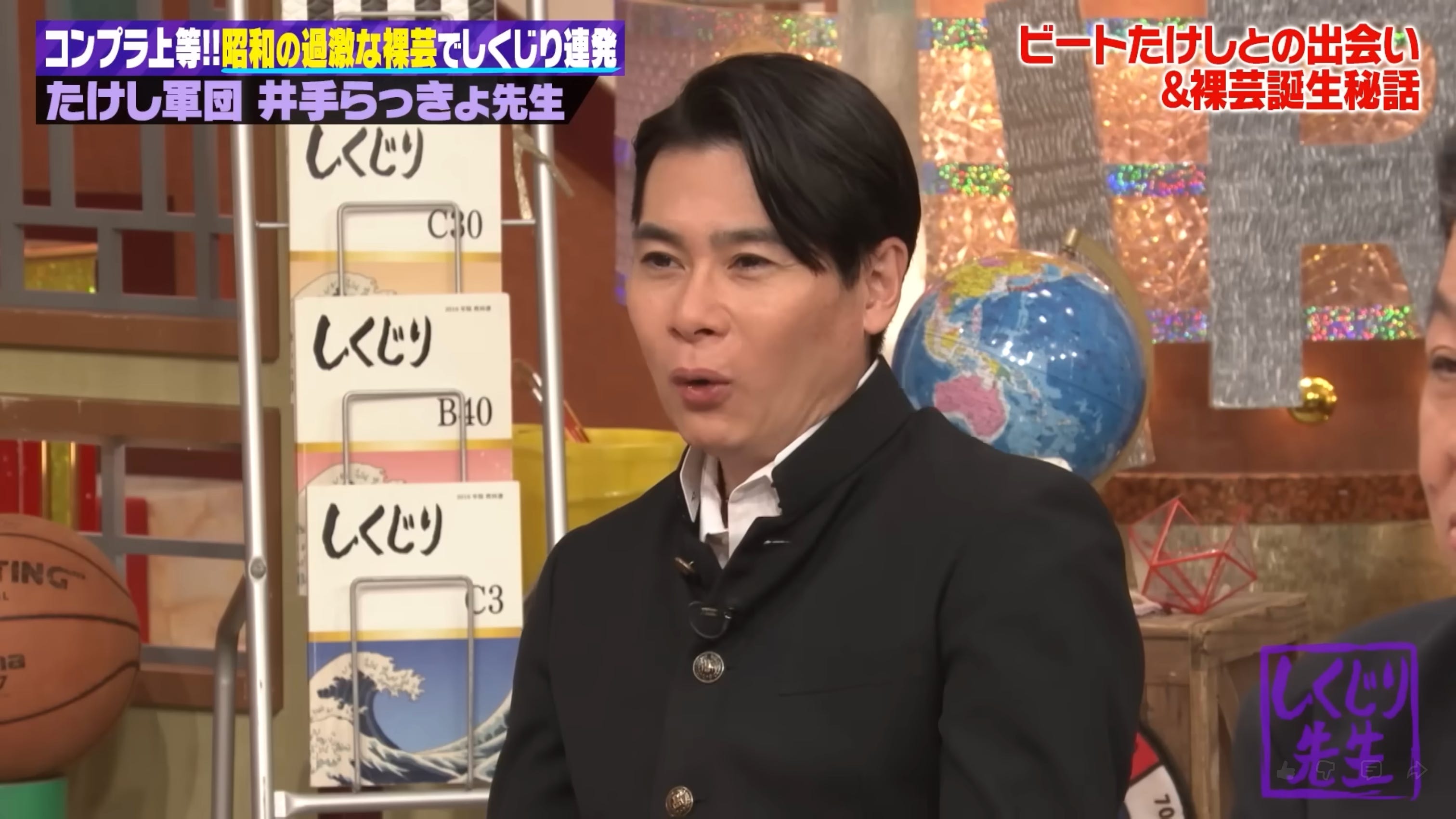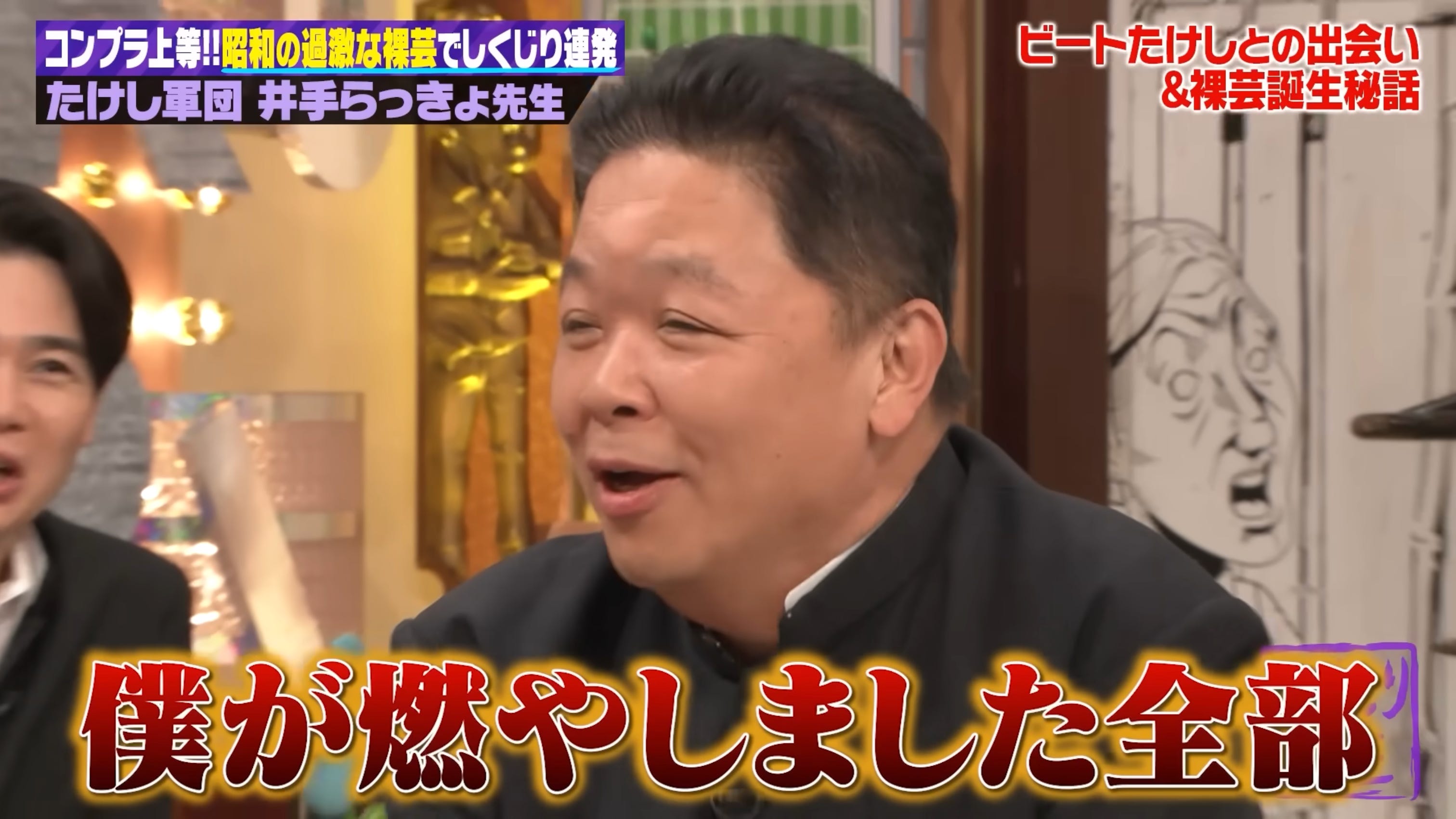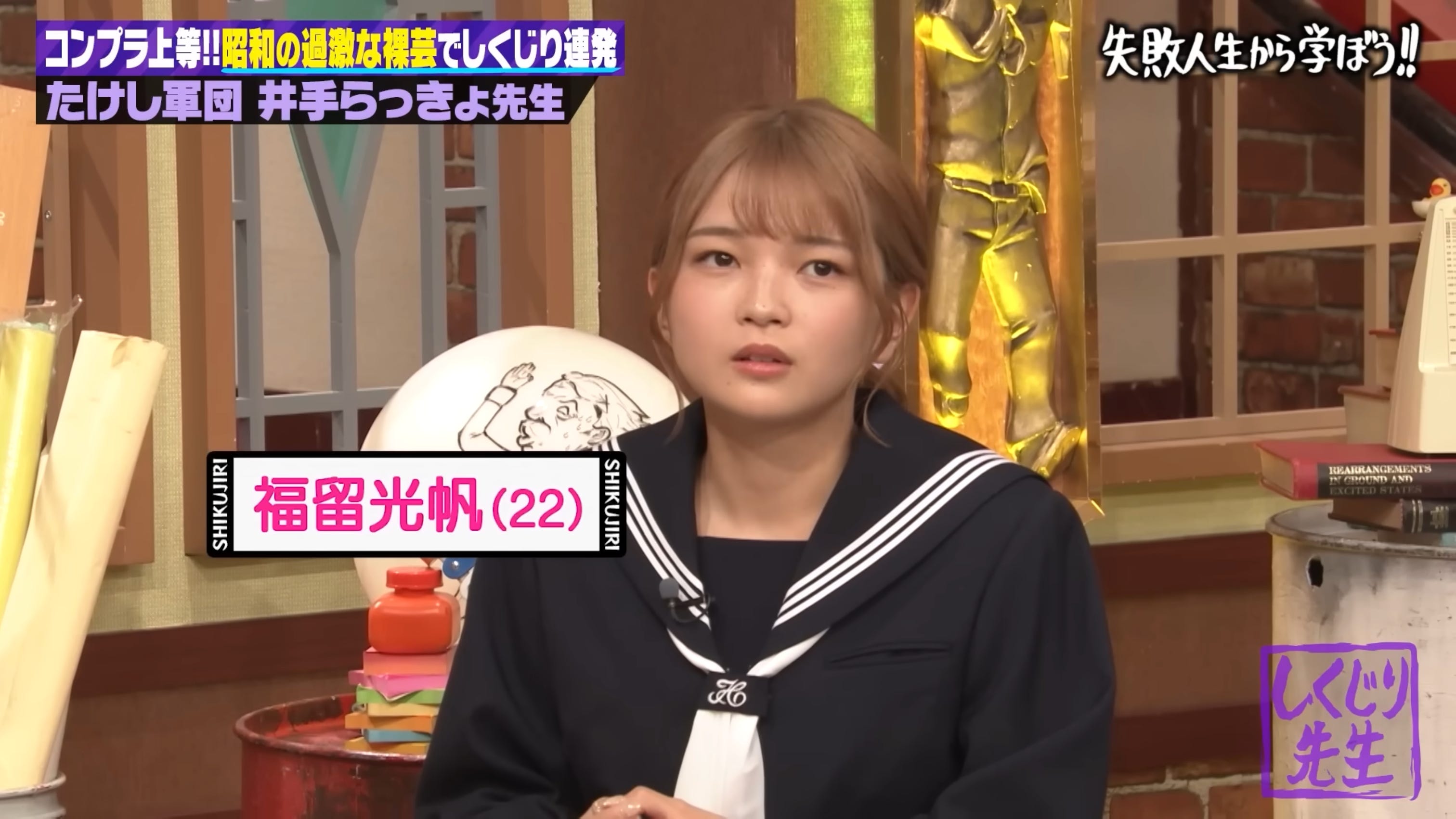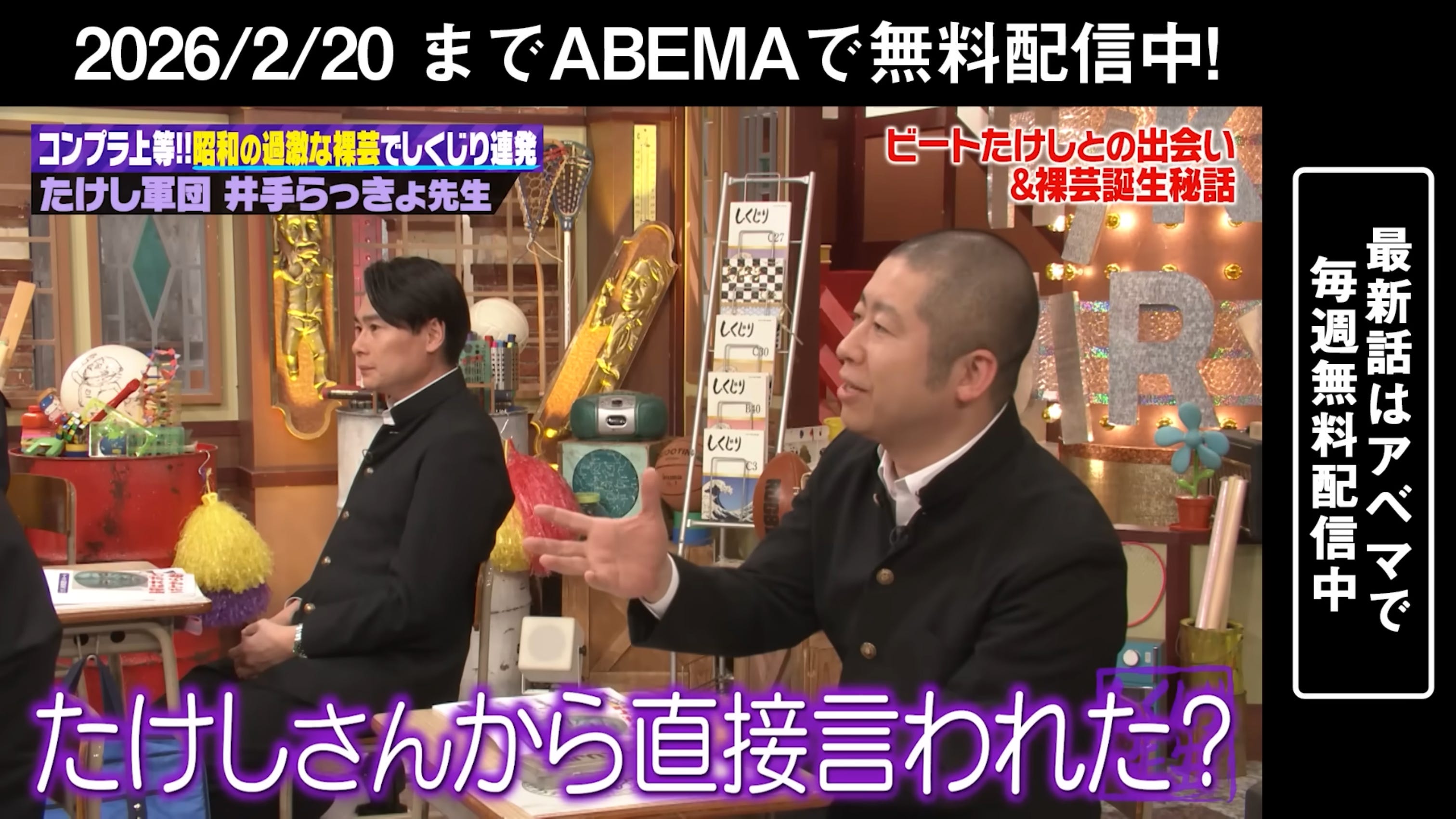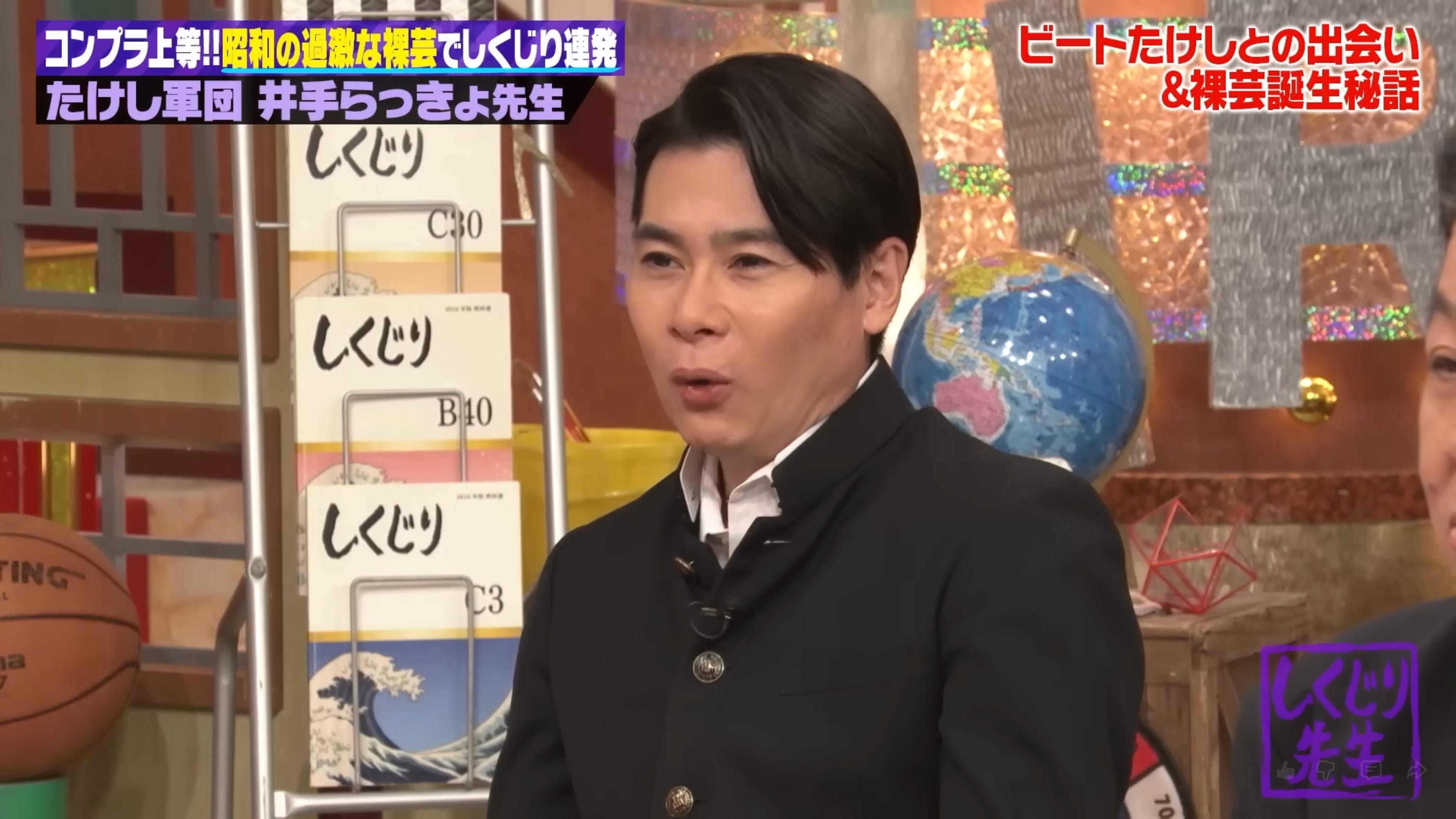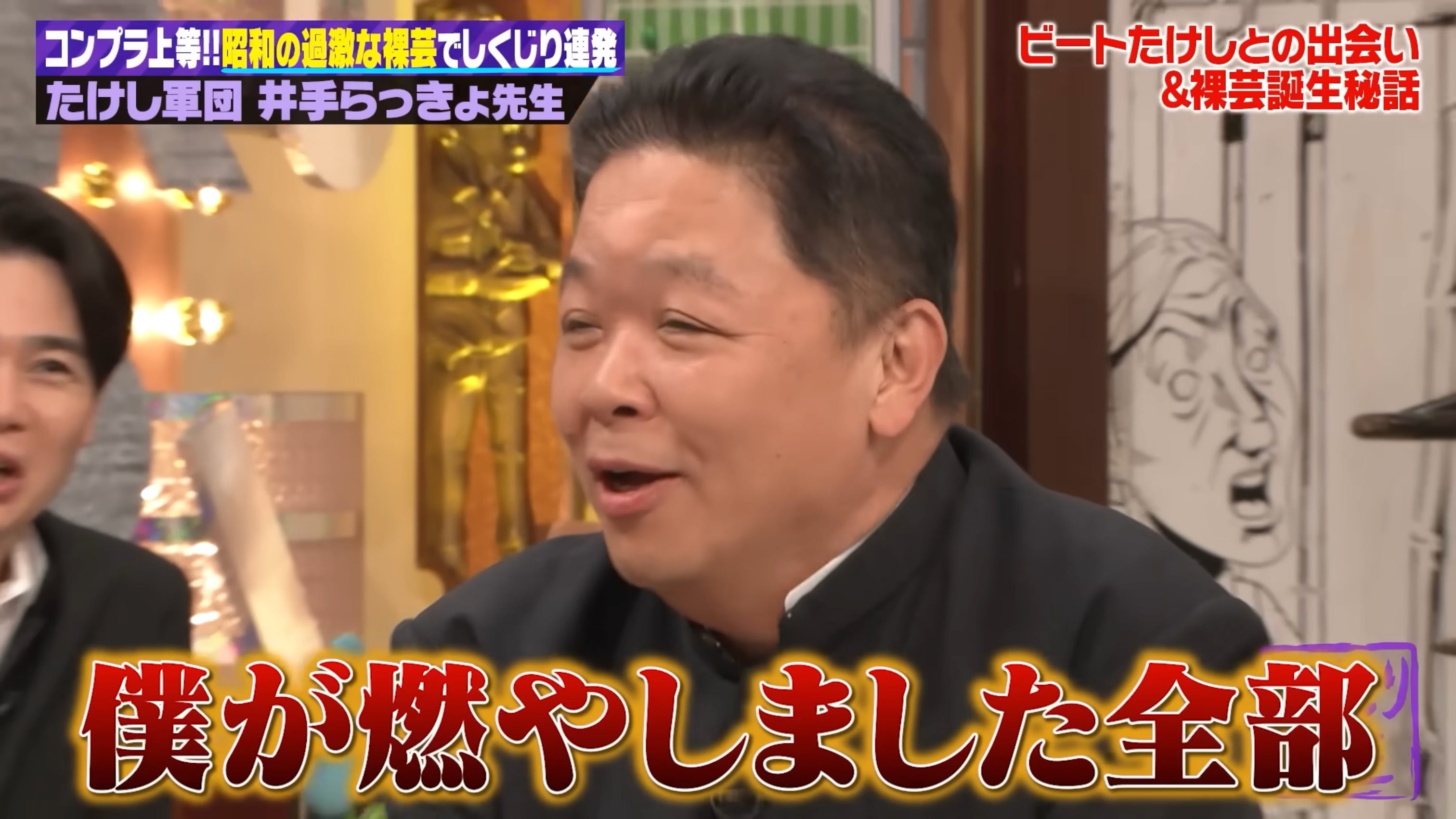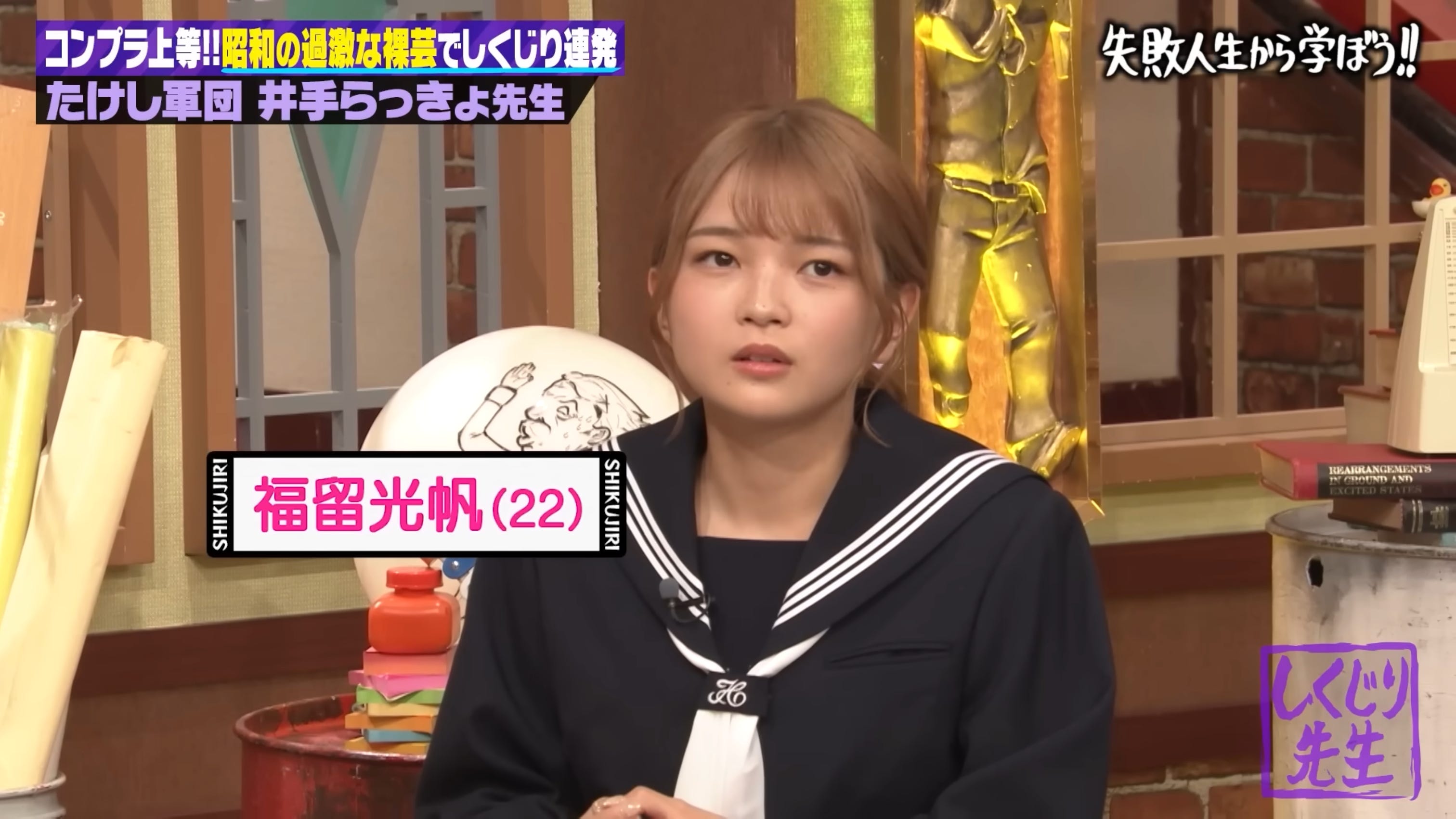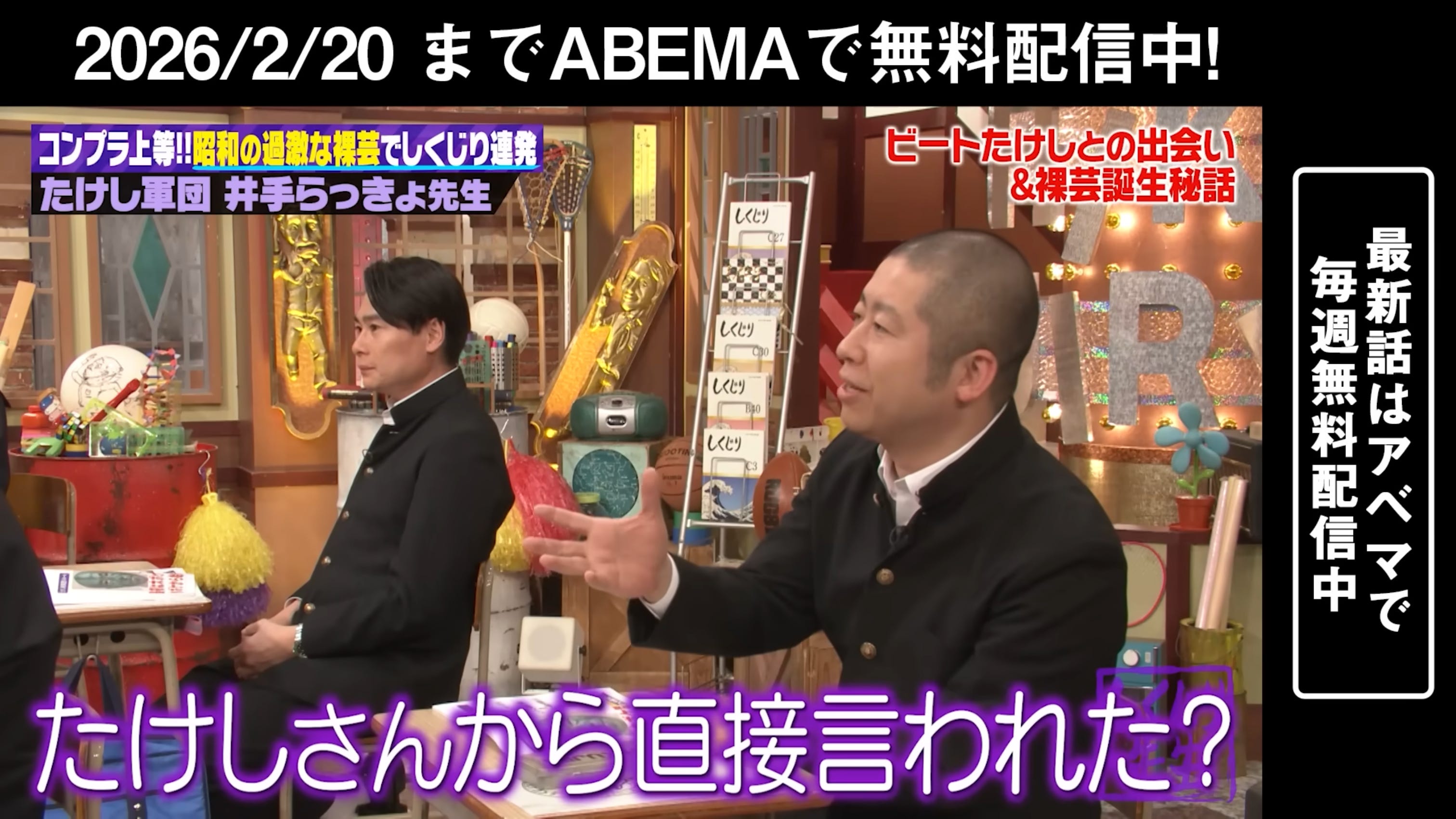
5 Minutes of Shikujiri Sensei with Itoi Yoshio – しくじり先生の5分(糸井嘉男)

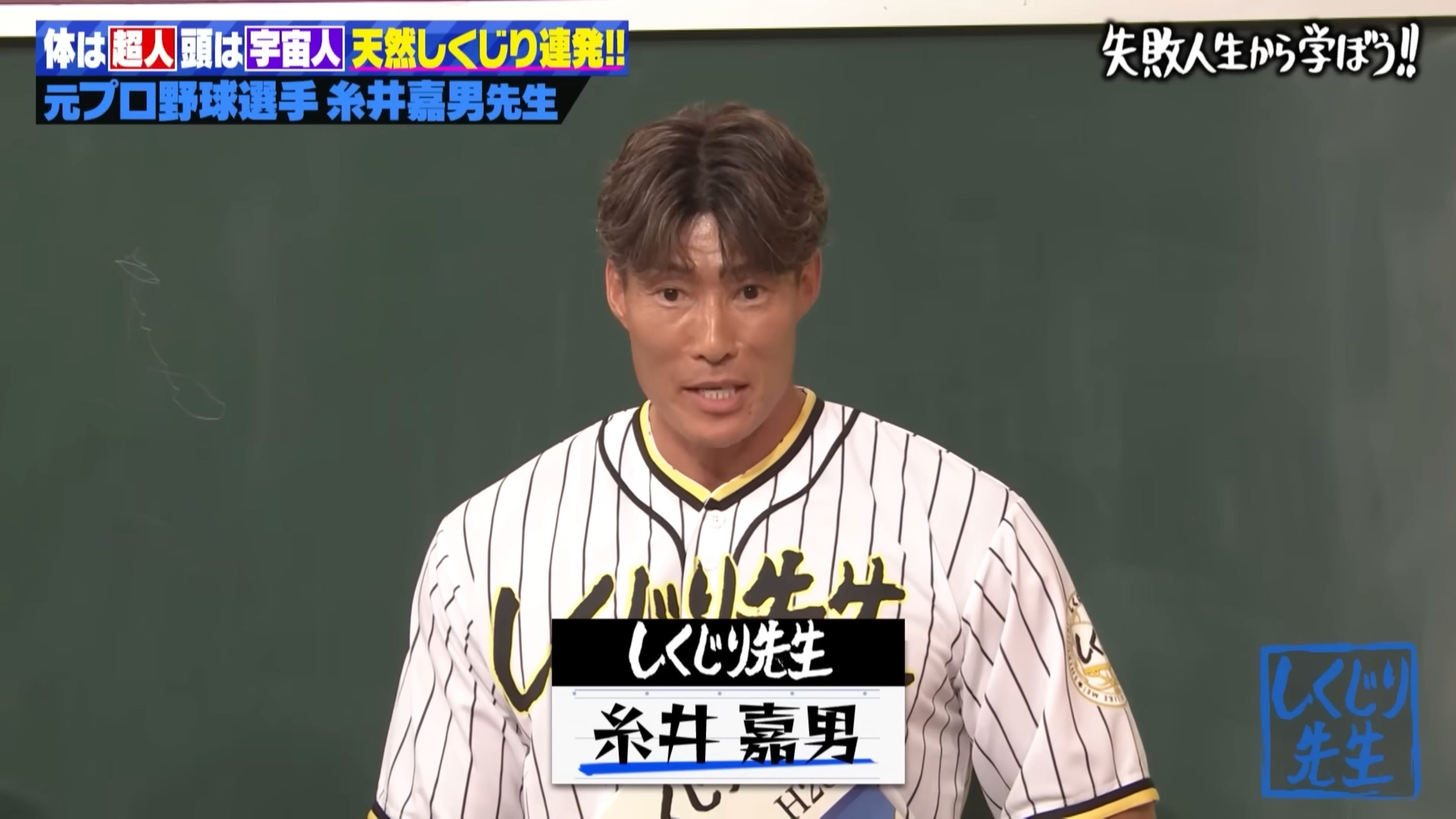
Here is a snippet of an episode of Shikujiri Sensei with Itoi Yoshio, a famous Japanese baseball player. Transcribed and translated the first five minutes, to the best of my ability.

This guy is a real character.

The clip of the episode on YT
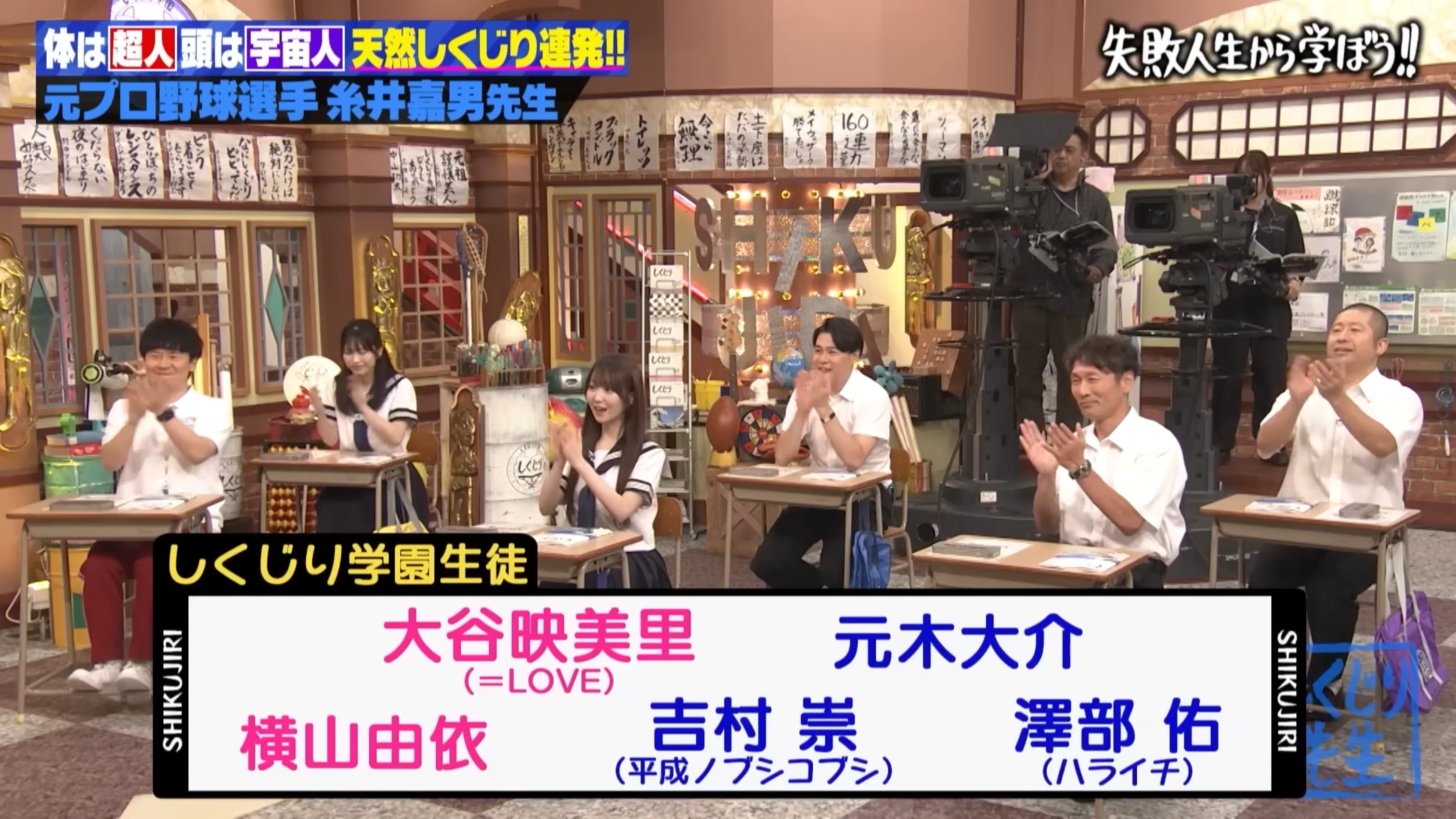
糸井嘉男 (いとい・よしお)/ Yoshio Itoi
本日のキャスト / Today’s cast

English Translation

Wakabayashi: “Here is today’s Failure Sensei. Come on out!”

Yoshio Itoi enters the room

Everyone: “Woah! Wow!”

Wakabayashi: “His aura!”

Hikaru Ijyuuin enters the room

Wakabayashi: “You two are big guys.”

Sawabe: “This lineup is amazing. The size.”

Itoi: “Hello all. I am the former pro baseball player, Itoi Yoshio. Thank you for having me here today.”

Applause

Ijyuuin: “And, he’s letting me support him today. I am Ijyuuin. Thank you for having me here today.”

Itoi: “Today I think I would like to tell you of my many legendary feats.”

Yoshimura: “What is this dinner show tone!”

Itoi: “A great mentor from the world of baseball, a great mentor of failure, is also here with us. I feel reassured.”

Motoki Daisuke: “Hey, I am not reassuring you.”

Everyone laughs

Ijyuuin: “We’ll start with Itoi Sensei’s self-introduction. Please open your textbooks to page 4.”

Itoi: “Yes. I was born on July 31st, 1981, and I’m 44 years old.”

Wakabayashi: “So young.”

Itoi: “My hometown is the same as Yokoyama’s, Kyoto.”

Itoi makes a cute finger gesture and smiles

Yokoyama: “I’m so happy.”

Yokoyama makes the same gesture in response

Yoshimura: “You do this in Kyoto?”

Itoi: “We don’t.”

Yokoyama: “We don’t do this in Kyoto. This is the first time I’ve done it.”

Yoshimura: “First time, huh.”

Itoi: “Yes. I played pro baseball for 19 years. I’ve been on 3 baseball teams. The Hokkaido Nippon-Ham Fighters, the Orix Buffaloes, and the Osaka Tigers.”

Sawabe: “Wow.”

Ijyuuin: “Wakabayashi, what do you think? Seeing him play.”

Wakabayashi: “With his speed, size and power, everyone thinks he really looks like a Major League player. He’s that kind of player.”

Motoki: “That’s why I said to him, why don’t you go to the Majors? I also had that conversation with him.”

Ijyuuin: “He’s at that level.”

Itoi makes a funny face

Yoshimura: “He’s not really following along.”

Wakabayashi: “You’re being talked about. Mr. Itoi.”

Motoki: “You don’t remember that?”

Itoi: “No, I remember it.”

Ijyuuin: “Itoi sensei, who left such a stupendous track record, was known as this in the baseball world and by all the fans. Next page, please.”

Itoi: “The body of Superman. The mind of an alien.”

Everyone laughs

Yokoyama: “What?”

Ijyuuin: “Why is he called an alien? Well, Mr. Itoi will reply immediately without thinking, and will do exactly what he is told to do. So, as aliens are pure, the people around him see him and think he may be off in another world.”

Itoi: “I’m pure.”

Ijyuuin: “He’s pure.”

Wakabayashi: “He’s pure…”

Sawabe: “He said it himself.”

Itoi: “So, an old coach of mine said to me, before I stepped up to bat, ‘Itoi, don’t think about anything and just hit the white ball.’ And I stepped up to bat thinking, ‘What is thinking about nothing?’ and thought too much about ‘thinking about nothing’, and I struck out.”

Everyone laughs

Wakabayashi: “Great story. How beautiful.”

Yoshimura: “It’s beautiful.”

Ijyuuin: “He’s pure. A pure and honest alien.”

Wakabayashi: “This guy is crazy.”

Ijyuuin: “Yes, now I think we would like to present some of the failures that this alien Itoi Sensei has committed. The next page, please.”

Itoi: “Yes, I entered the pro baseball world as a pitch —, ah, pitcher, and was immediately fired.”

Wakabayashi: “You can’t say pitcher?”

Sawabe guffaws

Itoi: “I couldn’t remember the hand signs and caused great chaos for myself and my team. I celebrated too much after hitting a homerun and almost fainted, and had to be substituted out.”

Yokoyama: “Does that happen?”

Itoi: “And finally, I worked out too much and retired early.”

Wakabayashi: “Oh, sarcasm!”

Sawabe: “You hastened your retirement, right.”

Wakabayashi: “We wanted to see more, come on! Mr. Itoi.”

Sawabe: “What is this!”

Itoi: “With that, let’s go. Play ball!!!”

Everyone laughs

Wakabayashi: “That’s great.”

Ijyuuin: “Yes, Itoi sensei was born and raised in Kyoto but, in elementary school and middle school, he was this kind of student. Next page, please.”

Itoi: “50 meter dash, long distance running, jump rope, ball-throwing, marathon… in everything, I was #1 by far.”

Everyone is impressed

Sawabe: “I thought so.”

Itoi: “I was a superman from a young age. Yep.”

Ijyuuin: “You can see what’s written on the right page.”

Yoshimura: “The ball-throwing is wild!”

Itoi: “It’s wild, isn’t it.”

Ijyuuin: “A normal kid can throw the ball 8 meters. Itoi could throw it 22 meters.”

Yokoyama: “Really??”

Yoshimura: “Holy!”

Ijyuuin: “His parents were both athletes.”

Itoi: “My dad competed in triathlons, and my mom was a volleyball player.”

Wakabayashi: “Amazing.”

Ijyuuin: “So, what was the reason young Itoi started playing baseball?”

Itoi: “At that time, I played baseball for fun, so it was only natural that I started doing baseball.”

Ijyuuin: “Your position?”

Itoi: “My position was at first, pitcher. I had the image of, baseball is all about pitching.”

Wakabayashi: “Yes.”

Sawabe: “Exactly.”

Ijyuuin: “Now, we have an astonishing story. During middle school, Itoi was not really in the spotlight, and, why wasn’t he in the spotlight? In his first year of high school, an unbelievable thing happened.”

Wakabayashi: “Oh, oh.”

Ijyuuin: “When he was training, Itoi thought, ‘My knee hurts, it feels a little weird.’ Then, at the hospital, this was revealed. Next page, please.”

Itoi: “Since the second grade in middle school, for about three years, my capknee—ah!”

Everyone bursts into laughter

Yokoyama: “That’s crucial!”

Sawabe: “Crucial!”

Sawabe: “Capknee!”

Yoshimura: “It’s backwards!”

Itoi: “But you get what I’m saying, right?”

Wakabayashi: “No, no, we don’t get it.”

Itoi: “Well it’s really true, that—”

Wakabayashi: “Why did you say it backwards?”

Itoi: “So, for three years, my kneecap was broken.”

Everyone: “What??”

Ootani: “Three years?”

Itoi: “Three years.”

(continues)

原文

若林:「本日のしくじり先生はこちらの方です。どうぞ!」

糸井入り

皆:「おおお!すごい!」

若林:「オーラが」

伊集院入り

若林:「大きいな二人とも」

澤部:「品揃えがすごい。でかさの」

糸井:「初めまして。元プロ野球選手の糸井嘉男です。よろしくお願いします。」

拍手

伊集院:「え、サポートをやらせていただきます。伊集院と申します。よろしくお願いします。」

糸井:「今日はたくさん伝説をね、発表したいと思います。」

吉村:「なんかディナーショーのトーン!」

糸井:「もう野球界の大先輩でもあります、しくじりの大先輩。。。おられるんだね。心強いです。」

元木大介:「いや、心強くない、俺は。」

「笑い」

伊集院:「まずは糸井先生の自己紹介ということで教科書の4ページを開いてください。」

糸井:「はい。1981年生まれの7月31日44歳になります。」

若林:「若いなー」

糸井:「出身はね、横山さんと同じ、京都府です。」

糸井さん面白い仕草をしている

横山:「嬉しいです。」

横山さん同じ仕草をしている

吉村:「京都これやるの?」

糸井:「やらない。」

横山:「京都これやらない。初めてやりました。」

吉村:「初めてだ。」

糸井:「はい。現役は19年。3球団渡り歩きました。北海道日本ハムファイターズ。オリックスバファローズ。阪神タイガーズ。」

澤部:「すごい」

伊集院:「若林君、どうですか。プレイを見て」

若林:「いやでもこのサイズで足早くて肩も強くてパワーもある、本当メジャーで見たいな、その皆が思うっていう選手ですよね」

元木:「だが本当に僕、元気で喋ったんですけどなんでメジャー行かないのっていう話ぐらいもしていましたから」

伊集院:「そのレベルですね」

吉村:「本人ピンと来ていません」

若林:「言われてんですよ。糸井さんは。」

元木:「覚えていないの?」

糸井:「いや、覚えています」

伊集院:「こういう輝かしい実績を残した糸井先生なんですが、プロ野球関係者やファンの皆さんからこんな風に言われていました。次のページお願いします。」

糸井:「体は「超人」。頭は「宇宙人」。」

「笑い」

横山:「えー?」

伊集院:「なぜ宇宙人と言われてるのか?ま、糸井さんは、何も考えられないで即答、言われるままに行動しちゃう。で、ま、宇宙人とかピュアだから、それが周りから見たら、なんかぶっ飛んでなっていうことになってしまうという。」

糸井:「ピュアなんです」

伊集院:「ピュアなんです」

若林:「ピュアなんですよ。。。」

澤部:「まとめた本人が」

糸井:「あの、昔コーチの方に打席に入る前に、「糸井、何も考えずに白い球だけを打て」って言われて、「何も考えずに」って何やろと思いながら打席入って「何も考えずに」と考えすぎ、それを考えすぎて、三球三振しました。」

「笑い」

若林:「いい話。綺麗だな。」

吉村:「綺麗」

伊集院:「ピュアなんです。ピュアで素直で宇宙人。」

若林:「やばいこの人」

伊集院:「ええ、そんな宇宙人と呼ばれた糸井先生が犯してしまったしくじりを発表してきたいと思います。次のページお願いします。」

糸井:「はい、ピッチャー、え、ピッチャーでプロに入団するも即クビ」

若林:「ピッチャーを言えないのか」

澤部ゲラゲラ笑

糸井:「サインを覚えられずチームも自分も大困惑。ホームラン後に叫び過ぎて酸欠になり途中交代」

横山:「そんなことあるんですか?」

糸井:「で最後なんですが筋トレしすぎて引退を大幅に早める」

若林:「うわ、皮肉!」

澤部:「大幅に早めたんですね」

若林:「もっと見えたんだ本当は糸井さんを」

澤部:「何それ!」

糸井:「それで行きますよ。プレイボール!!」

「爆笑」

若林:「これがいい」

伊集院:「え、糸井先生は京都で生まれ育つんですけど小学校中学校とこういう生徒でした。次のページお願いします。」

糸井:「50メートル走、持久走、幅跳び、ボール投げ、マラソン大会、全部ぶっちぎりの1位です。」

皆:「そごい!」

澤部:「やっぱそうなんか」

糸井:「ちっちゃい頃から超人でしたね。はい」

伊集院:「右のページにも色々書いてありますけど」

吉村:「ボール投げもやばいじゃん!」

糸井:「ボール投げやばいですね、これ」

伊集院:「普通の子8メートルですよ。22メートルだって。」

横山:「ええ?」

吉村:「やばっ!」

伊集院:「親さんもアシリートなんですよね。」

糸井:「親父がトライアスロンっていう競技をやっていまして、母親はこうバレーボール選手だった。」

皆:「ええ、すげー」

若林:「やっぱすげーんだなー」

伊集院:「さあ、こんな糸井少年ですけど野球を始めるきっかけなんですか。」

糸井:「当時やっぱ、遊びが野球でしたから、自然とこう野球になっていたっていう流れでしたね、昔は」

伊集院:「ポジションは?」

糸井:「ポジションは、最初やっぱピッチャーでした。僕はやっぱこう、野球エコールピッチャーというイメージでやってたんでね」

若林:「はい」

澤部:「確かに」

伊集院:「この後、驚愕の話があります。中学校の時はあんまり注目をされていないんですけど、えっと、なぜ注目されていないのか、これ高校一年の時にとんでもない事件が起こります。」

若林:「あ、あ、あ」

伊集院:「練習をしていたらなんかやっぱ「膝痛えな、膝に違和感があるな」で、病院でこんなことが明らかになります。次のページお願いします。」

糸井:「中学校2年生から、約3年間、皿の膝の、ああいづー」

皆爆笑

横山:「大事、大事!」

澤部:「大事な!」

澤部:「皿の膝!」

吉村:「逆だ」

糸井:「でもなんとなく分かりますよね。」

若林:「いやいや、わっかんないよ。」

糸井:「そうなんですよ、あのー」

若林:「え、なんで逆になるの?」

糸井:「ね、三年がやっぱ、膝のお皿が割れてたんです。」

皆:「へ??」

大谷:「三年間?」

糸井:「三年間」

(続いて)

Stinking Hellebore

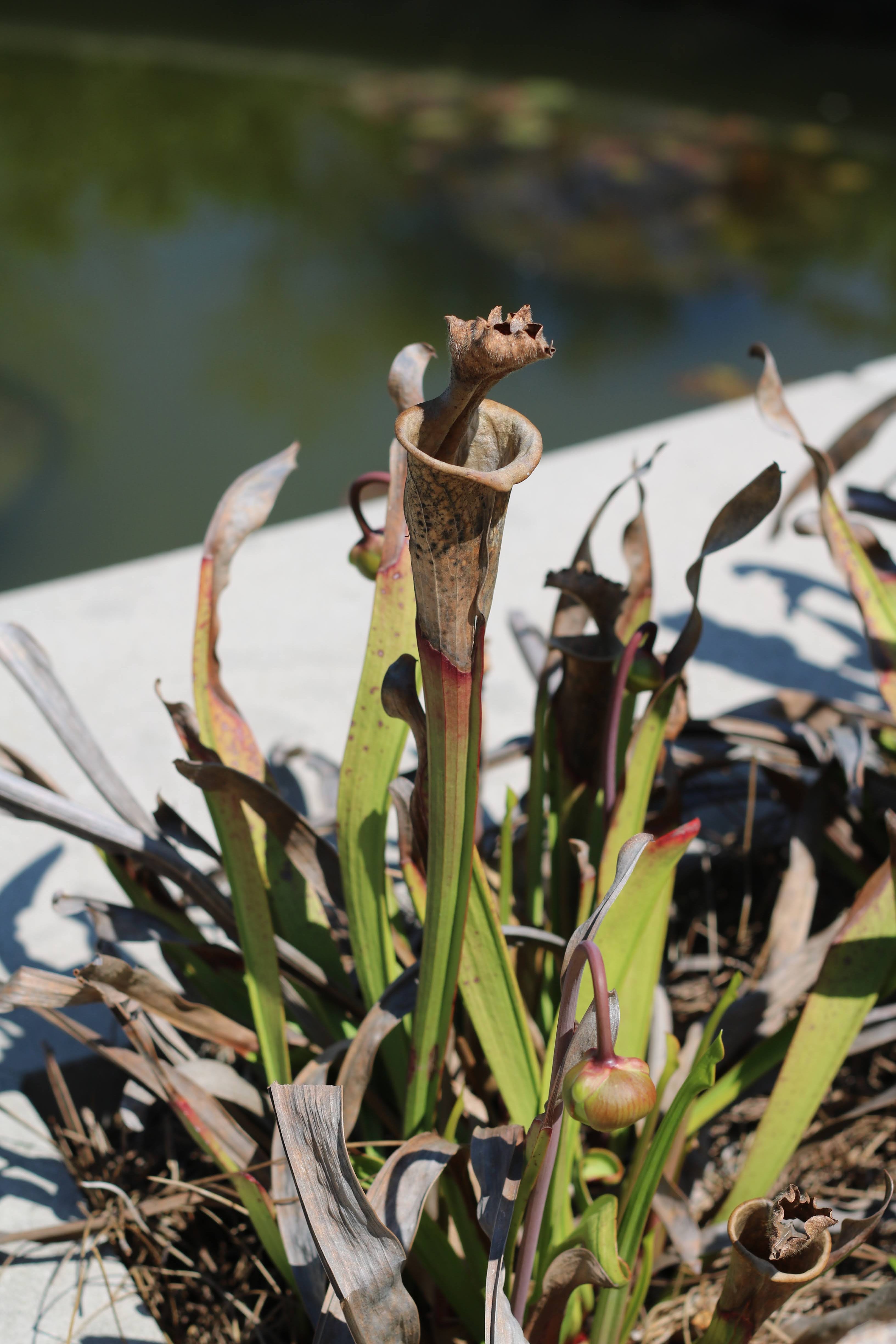
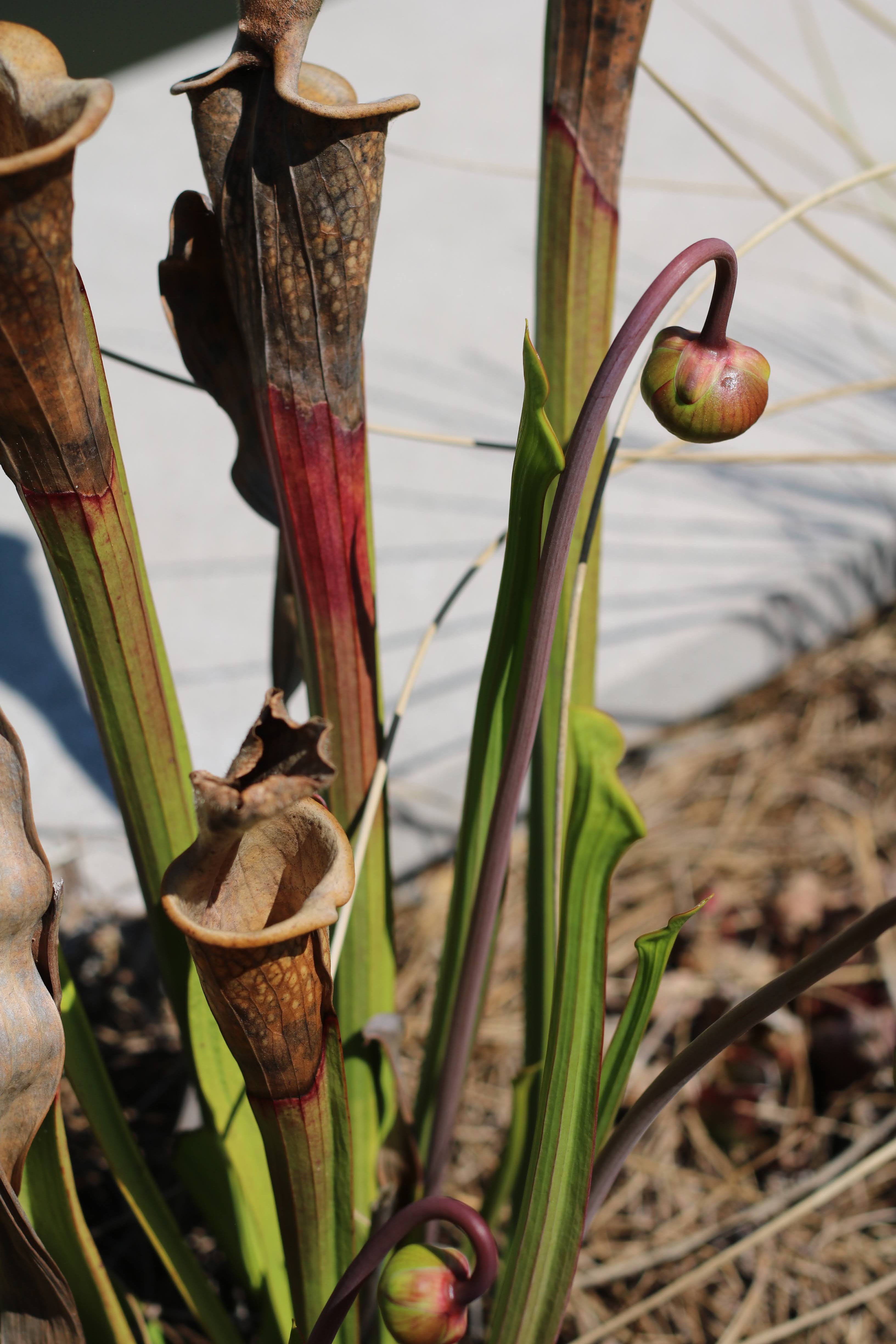
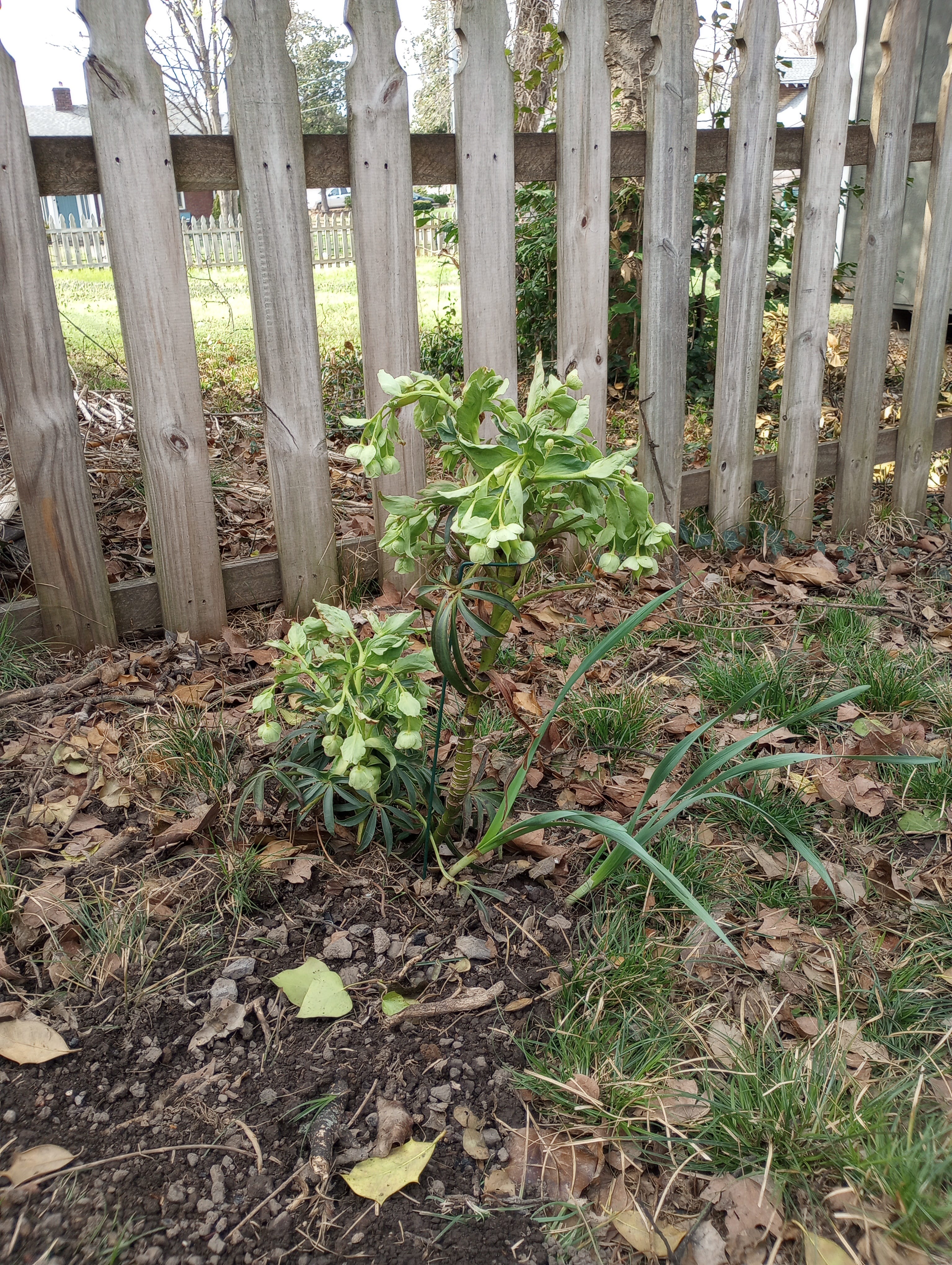
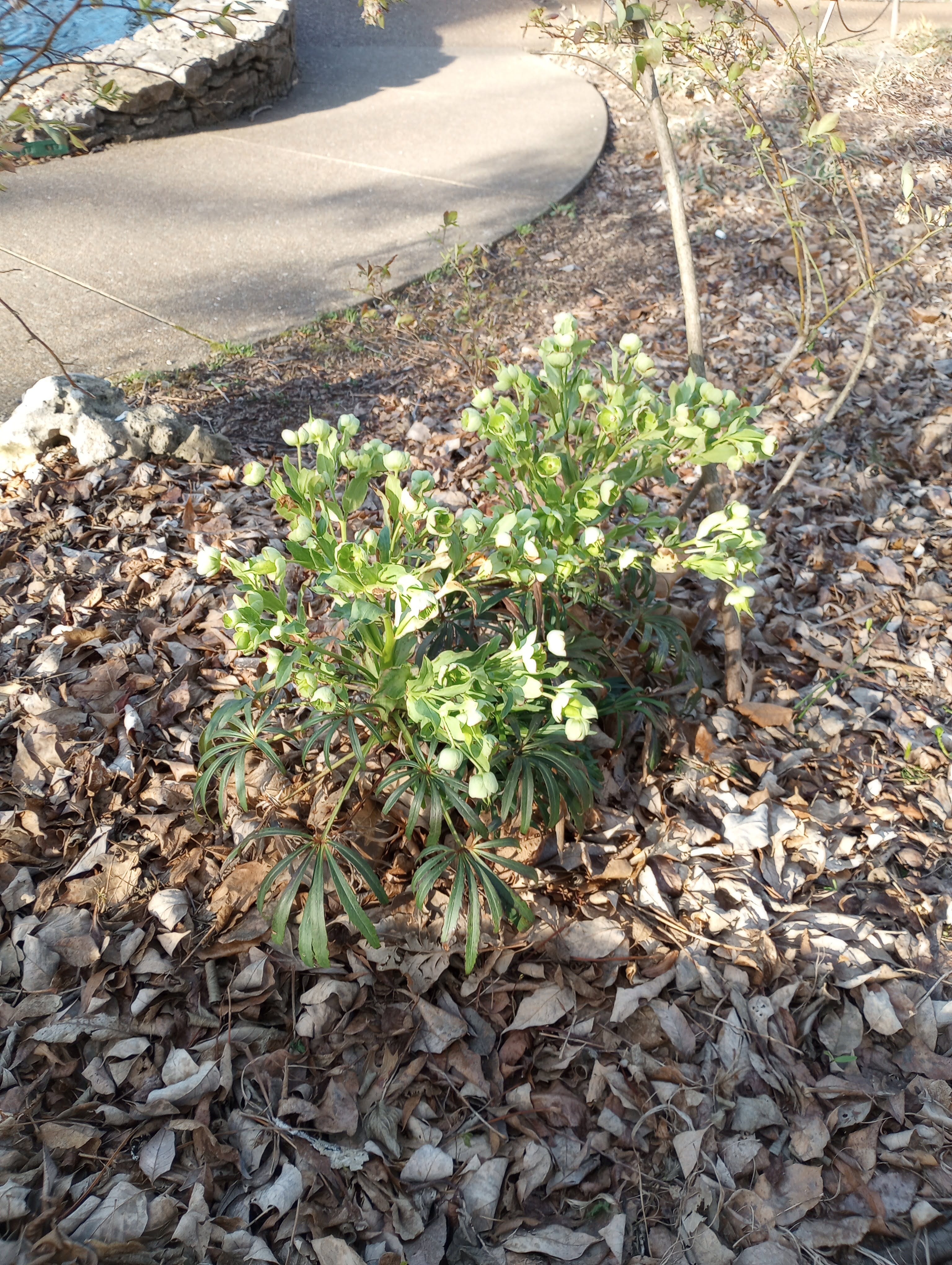
My very own Stinking hellebore, Helleborus foetidus

These days, Stinking Hellebore has my full attention. The above photo is my very own Stinking Hellebore, gifted to me by an incredible, comedian woman, named Donna Jo. Yes, the name truly is “Stinking Hellebore”. That’s what the people are calling this funky green beauty.

Donna Jo is a Master Gardener, the second Vice President, as in, the second of the two Vice Presidents, of the TN Extension Master Gardener program. Donna Jo held a public, group shaming of all individuals present at one of our meetings, who did not have their nametags, which they have stressed are very important. It was my third week of not having my nametag, three in a row, I was conscious of it, and Donna Jo, when she graced us with her presence, at the meeting, she had everyone who did not have their nametags raise their hands, and then she did a public shaming, and had everyone, on the count of 3, say, “Shame on you!” This public shaming was effective, and I have not forgotten my nametag since.

Donna Jo, in the same meeting, held another public shaming, I think purely because she really wanted to have another one, the earlier one was not enough, and she said, “Raise your hands if you were the bug killer in your family!”, and several hands went up, and she had us say, again, on the count of three, “Shame on you!” Our fearless leader Amy Dunlap had returned from her earlier absence, and was witnessing Donna Jo’s public shaming ritual with some horror and bewilderment, and she said, the most perfect line, “What are you doing??” We all cracked up at that.

Donna Jo could not help but be funny, can’t help but be funny at all times. You can see it, it was obvious from the beginning, that this is a real character here. We all knew it. Well, at my first volunteering event at the Nashville City Cemetary, where I learned what a hellebore even was, and cleaned up the beds, pulling the weeds, doing some pruning of the irises, I popped over to the bed with Donna Jo and Margarita, and at some point, she said, “What are you doing after this?” I said, “I’ve got yoga at 2 pm.” So, she said she had lilies if I wanted them, and I did. I am at the point where I will take almost anything I’m given, because I have space in the yard, and a willingness to give it a go. So, we cut out a little early, which was great honestly, I was hungry and getting a little bored (2 hours of weeding already), and so I followed Donna Jo across town to her house. I had heard great things about her garden, she had showed me some photos at our Master Gardener meeting, when I was asking her about some plants, and she gives a tour of her garden for the program, which is highly attended. I did not expect to get over to her garden so soon, that’s for sure, but you never know how things will go.

Donna Jo’s garden is a small paradise, and I have no photos of it, not right now, but it is a domestic botanical garden. You can immediately tell that hundreds if not thousands of hours, significant amounts of love and care have gone into the cultivation of her landscape. Tens, 30 or 40 forsythias that were in bloom, lining the driveway, forming a grove in the back, and large beds of daffodils, lilies, irises, daisies, etc., and then hellebores, and all kinds of other things that I don’t know the names for. She was giving me some of these lilies, to divide them, keep the garden bed from overflowing and being too cluttered, and she gave me plenty. I was then checking everything else out, as we walked around, asking her about things, and there was a really interesting plant, and I said, “What’s this one?” And she told me it was a “Stinking hellebore”. Except, she was 100% calling them “hellebora”, I’m almost positive. Well, I thought that was an incredible name for such a beautiful plant, and she said that they don’t even stink. Right now, with the flowers, it smells wonderful. Very pleasant and fragrant. So, not sure about the stinking part. But, after all the lilies, she had dug me up ten or fifteen, big ones, healthy, huge tubers, and I was admiring the Stinking Hellebore, and she said, “Want one? I’ll give you one.” And I was like, no way Donna, I can’t just take one of your amazing Stinking Hellebore. She insisted.

She initially was going to give me a really well-developed, large, beautiful Stinking Hellebore, but I was really unwilling to take such a wonderful specimen, that was clearly doing so well, and looked so great. It felt like too much. She ended up finding me a smaller one, still quite large, but it was mixed in with several, and so she dug that up and it was mine. I’ll tell you that I felt like I had gotten a puppy, I still feel that way, and I was extremely careful with this new baby of mine, all the way home, and I planted it immediately. I sent Donna Jo the photos, so proud, of the Stinking Hellebore in its new home.

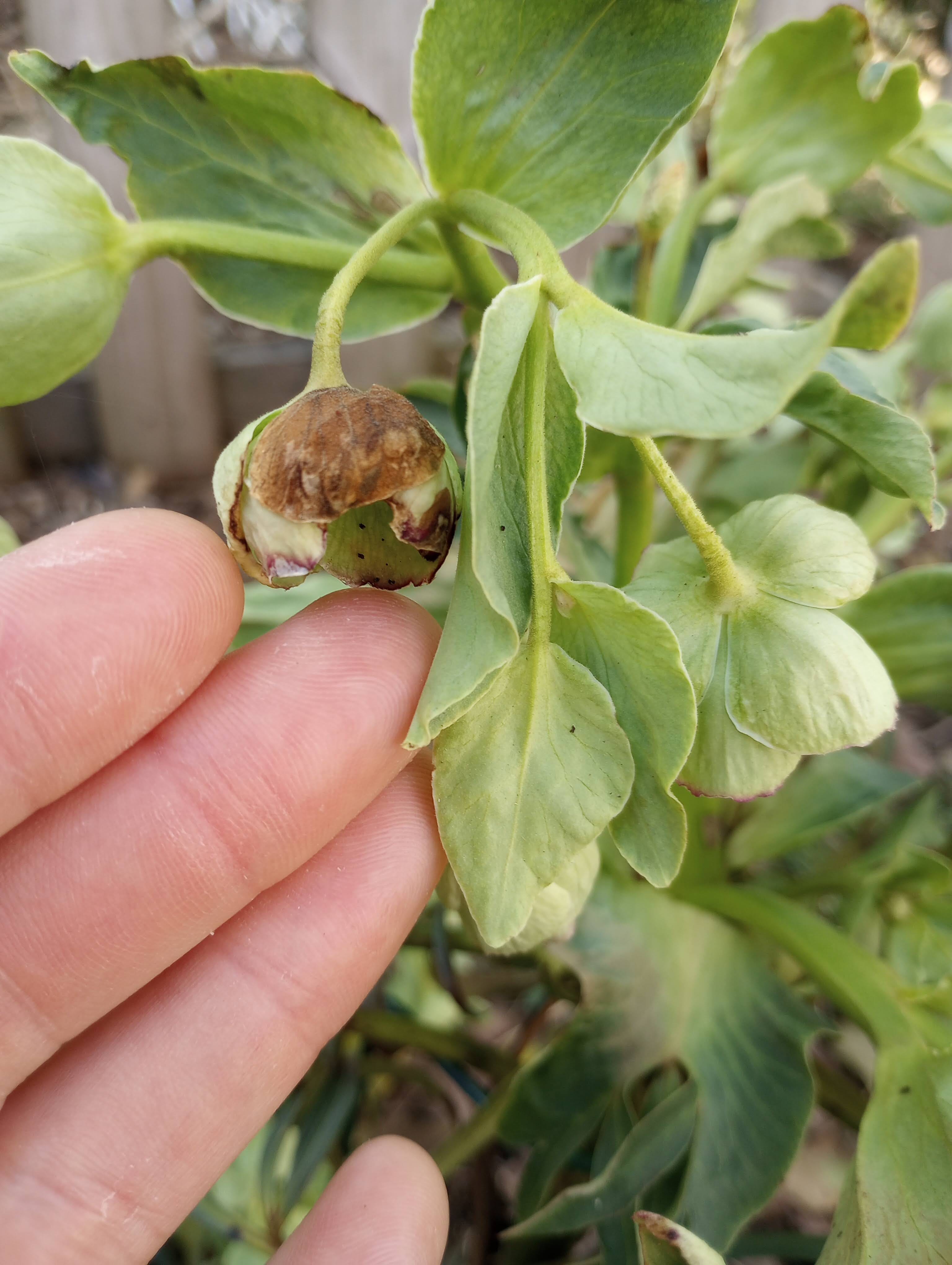
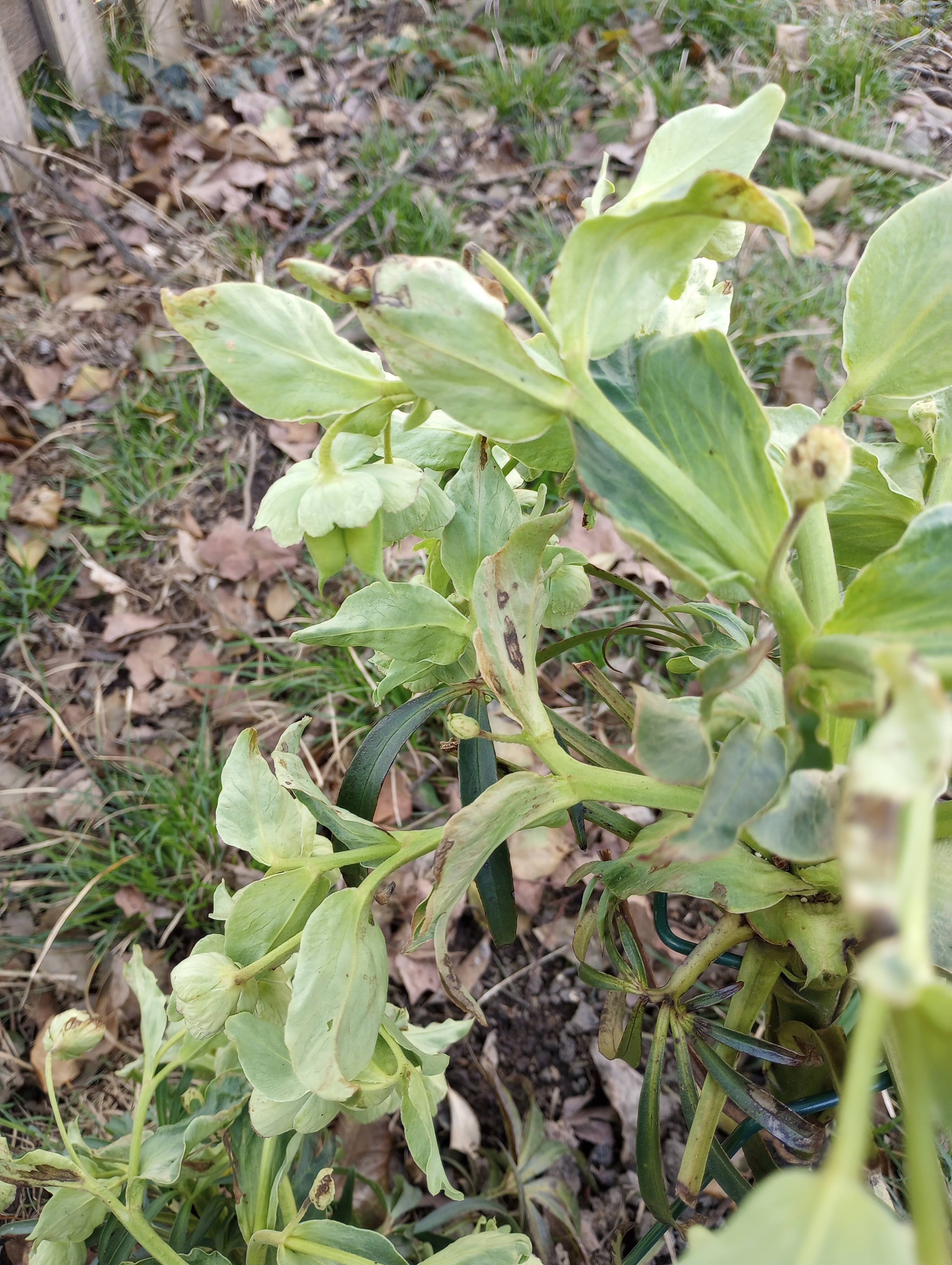
Now, I have monitored the Stinking Hellebore, my baby, carefully, and for at least a week, several days after the planting, it was looking fine and dandy. However, about four days ago, I noticed some browning. One of the flowers was brown and curling up. That was the first sign, and I spotted some browning, splotching on other leaves. That was concerning, and the next day, two days later, a little more advanced. Today I checked, and it looks like the browning hasn’t increased any since then. That’s good. I assume that this is simply “transplant shock” (I’m not sure if that’s a term exactly but I think it is), as the plant has just teleported into a new environment, new soil type, different amounts of sunlight, and the roots have to resettle and adapt to the move. I haven’t overwatered, although the soil might still be a little wet for it. It has rained a bit, and that soil there has stayed moist. It doesn’t get intense sun all day, but sun until about 1 or 2 pm. That could matter, but right now my diagnosis is simply that it’s having some stress from the move.

Some browning
General splotching and browning on leaves and flowers

You may know that I am concerned with the invasive plant problem, and am certainly not wanting to propagate any invasive species, and plant natives, mostly. Well, already I’ve had my first test, the first real test of my principles. Because, I immediately researched my new Stinking Hellebore baby, and discovered some concerning things—native to Eurasia, and in some places (TN not yet one, but I think North Carolina was on the list), hellebores are considered invasive. This means that I now may be propagating and caring for an invasive plant. Yes, me. What can I do? This is how principles are tested. You say, no nepotism. And then your nephew is trying to get a job. What do you do? You get what I’m saying.

Well, as we can see, I did plant it. I had to. Donna Jo gave it to me. That’s my excuse, I guess. Is this one plant likely to be the demise of native plant life in Tennessee? No, no… and I have done so much good work in removing invasives off of my property. So, if we look at the scales of justice, or whatever, surely they are balanced in my favor, regarding my ecological footprint… I can have a Stinking Hellebore, right? It’s a slippery slope, I suppose. It’s easy when they aren’t pretty, but then someone wants to give you a pretty one, one that’s caught your fancy, and oh boy, what do you do now?

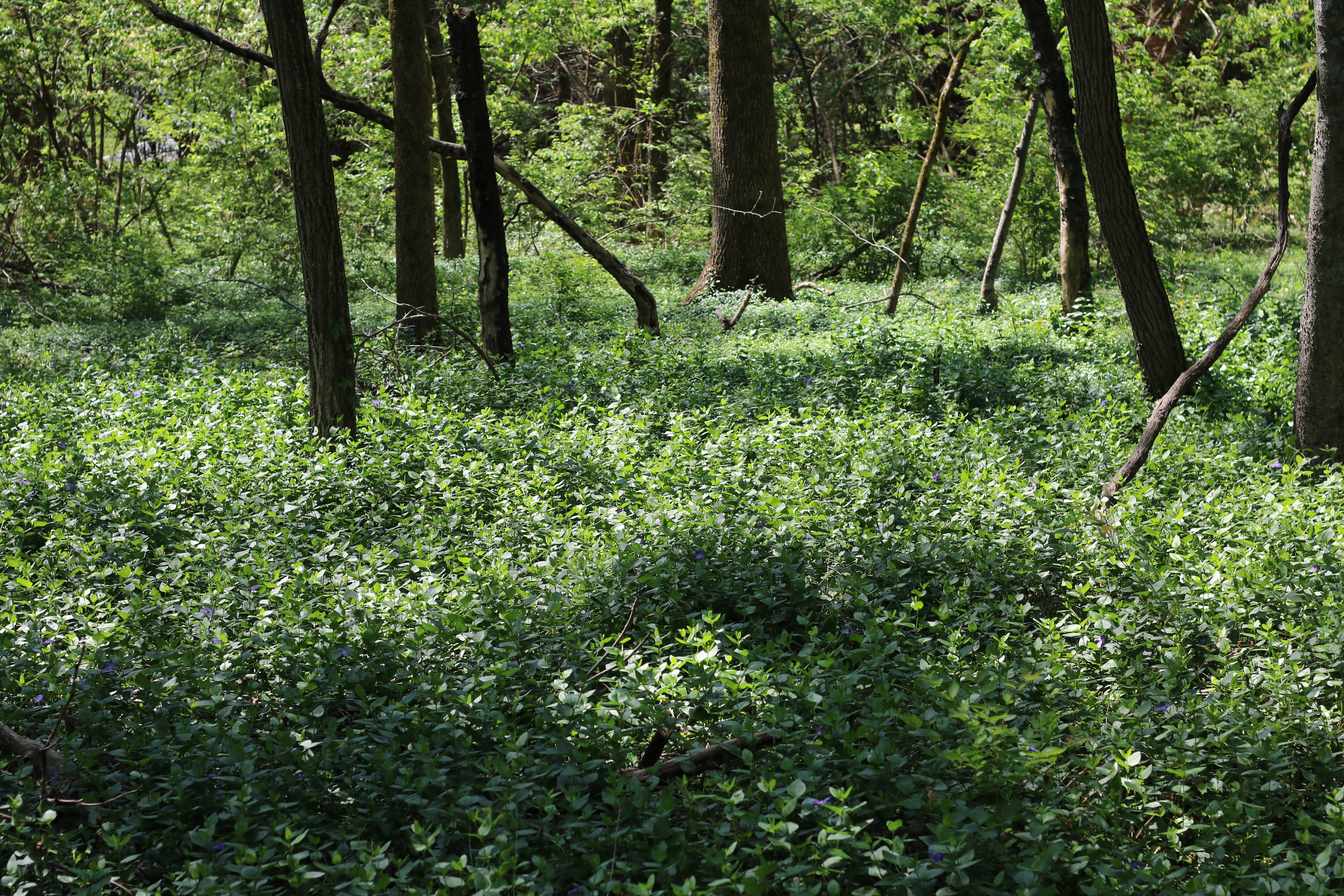
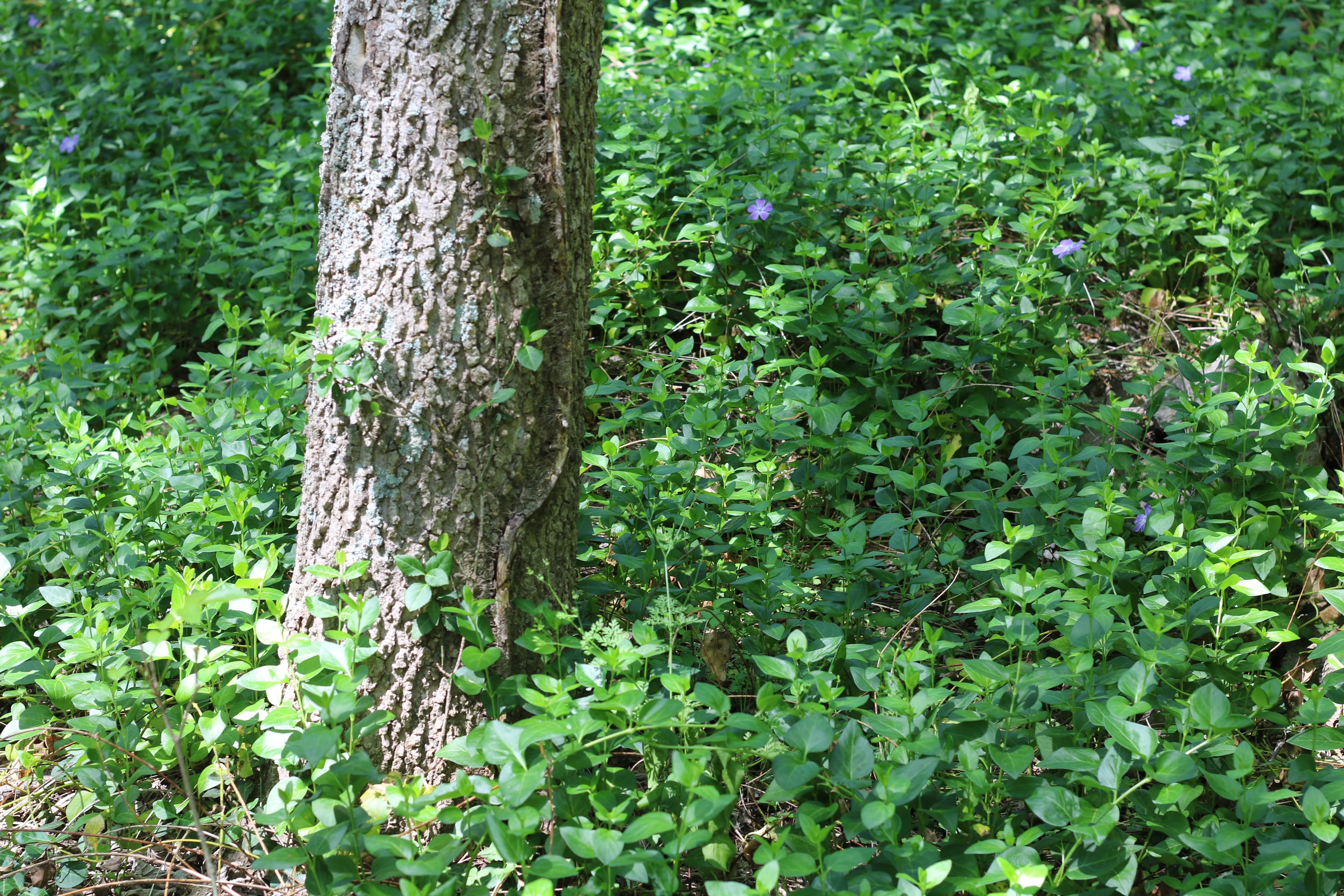
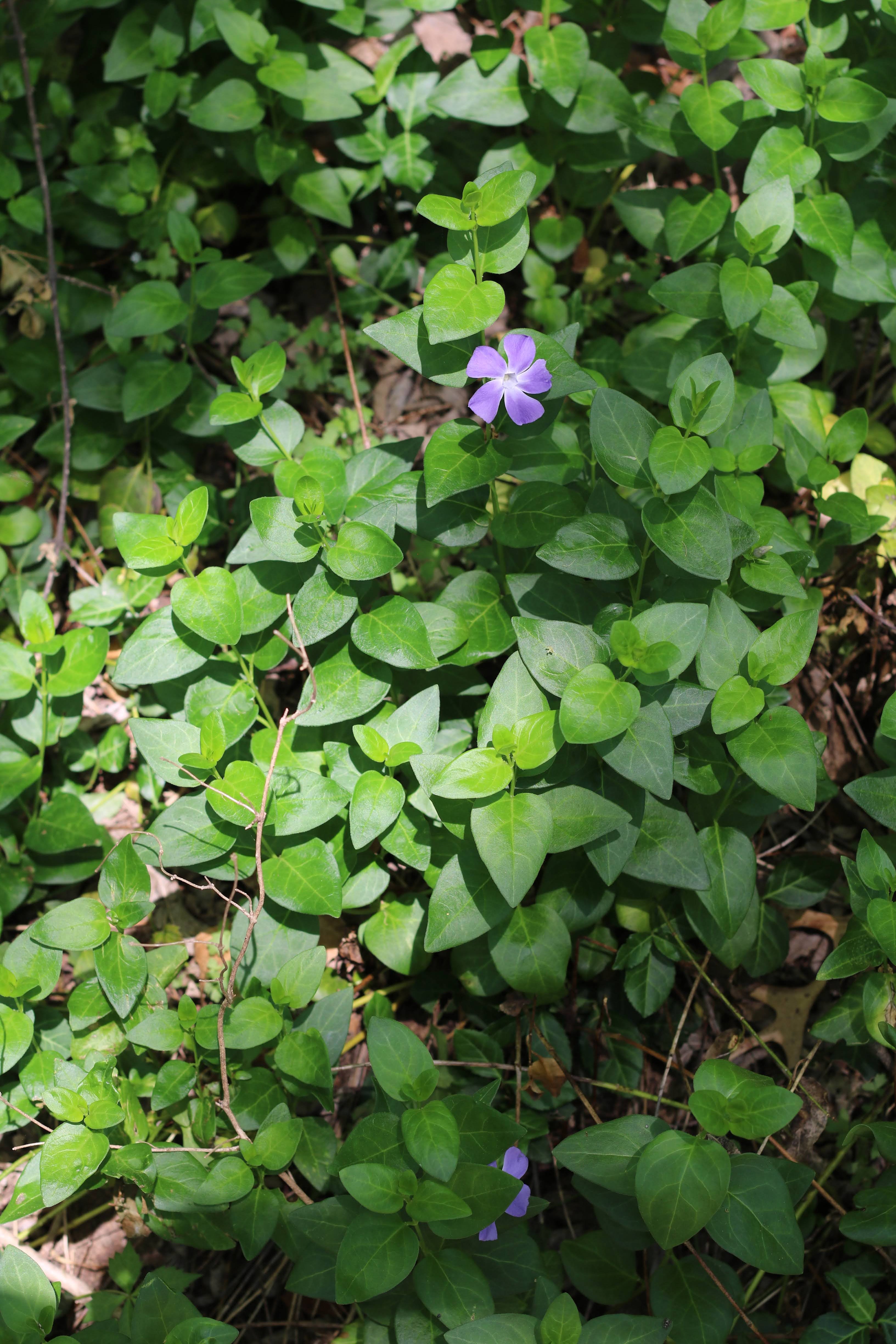
Donna Jo had a beautiful vine, ground cover, called periwinkle, that’s flowering right now, and is very attractive. I had heard of that, and thought, at the time I thought it was native, and thought that it could do part of what wintercreeper is commonly doing right now, being an attractive, green ground cover. However, sadly, not-native, and considered invasive. That made me sad.

On a side note, wintercreeper is really an amazing plant. It can literally become a shrub, form itself upwards and become a dense bush, standing alone. You see it in that form all over in the neighborhood. So, wintercreeper can be literally just a mass of ground cover, or it can be snaking up a tree and forming a large canopy on the trunk of a tree, or it can wind itself up and become a dense shrub. I don’t know how they get it to do that, if it is another cultivar or what. But, that’s pretty amazing, to be so modular as a plant.


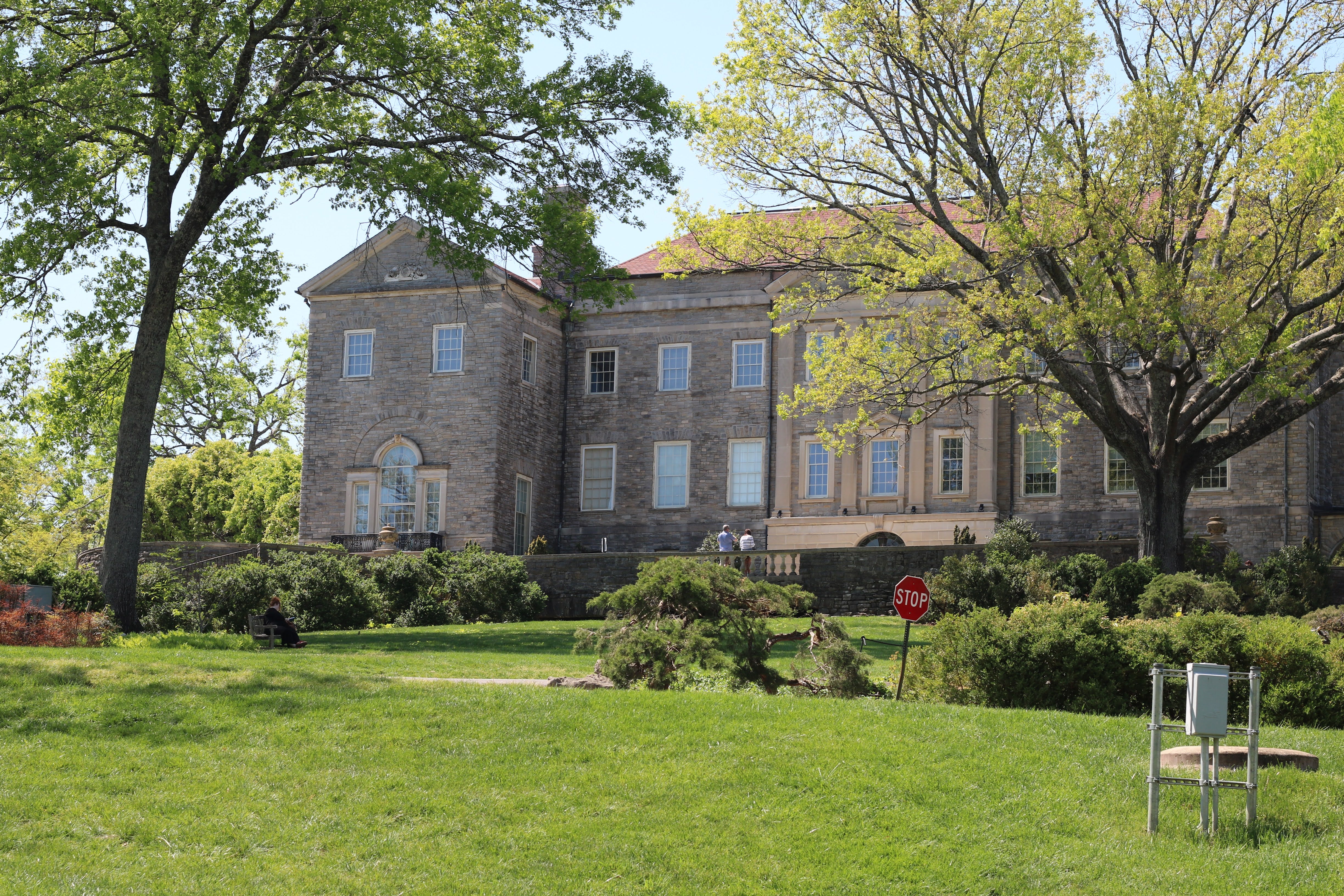
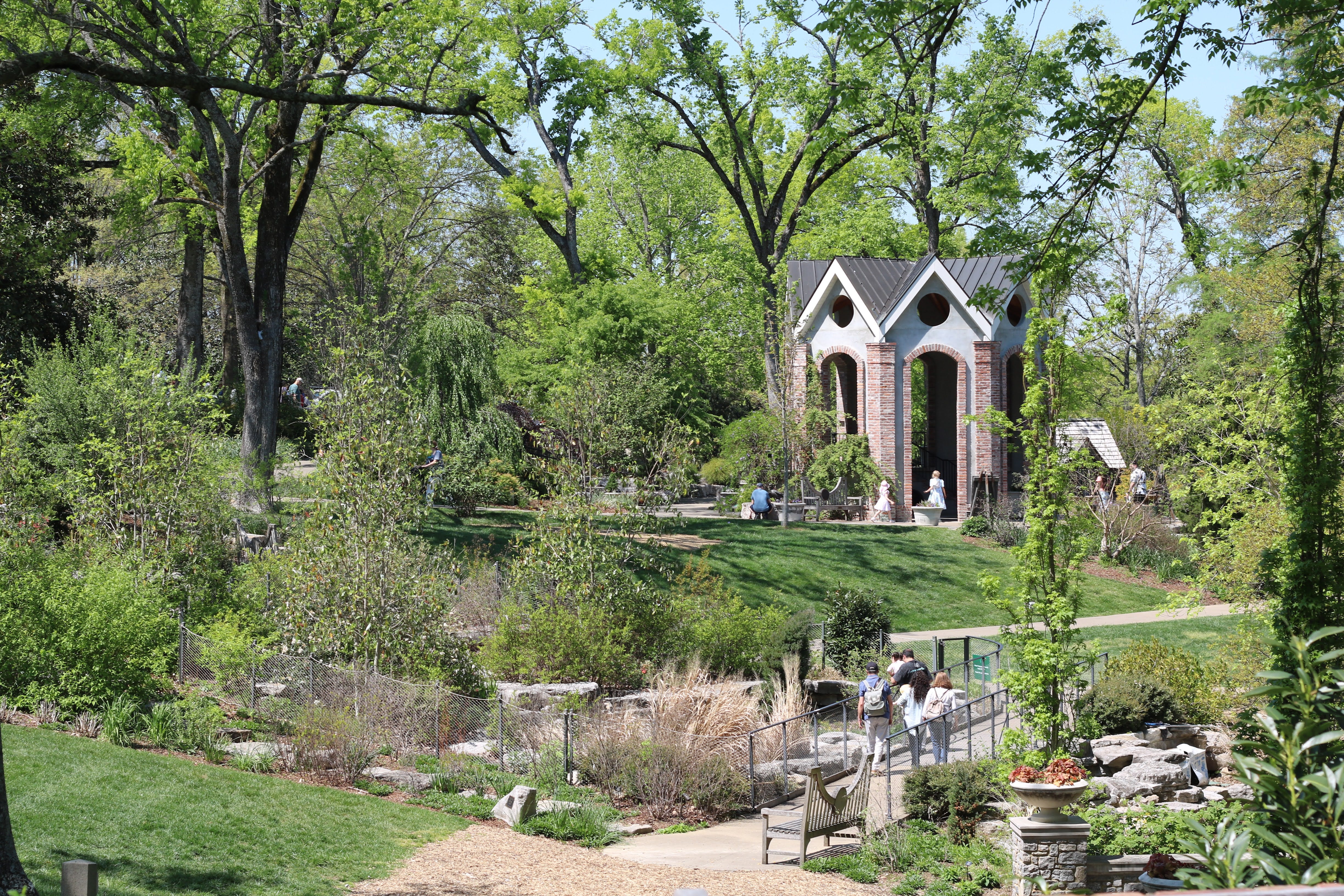
Now that hellebores are on my radar, again, I know I have said this many times, but it really is so true—once you learn about a plant, you start seeing it everywhere. That’s just how it goes. Because, I swear to god I have never seen a hellebore in my life, not once in my 30 years, and now I suddenly see hellebores everywhere I go. All over, but really, that means at Cheekwood, which is a botanical garden after all, and then today, at Vanderbilt, on the campus. At Cheekwood they have tons and tons of hellebores right now. They look healthy and are blooming well.

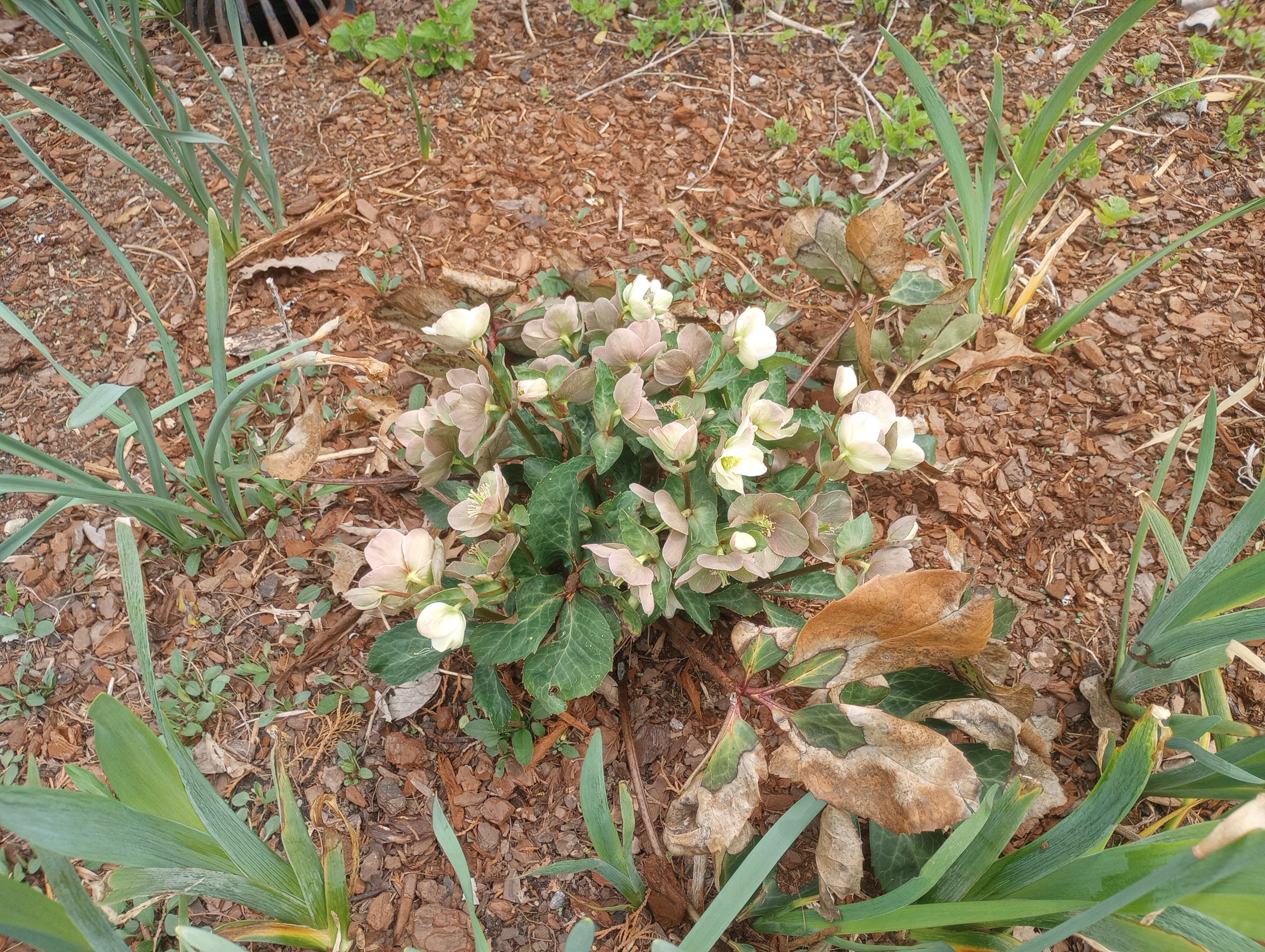
When I went to Vanderbilt today, strolling around the campus, there was a large bed of hellebores, not the Stinking, but the other kind, and they were not looking so good. Armed with my newfound gardening knowledge, I am inspecting all plants, and assessing their conditions, taking notes. These hellebores were stressed, not doing as well as the Cheekwood hellebores. Why? They were wilted, starting to wither. That’s what drought-stress looks like, I thought, and then looking at the soil, it was dry, with visible cracks. This garden bed was between a sidewalk and building too, if that matters, which it probably does, raising the temperature of the bed, and reflecting light. It seemed to me like they needed water.

Who’s the gardener? Excuse me, who’s responsible for these beds??? Give them hellebores some water!!

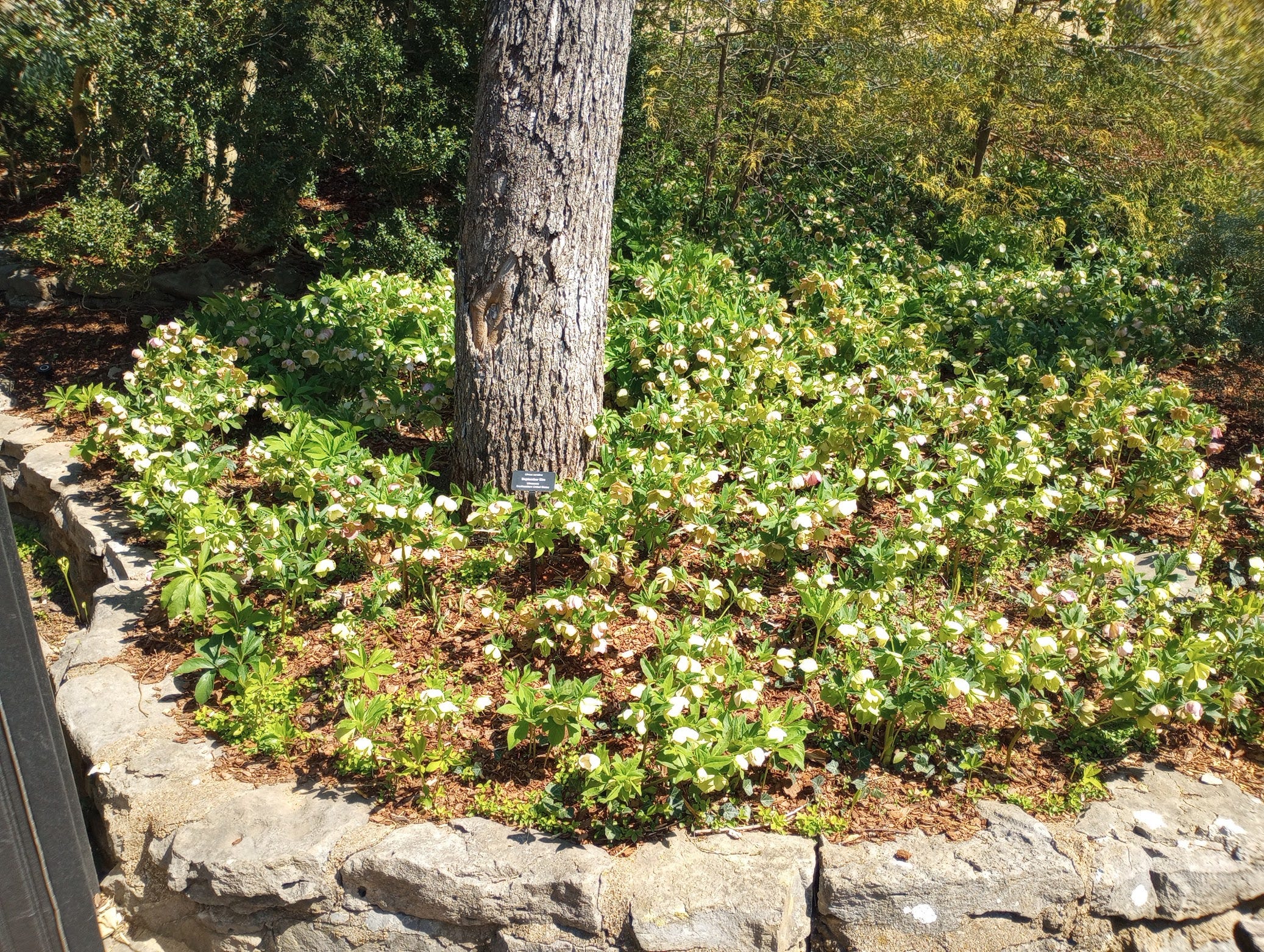
Huge hellebore bed under a September Elm at Cheekwood
Cheekwood Stinking Hellebore
Hellebore of the purpler variety, I think not Stinking Hellebore but another kind

5 Minutes of Shikujiri Sensei (w/ Ide Rakkyo) [English Translation]

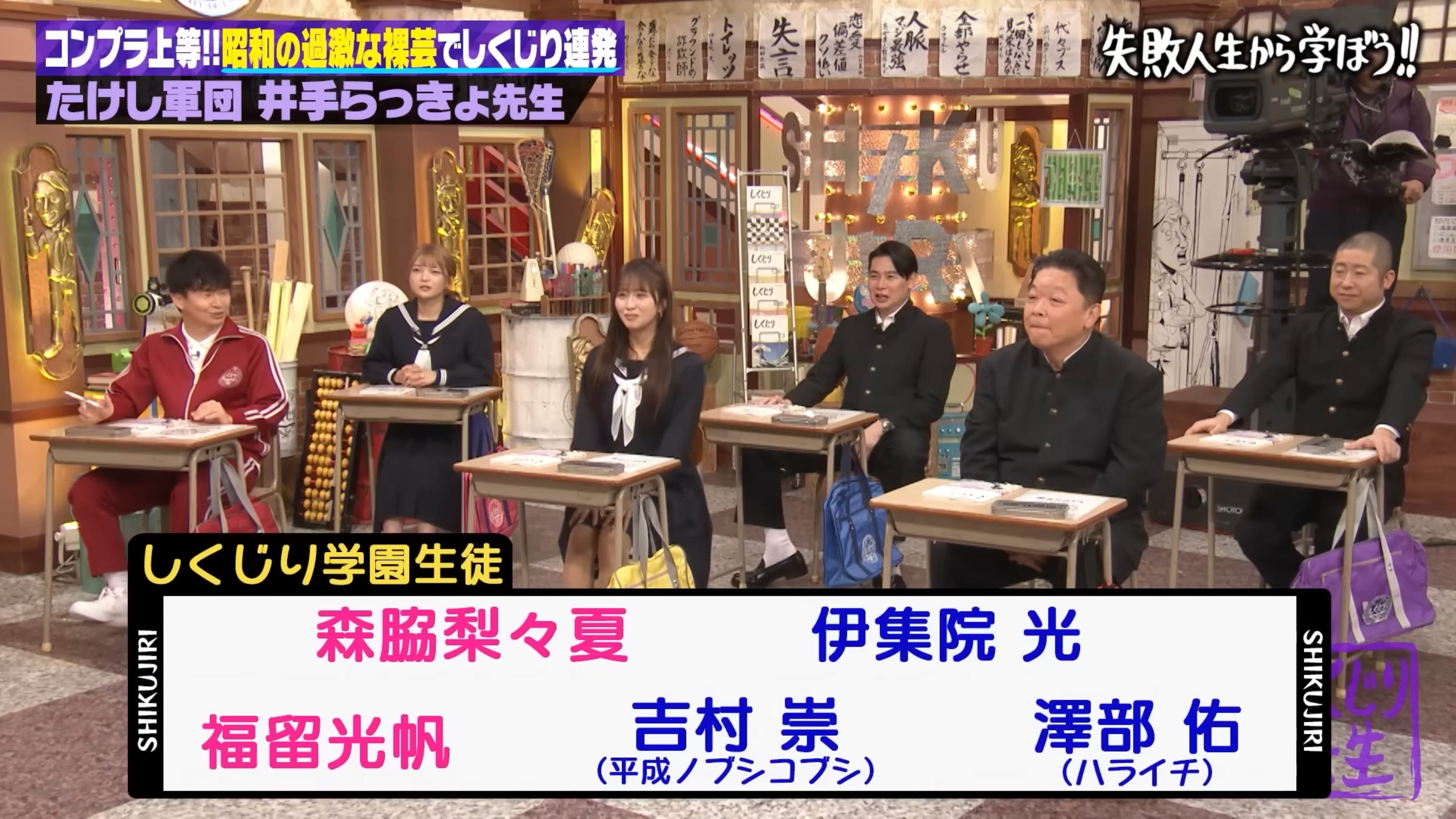
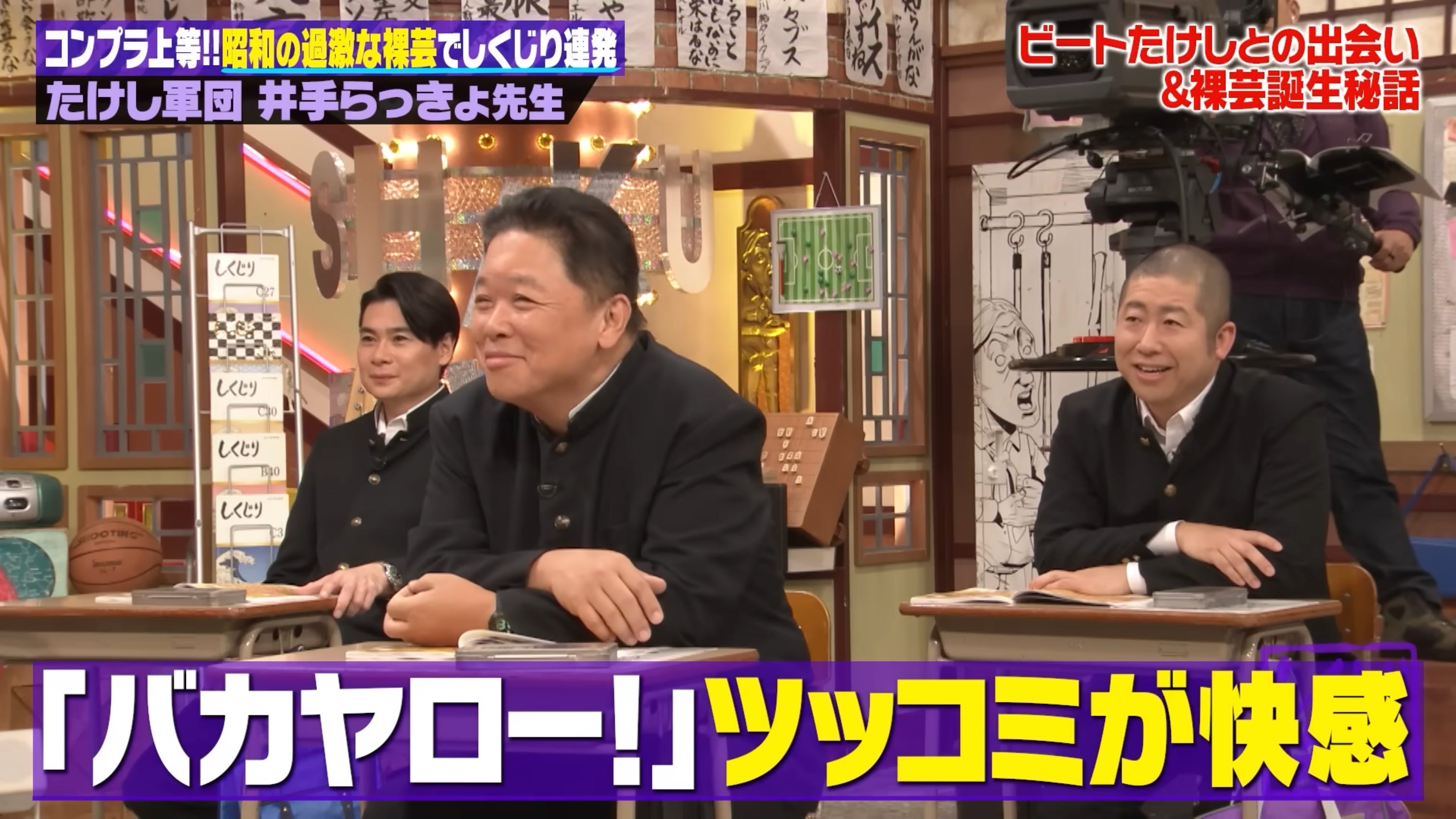
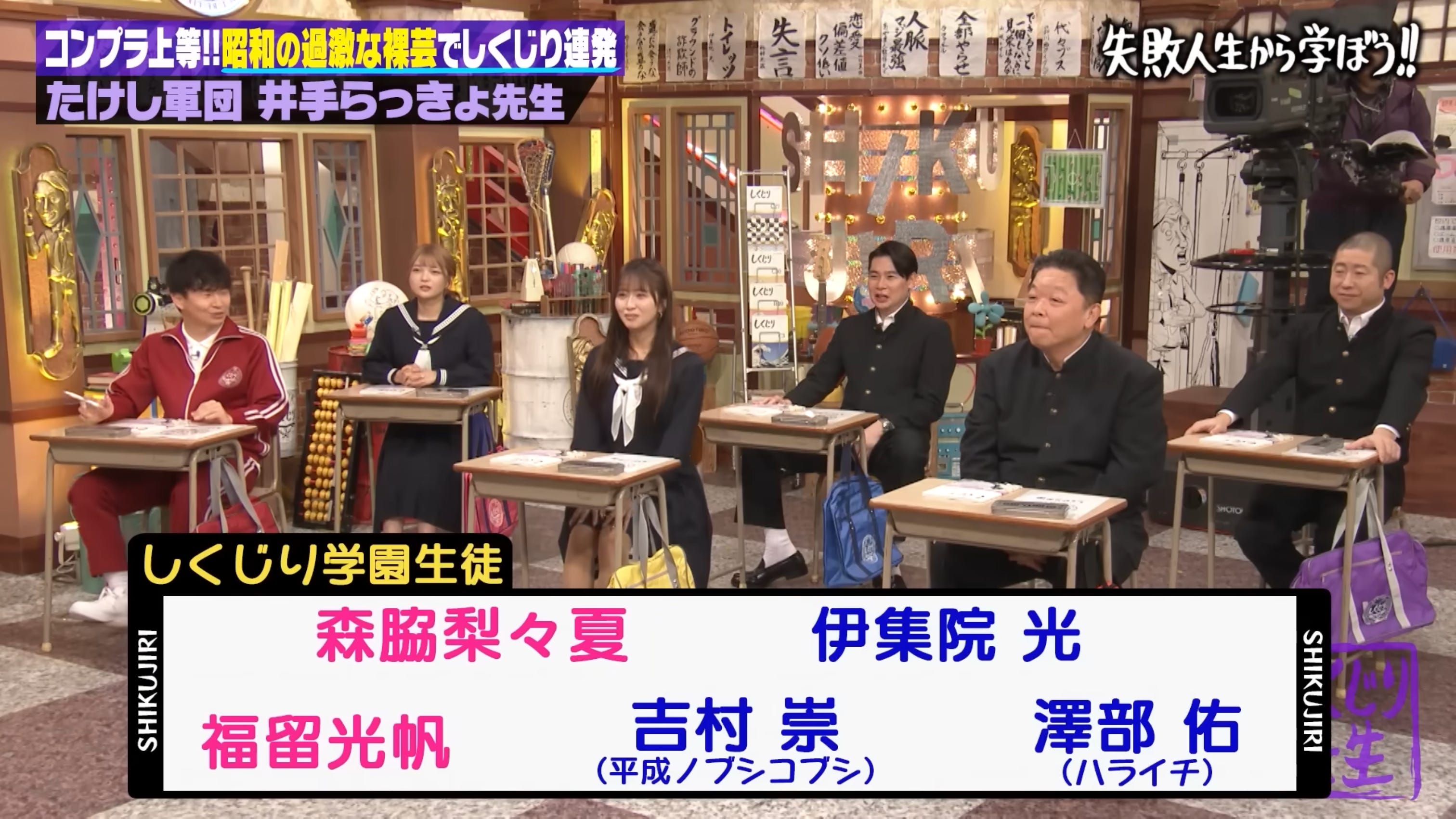
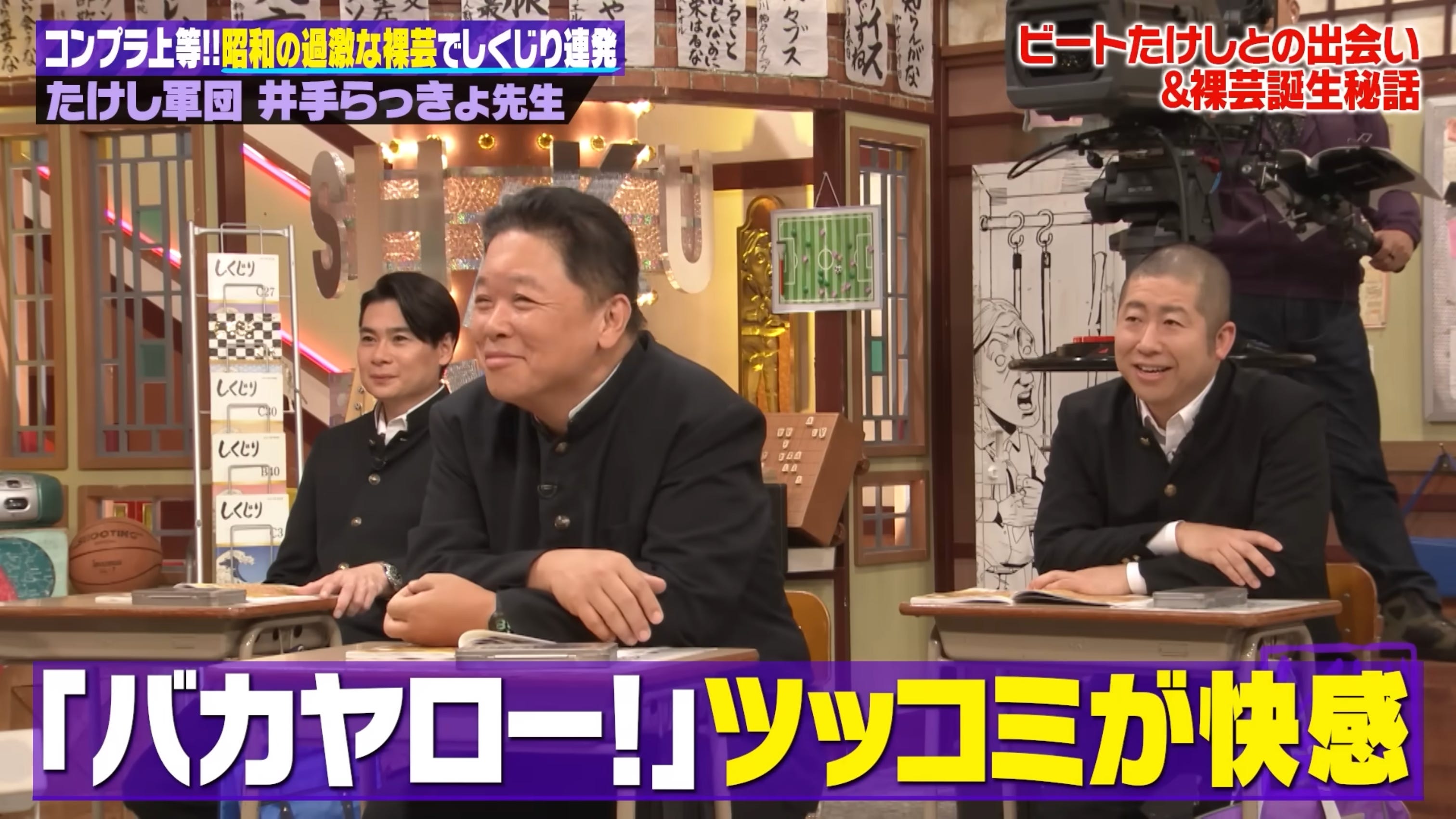
The cast

Here is an episode of a well-known Japanese late night TV show, called Shikujiri Sensei (しくじり先生). The premise of the show is that celebrities come on as a Sensei and tell the class about where they have failed in their careers, and how not to do the same. Although I never make it to that part, because I am only watching the clips on YouTube, which are roughly the first 15 minutes of the show, which probably lasts an hour. So I never get to hear the advice. That’s okay. I don’t need it anyway, I’m just here for the Japanese.

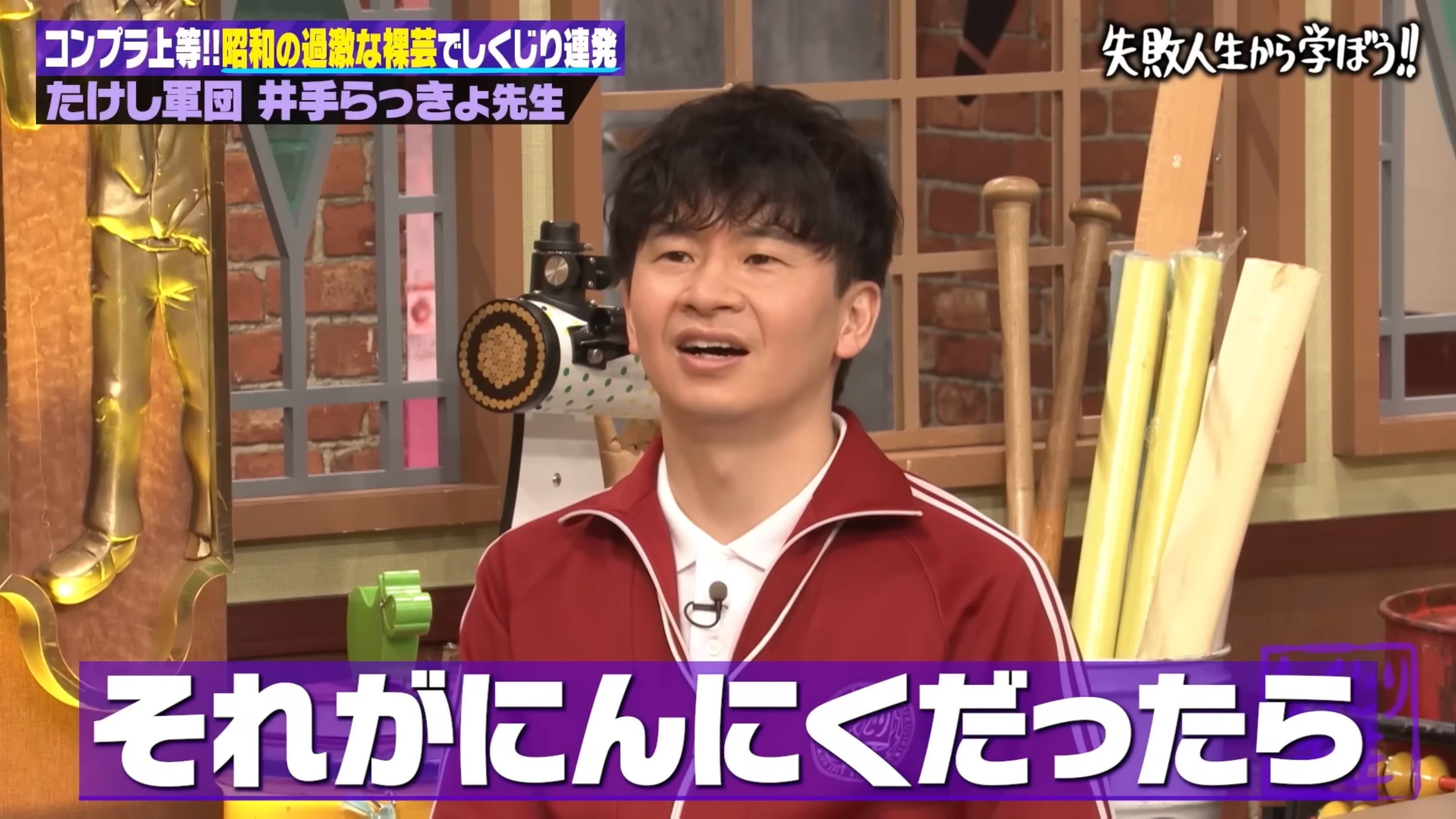
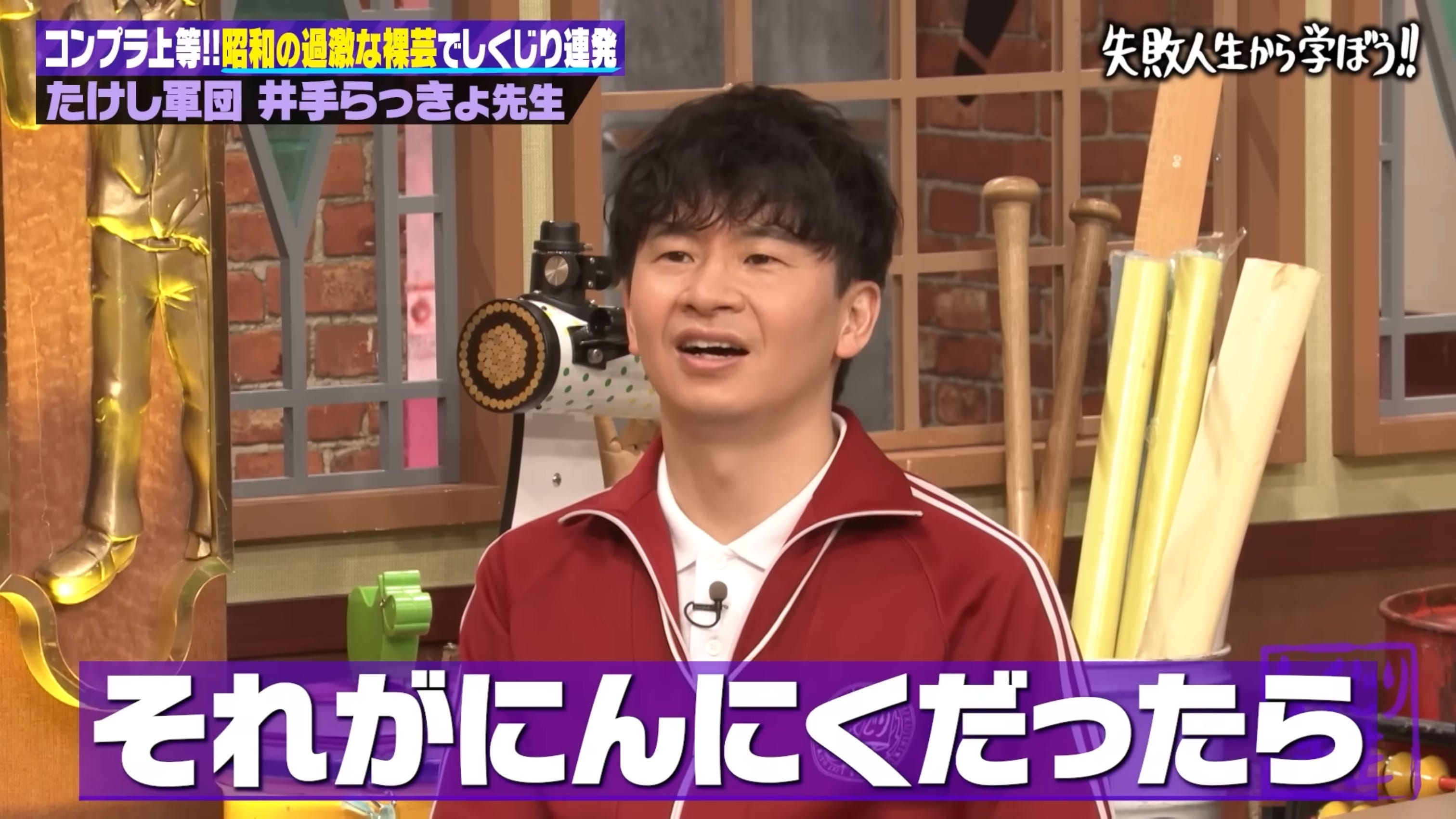
I liked this episode a lot, with a famous entertainer, Ide Rakkyo, the founder of the nude act. I thought I would transcribe and translate the episode, about 15 minutes, for practice. But it was hard, I was averaging about an hour per minute of transcription (listening to the episode and recording what was said, and I had a lot of help, from the YouTube auto-subtitle and the actual show putting up subtitles at times) and so I ended up just settling for five minutes of the episode so that I didn’t spend 20 hours on this little project.

Yoshimura Takashi
Ijyuuin Hikaru
Moriwaki Ririka
Fukutome Mitsuho
Sawabe Yuu (right)
The homeroom teacher: Wakabayashi Masayusa
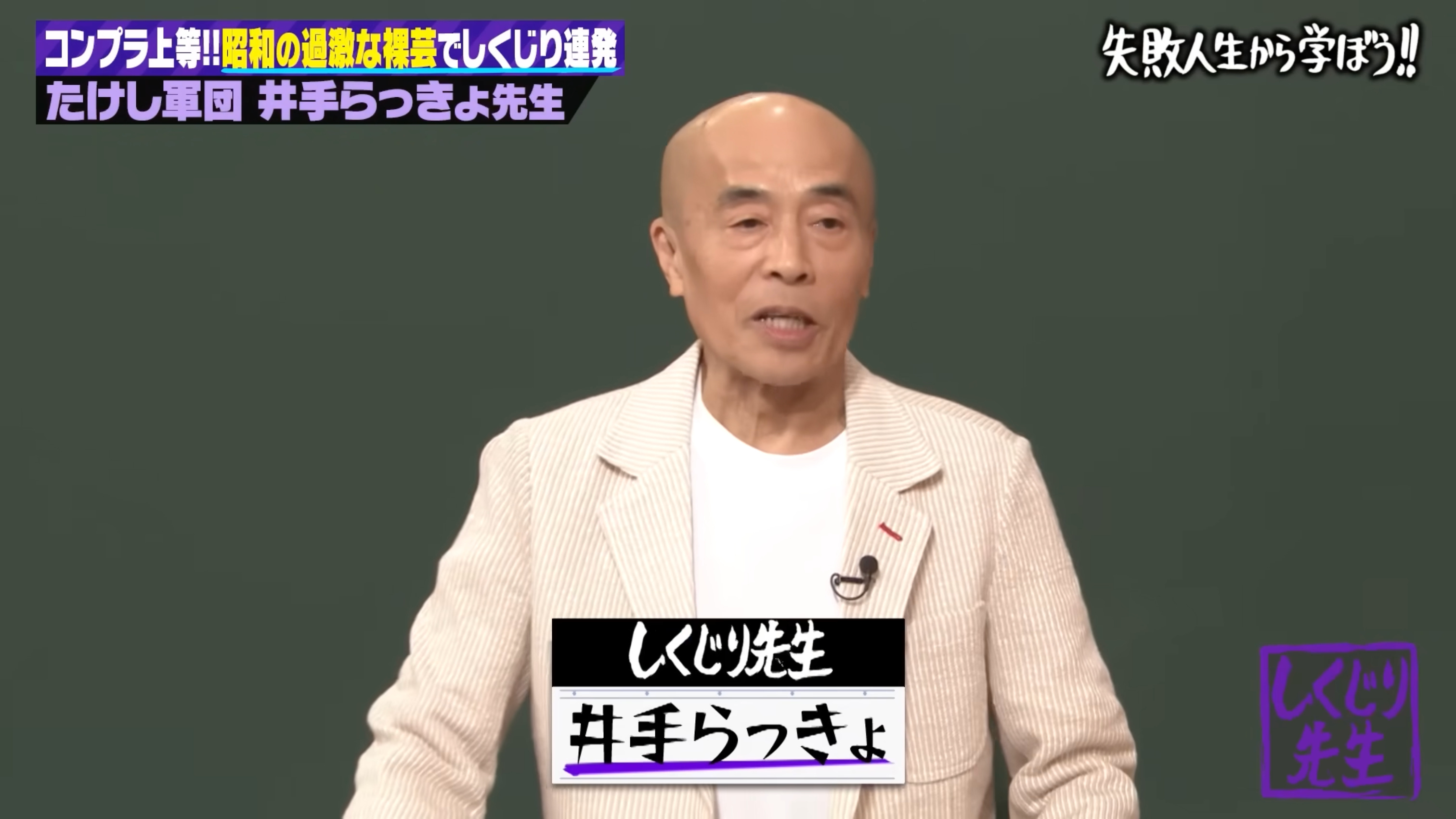
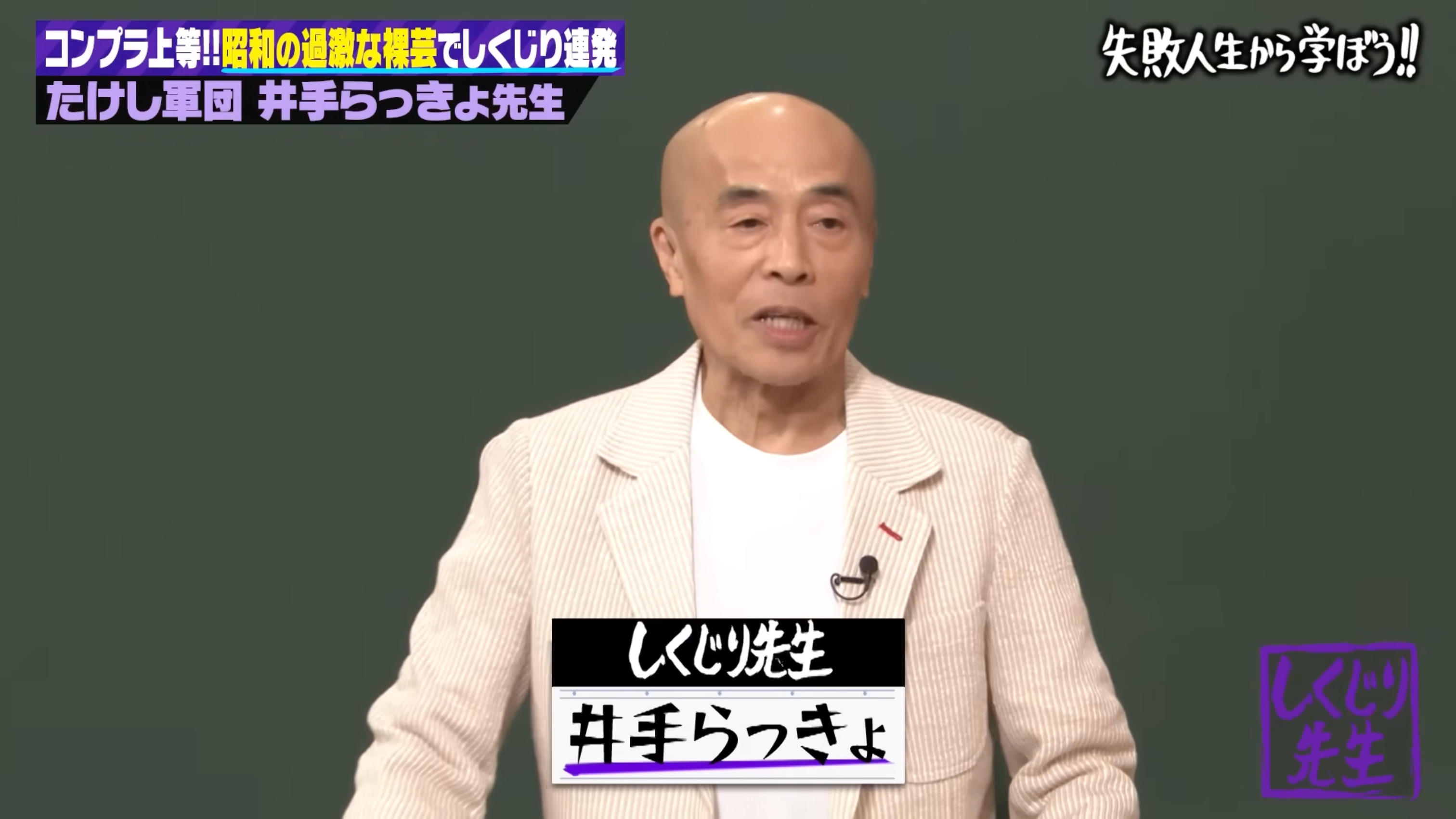
Today’s Failure Sensei: Ide Rakkyo
Ide Rakkyo naked within 2.5 seconds

START

Wakabayashi: “Here is today’s Failure Sensei. Welcome!”

Applause

Ide Rakkyo loses his clothes

Sawabe: “So fast! So fast!”

Ide Rakkyo: “I’ve done my work for the day, so I’ll go home now.”

Everyone: “Sensei, class! Class!”

Sawabe: “The fastest anyone has ever gotten into their underwear.”

Wakabayashi: “Amazing, wow.”

Ide Rakkyo starts putting clothes back on

Ijyuuin: “And so calm in getting dressed, of course. We would expect nothing less.”

Yoshimura: “I’m so happy.”

Wakabayashi: “Yoshimura, you must be happy.”

Yoshimura: “Of course, absolutely. He is the peak of my lineage. There’s no doubt about it!”

Ide Rakkyo: “Hello, I am Ide Rakkyo from Takeshi’s Army. Thank you for having me here today.”

Ide Rakkyo: “But I think there may be some people here who don’t know about me.”

Shot of Fukutome blank-faced

Wakabayashi: “What, really?”

Sawabe: “You don’t know him?”

Yoshimura: “Why?”

Moriwaki: “But, I asked my dad. I said that I would be working with Ide Rakkyou tomorrow, and my dad replied, ‘He’s someone who gets naked immediately.’”

Ide Rakkyo: “Well, that happened right away.”

Sawabe: “It was proved immediately.”

Moriwaki: “Really!”

Wakabayashi: “Your dad is a prophet.”

Yoshimura: “He’s not a prophet!”

Ide Rakkyo: “Well, first let me introduce you to my profile. Please open your textbook to page 4.”

Ijyuuin: “Okay.”

Ide Rakkyo: “My real name is Ide Hiroshi. Hiroshi is written as Hakase. It’s a good name isn’t it. Yes.”

Ide Rakkyo: “I’m from Kumamoto, and I’m 66. I’ve become quite an old man, now.”

Wakabayashi: “And you’re still doing that at 66, amazing…”

Ide Rakkyo: “That’s right.”

Ide Rakkyo: “My special skill is short-distance running.”

Sawabe: “You were so fast! The fastest in the entertainment industry.”

Ide Rakkyo: “My fastest time was, for the 100 meter dash, 10.89 seconds.”

Moriwaki: “10 seconds!”

Ide Rakkyo: “Yes. As for stripping down, about 2.5.”

Everyone laughs and says, “That’s fast.”

Sawabe: “The world record.”

Wakabayashi: “It’s still hasn’t been beaten.”

Yoshimura: “So fast.”

Sawabe: “Because nobody else is doing it.”

Ijyuuin: “Really, nobody else is taking their clothes off.”

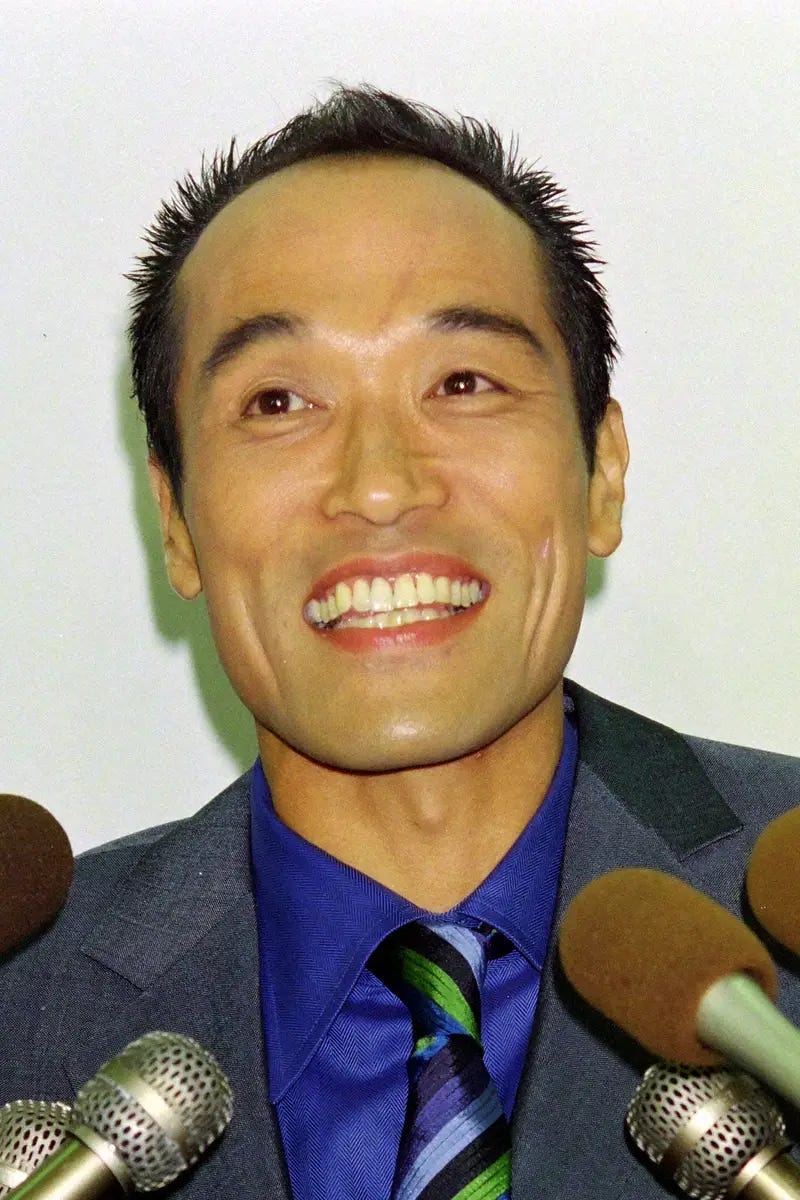
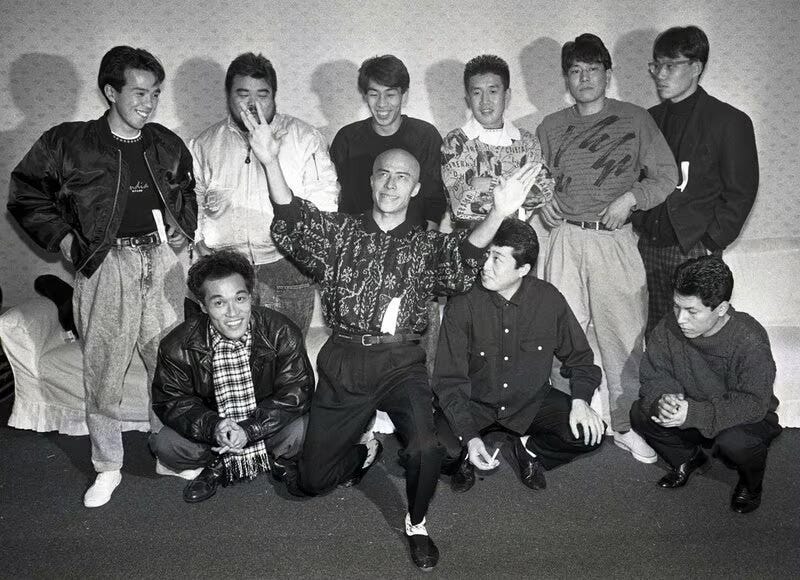
Ide Rakkyo: “Well then, there were originally 10 members in Takeshi’s Army. Of those ten members, Sono Manma Higashi was also a member of the army.”

浮気否定会見>必死の釈明で浮気を否定する会見を行った、そのまんま東(1998年撮影) - スポニチ Sponichi Annex 芸能
Sono Manma Higashi そのまんま東
Members of Takeshi’s Army (Ide Rakkyo is posing in center)

Wakabayashi: “Yes.”

Sawabe: “Mr. Higashi was the youngest, wasn’t he?”

Ide Rakkyo: “That’s right, that’s right.”

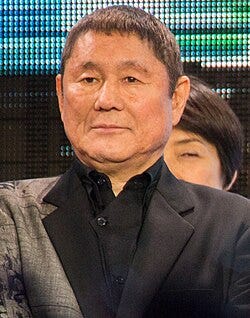
Ide Rakkyo: “Mr. Takeshi created all of our stage names. Takeshi kun. Mr. Beat Takeshi.”

Takeshi Kitano - Wikipedia
Beat Takeshi

Ide Rakkyo: “We had gone to an Izakaya, they brought us some edamame, and Takeshi said, ‘Oh, you’re Tsumami Edamame’, and in that way it was decided.”

Morwaki: “Really? So that’s how it happened.”

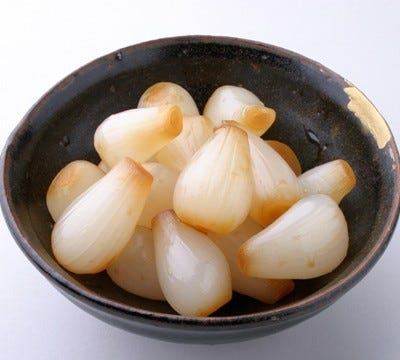
Ide Rakkyo: “Then next, sometimes they brought rakkyou (onions), and Takeshi said, ‘Hey Ide, you look like rakkyou, so you’ll be Ide Rakkyou.’”

Rakkyo Zuke - 【郷土料理ものがたり】
Rakkyo

Wakabayashi: “Wow.”

Ide Rakkyo: “If it had been ninniku (garlic), these days I would be called Ide Ninniku instead.”

Ide Rakkyo: “Well, that’s me, but in the entertainment world, I was called this. It’s on the next page.”

Ide Rakkyo: “The founder of the naked act.”

Moriwaki: “Amazing!”

Fukutome: “That’s really amazing.”

Ide Rakkyo: “At this time there are now many naked acts.”

Ijyuuin: “Many.”

Ide Rakkyo: “Yes, there are many. But, they wear swim trunks, or cover themselves with a plate. I was covered with pixels.”

Sawabe: “Right. On the scene, you were naked.”

Yoshimura: “That’s right, you were exposed.”

Moriwaki: “Wait, even your special place?”

Ide Rakkyo: “I was usually naked, completely stark naked.”

Everyone laughs

Ide Rakkyo: “Well, it wasn’t a live broadcast. Of course.”

Ide Rakkyo: “I was told to roll a snowman, I was completely stark naked, and had set my clothes down on the ground. My socks, pants, a sweater, and I was pushing the snowman, and when I went to go put my clothes back on, they were all frozen stiff, and I couldn’t wear them again!”

Moriwaki: “How terrible!”

Ide Rakkyo: “Like this, I performed in some severe locations.”

Yoshimura: “So cool.”

Ide Rakkyo: “So, that’s me, and I have committed some failures. On the next page.”

Sawabe: “Failures?”

Ide Rakkyo: “Getting completely naked without reading the room, and pissing off big names in the acting world.”

Everybody laughs

Ide Rakkyo: “Getting naked in front of the audience many times, and being reported to the police.”
Ide Rakkyo: “Getting naked at my daughter’s wedding and causing an outrage.”
Moriwaki: “No!!!!”

Wakabayashi: “Right, because they call it, ‘Virgin Road’.”
Fukutome: “Why did you think you could do that?”
Sawabe busts out laughing

Ide Rakkyo: “There were less rules at that time, so I got into trouble.”

Wakabayashi: “That’s it, right.”

Ide Rakkyo: “Yes. Like this, if I did this now, it would be considered Super Sexual Harrassment.”

Everyone laughs

Ijyuuin: “Super Sexual Harrassment.”

Wakabayashi: “A Super Sexual Harrassment actor.”

Moriwaki: “That’s the first time I’ve heard that.”

Yoshimura: “You say that but, at that time it was still Super Sexual Harrassment!”

Sawabe: “The times haven’t changed.”

Yoshimura: “They haven’t changed.”

Ide Rakkyo: “This time again, if we try to look back over my life, I think there may be some things that we can learn from. With this in mind, I’ll try and tell you about some of the failures I’ve committed with my naked act. And I would like to tell you about what I’ve learned from being in Takeshi’s Army.”

Ijyuuin: “We are really going to learn from this.”

Moriwaki: “I want to hear it.”

Narrator: “While prioritizing getting laughs, Ide Rakkyo had a number of failures with his naked act. First, let’s have a lesson about Rakkyou entering Takeshi’s Army, and the reason he started doing his naked act.”

Ide Rakkyo: “These days I am only seen as being a naked act, but 44 years ago, when I was 22 years old, I was scouted to be used in the entertainment industry for another act. That act is on the next page.”

Ide Rakkyo: “‘An impersonator repeatedly creating explosive laughter.’ Originally I was an impersonator.”

Ijyuuin: “He was an impersonator in the orthodox way.”

Yoshimura: “Is that so?”

…continues


(Original Japanese)

はじめ

若林:「本日のしくじり先生はこちらの方です。どうぞ!」

*拍手*

井手らっきょ becomes naked in 2.5 seconds

澤部:「早い!早い!」

井手らっきょ:「私ひと仕事終わったんで私は今日帰ります。」

皆:「先生、授業!授業!」

澤部:「最速パンイチ」

若林:「すごいね、これー」

伊集院:「落ちついて着ますよね、ちゃんとね、やっぱり。さすがですね。」

吉村:「嬉しいなー」

若林:「まー吉村嬉しいよなー」

吉村:「いやいやそうですよ。僕の系譜のトップの方ですから。そうですから、そう!」

井手らっきょ:「どうも、たけし軍団の井手らっきょでございました、お願いします。」

井手らっきょ:「僕のことをやっぱり知らない方もいらっしゃると思うんですけど。」

Shot of 福留 blank-faced

若林:「え、マジで?」

澤部:「知らない?」

吉村:「なんで」

森脇:「でも、パパに聞いたんですよ。明日、井手らっきょさんと仕事するんだって言ったら、あの、すぐ裸になる人だよって言われました。」

井手らっきょ:「もう、すぐなりましたからね」

澤部:「すぐ証明された」

森脇:「本当だ!」

若林:「預言者だ」

吉村:「預言者じゃないでしょ!」

井手らっきょ:「はい、まずはプロフィールを紹介しましょう。教科書4ページを開いてくださいね。」

伊集院:「はーい」

井手らっきょ:「私本名、井手博士と申します。博士(はかせ)と書いて、ひろし。いい名前ですね。うん。」

井手らっきょ:「熊本県出身、66歳もう、かなりおじいちゃんなってしまいしたが」

若林:「66で今のやってたんだ、すげーなー。」

井手らっきょ:「そう」

井手らっきょ:「特技はですね、短距離走。」

澤部:「早かったぜー!芸能界1」

井手らっきょ:「一番早かった時はね、100メートル10秒89で走りました。」

森脇:「10秒!」

井手らっきょ:「はい。脱ぐのは、2.5ぐらいで」

皆:「笑い」「早いですね」

澤部:「世界記録」

若林:「未だに破られていない」

吉村:「早いなー」

澤部:「他の人やってねーですから」

伊集院:「本当脱いでいないんだよ」

井手らっきょ:「では、たけし軍団っていうメンバーは、元々、10人、正式メンバー10人ってそのまんま東も、軍団のメンバーでありましたね。」

若林:「はい」

澤部:「東さんは一番弟子なんでしたっけ」

井手らっきょ:「そうです、そうです。」

井手らっきょ:「芸名は全部たけしさんが作るんですよ。たけし君。ビートたけしさんが。」

ビートたけし

井手らっきょ:「ほんで、その居酒屋に行った時につまみに枝豆が出て、「お、お前つまみ枝豆だ」そうやって決めるんです。」

森脇:「へー、こんな感じなんだ。」

井手らっきょ:「で隣に、たまたまらっきょがあった「お井手、お前はらっきょ見たいだから井手らっきょだ。」」

若林:「へー」

井手らっきょ:「それがもしにんにくだったら今頃僕井手にんにくって言われてるんです。」

井手らっきょ:「ま、そんな私でございますけども、芸人界隈ではですね。こう言うふうに言われました。次のページです。」

井手らっきょ:「裸芸の元祖」

森脇:「すごい!」

福留:「本当にすごい」

井手らっきょ:「現在も裸芸は結構いっらしゃいますですけどね」

伊集院:「多い」

井手らっきょ:「多いですよね、でもその。。。海パンを穿いたり、お盆で隠したりとか。僕はモザイクが隠してくれた。」

澤部:「確かに。現場では出てる」

吉村:「そう、出していましたね」

森脇:「へ、大事なとこもですか?」

井手らっきょ:「もう、常にポンポン、スッポンポンっていう状態で」

*皆笑*

井手らっきょ:「ま、生放送では出しませんけど。もちろん」

井手らっきょ:「雪山だるまさんが転んだとか言って、素っ裸洋服は下に置いたんですよ。靴下があったり、パンツがあったり、セーターがあったりでだるまさんが。。。ていながら、と履いていくんですけど、もうカチカチで履けないんですよ!」

森脇:「かわいそう」

井手らっきょ:「そんな、もう、過酷なロケもありました。」

吉村:「カッケーな」

井手らっきょ:「まー、そんな私ですけどま、こんなしくじりを犯しております。次のページです。」

澤部:「しくじり?」

井手らっきょ:「空気を読まずに全裸になってですね。え、芸能界の大御所がブチギレたというの」

*皆笑*

井手らっきょ:「客前で何度も全裸になり警察に出頭」

井手らっきょ:「娘の結婚式で裸になって大バッシング」

森脇:「嘘!!!」

若林:「バージンロードだからね。」

澤部:「すげー」

福留:「なんでいけると思ったんよ?」

澤部:*爆笑*

井手らっきょ:「緩かった時代でもトラブルはありました」

若林:「あったんだ、やっぱり」

井手らっきょ:「はい。ということで私ですね、現代なも、スーパーセクハラと。。。」

*皆笑*

伊集院:「スーパーセクハラ」

若林:「スーパーセクハラ芸人」

森脇:「初めて聞きました」

吉松:「こんなことと言うのもあるですけど、当時からスーパーセクハラだよ!」

澤部:「時代がどうこうじゃない。」

吉松:「どうこうじゃない。」

井手らっきょ:「今回そう改めて、ま、人生を振り返えてみるとですね、やっぱ学べることが少しはこう、あるんじゃないかと。と言うことで私は裸芸で犯してしまったしくじり言おうですね。そして団体芸で学んだことを授業していただきたいと思います。」

伊集院:「勉強になる、これは」

森脇:「聞きたい」

ナレーター:「その場の笑いの優先し、数々のしくじりを起こしてきた裸芸。まずは、たけし軍団に入り、裸芸を始めたきっかけから授業してもらいましょう。」

井手らっきょ:「今私には裸芸のイメージしかありませんですけども、今から44年前、私が22歳の時に、ある芸がきっかけでスカウトされた芸能界利用するんですけども、その芸というのが次のページです。」

井手らっきょ:「爆笑連発のモノマネ、元々モノマネのタレントですね。」

伊集院:「正統派のモノマネだったんだよ。」

吉村:「そうなんですか?」

しくじり先生の5分 「日本語」

今回のキャスト
Takashi Yoshimura / 吉村崇
Hikaru Ijyuuin / 伊集院光
Ririka Moriwaki / 森脇莉々夏
Mitsuho Fukutome (福留光帆)
右の方: Yuu Sawabe / 澤部佑
担任: Masayusa Wakabayashi / 若林正恭
今回のしくじり先生: Ide Rakkyo / 井手らっきょ
2.5秒以内裸
男の子

はじめ

若林:「本日のしくじり先生はこちらの方です。どうぞ!」

*拍手*

井手らっきょ becomes naked in 2.5 seconds

澤部:「早い!早い!」

井手らっきょ:「私ひと仕事終わったんで私は今日帰ります。」

皆:「先生、授業!授業!」

澤部:「最速パンイチ」

若林:「すごいね、これー」

伊集院:「落ちついて着ますよね、ちゃんとね、やっぱり。さすがですね。」

吉村:「嬉しいなー」

若林:「まー吉村嬉しいよなー」

吉村:「いやいやそうですよ。僕の系譜のトップの方ですから。そうですから、そう!」

井手らっきょ:「どうも、たけし軍団の井手らっきょでございました、お願いします。」

井手らっきょ:「僕のことをやっぱり知らない方もいらっしゃると思うんですけど。」

Shot of 福留 blank-faced

若林:「え、マジで?」

澤部:「知らない?」

吉村:「なんで」

森脇:「でも、パパに聞いたんですよ。明日、井手らっきょさんと仕事するんだって言ったら、あの、すぐ裸になる人だよって言われました。」

井手らっきょ:「もう、すぐなりましたからね」

澤部:「すぐ証明された」

森脇:「本当だ!」

若林:「預言者だ」

吉村:「預言者じゃないでしょ!」

井手らっきょ:「はい、まずはプロフィールを紹介しましょう。教科書4ページを開いてくださいね。」

伊集院:「はーい」

井手らっきょ:「私本名、井手博士と申します。博士(はかせ)と書いて、ひろし。いい名前ですね。うん。」

井手らっきょ:「熊本県出身、66歳もう、かなりおじいちゃんなってしまいしたが」

若林:「66で今のやってたんだ、すげーなー。」

井手らっきょ:「そう」

井手らっきょ:「特技はですね、短距離走。」

澤部:「早かったぜー!芸能界1」

井手らっきょ:「一番早かった時はね、100メートル10秒89で走りました。」

森脇:「10秒!」

井手らっきょ:「はい。脱ぐのは、2.5ぐらいで」

皆:「笑い」「早いですね」

澤部:「世界記録」

若林:「未だに破られていない」

吉村:「早いなー」

澤部:「他の人やってねーですから」

伊集院:「本当脱いでいないんだよ」

井手らっきょ:「では、たけし軍団っていうメンバーは、元々、10人、正式メンバー10人ってそのまんま東も、軍団のメンバーでありましたね。」

若林:「はい」

澤部:「東さんは一番弟子なんでしたっけ」

井手らっきょ:「そうです、そうです。」

井手らっきょ:「芸名は全部たけしさんが作るんですよ。たけし君。ビートたけしさんが。」

ビートたけし

井手らっきょ:「ほんで、その居酒屋に行った時につまみに枝豆が出て、「お、お前つまみ枝豆だ」そうやって決めるんです。」

森脇:「へー、こんな感じなんだ。」

井手らっきょ:「で隣に、たまたまらっきょがあった「お井手、お前はらっきょ見たいだから井手らっきょだ。」」

若林:「へー」

井手らっきょ:「それがもしにんにくだったら今頃僕井手にんにくって言われてるんです。」

井手らっきょ:「ま、そんな私でございますけども、芸人界隈ではですね。こう言うふうに言われました。次のページです。」

井手らっきょ:「裸芸の元祖」

森脇:「すごい!」

福留:「本当にすごい」

井手らっきょ:「現在も裸芸は結構いっらしゃいますですけどね」

伊集院:「多い」

井手らっきょ:「多いですよね、でもその。。。海パンを穿いたり、お盆で隠したりとか。僕はモザイクが隠してくれた。」

澤部:「確かに。現場では出てる」

吉村:「そう、出していましたね」

森脇:「へ、大事なとこもですか?」

井手らっきょ:「もう、常にポンポン、スッポンポンっていう状態で」

*皆笑*

井手らっきょ:「ま、生放送では出しませんけど。もちろん」

井手らっきょ:「雪山だるまさんが転んだとか言って、素っ裸洋服は下に置いたんですよ。靴下があったり、パンツがあったり、セーターがあったりでだるまさんが。。。ていながら、と履いていくんですけど、もうカチカチで履けないんですよ!」

森脇:「かわいそう」

井手らっきょ:「そんな、もう、過酷なロケもありました。」

吉村:「カッケーな」

井手らっきょ:「まー、そんな私ですけどま、こんなしくじりを犯しております。次のページです。」

澤部:「しくじり?」

井手らっきょ:「空気を読まずに全裸になってですね。え、芸能界の大御所がブチギレたというの」

*皆笑*

井手らっきょ:「客前で何度も全裸になり警察に出頭」

井手らっきょ:「娘の結婚式で裸になって大バッシング」

森脇:「嘘!!!」

若林:「バージンロードだからね。」

澤部:「すげー」

福留:「なんでいけると思ったんよ?」

澤部:*爆笑*

井手らっきょ:「緩かった時代でもトラブルはありました」

若林:「あったんだ、やっぱり」

井手らっきょ:「はい。ということで私ですね、現代なも、スーパーセクハラと。。。」

*皆笑*

伊集院:「スーパーセクハラ」

若林:「スーパーセクハラ芸人」

森脇:「初めて聞きました」

吉松:「こんなことと言うのもあるですけど、当時からスーパーセクハラだよ!」

澤部:「時代がどうこうじゃない。」

吉松:「どうこうじゃない。」

井手らっきょ:「今回そう改めて、ま、人生を振り返えてみるとですね、やっぱ学べることが少しはこう、あるんじゃないかと。と言うことで私は裸芸で犯してしまったしくじり言おうですね。そして団体芸で学んだことを授業していただきたいと思います。」

伊集院:「勉強になる、これは」

森脇:「聞きたい」

ナレーター:「その場の笑いの優先し、数々のしくじりを起こしてきた裸芸。まずは、たけし軍団に入り、裸芸を始めたきっかけから授業してもらいましょう。」

井手らっきょ:「今私には裸芸のイメージしかありませんですけども、今から44年前、私が22歳の時に、ある芸がきっかけでスカウトされた芸能界利用するんですけども、その芸というのが次のページです。」

井手らっきょ:「爆笑連発のモノマネ、元々モノマネのタレントですね。」

伊集院:「正統派のモノマネだったんだよ。」

吉村:「そうなんですか?」

Someone Who Talks About The Weather

I stepped outside, and noticed a woman sitting off at the edge of the building. I recognized her. She’s a route-setter for the climbing gym. She saw me looking right after I had started to move my eyes away, I saw her smile my way. I’ve talked to her before several times, at the desk, we’ve had pleasant interactions. I figured I would say something to her then since we had both acknowledged each other. And I came over and I said, “Taking a break?” I saw that she had her drill, for setting the holds. She nodded…

And then, you know, I can’t remember who talked about the weather first. It may have been her, may have been me — but someone said, “It’s nice out here,” and that’s how it started. We just talked about the weather.

The weather was interesting this morning, was still interesting then. And we had a pleasant small connection over that. And, well, after I had walked around outside, picked up some trash, inspected the plants on the premises, as soon as I came and sat back down in my chair at the cafe, I had the thought—I am becoming someone who talks about the weather.

The fact that I’ve been talking about the weather has been in my mind, as a latent thought. In many of my recent interactions with the staff at Ugly Mugs, after our connection I’ve walked away thinking, “Man, I talked about the weather again.” Without shame, but noticing it. That I’ve been defaulting to the weather as a conversation topic in lieu of anything else. And here it happened again, with the familiar route-setter.

I guess today, the weather was really interesting, because it was sunny in the morning, and then on the walk, dark clouds, and wind, but also sun—possibly a storm incoming, but then, stepping out for the break, sunny and warm. The dark clouds off in the horizon. But still windy, a gust of warm wind hitting me as I stood there talking with her, swirling her hair around.

It’s a weird vibe, when you can see threatening clouds, and be basking in the warm sunlight, and it’s March 5th. That’s spring weather.

I came and sat down and I thought, instantly, I’m becoming someone who talks about the weather. The realization just hit me. And for some reason, that’s funny to me. I just don’t think I paid so much attention to it before. Or, at least, it was not a go-to conversation topic for me. Not that I can remember. But, it seems to be now.

I guess the weather is just such an easy topic. And very natural, if you happen to be outside, or are near the outdoors, or have just come from the outdoors. Pretty much everyone can relate to it. It’s topical, and if you’ve got nothing much else to say, it’s extremely low-hanging fruit. Inoffensive, low risk, and you don’t have to have a major discussion about it. You can discuss the weather as much or as little as you like.

You: “Man, this rain is crazy.”

Them: “I know, right?”

The end.

Or, You: “Man, this rain is crazy.”

Them: “I know, I forgot my umbrella too and got soaked on the way here. I’m afraid to go back outside. Haha!”

You: Whatever you want to say next

Spring Is Here In Tennessee!!!!! (March 4th)

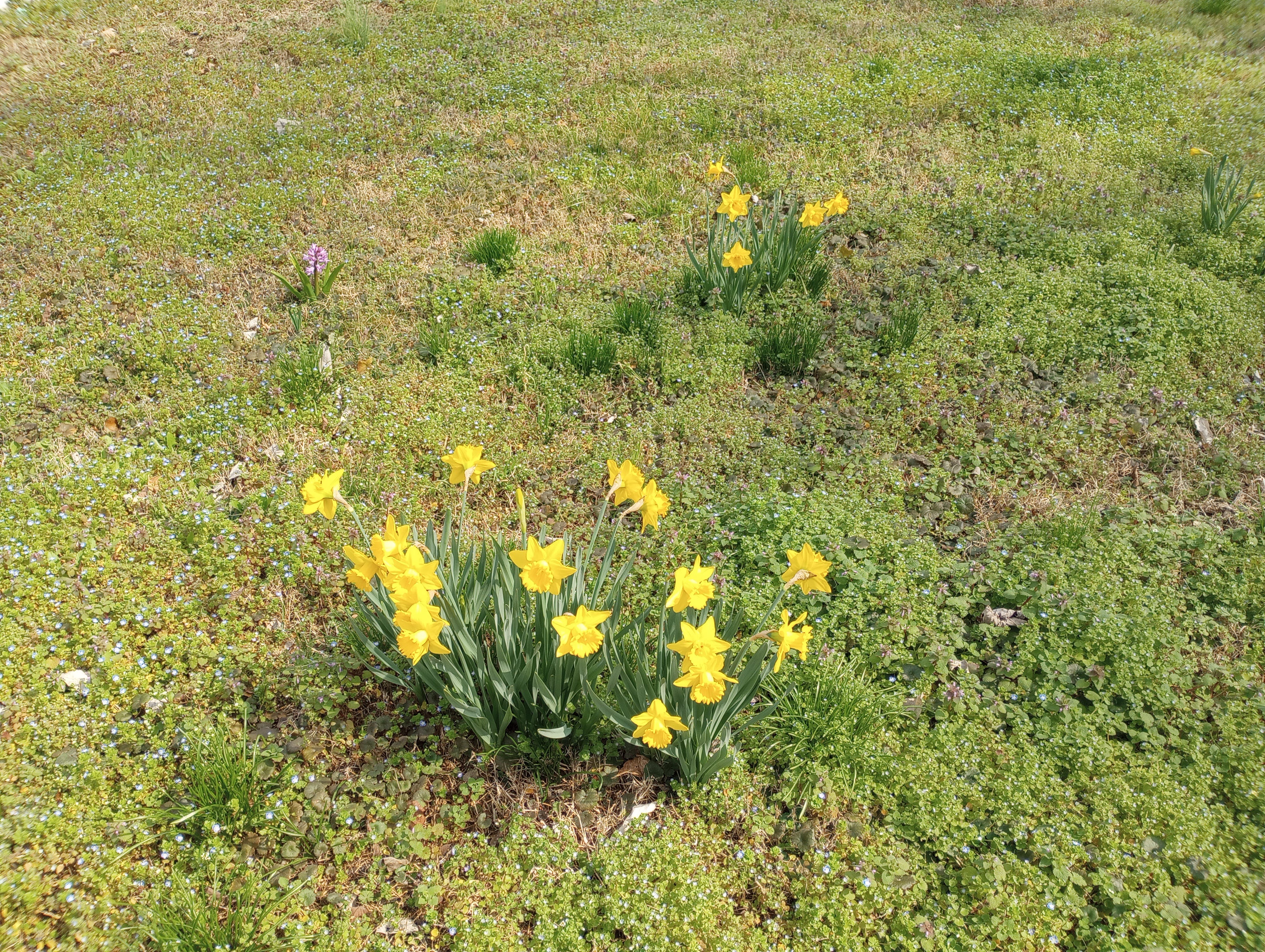
Daffodils
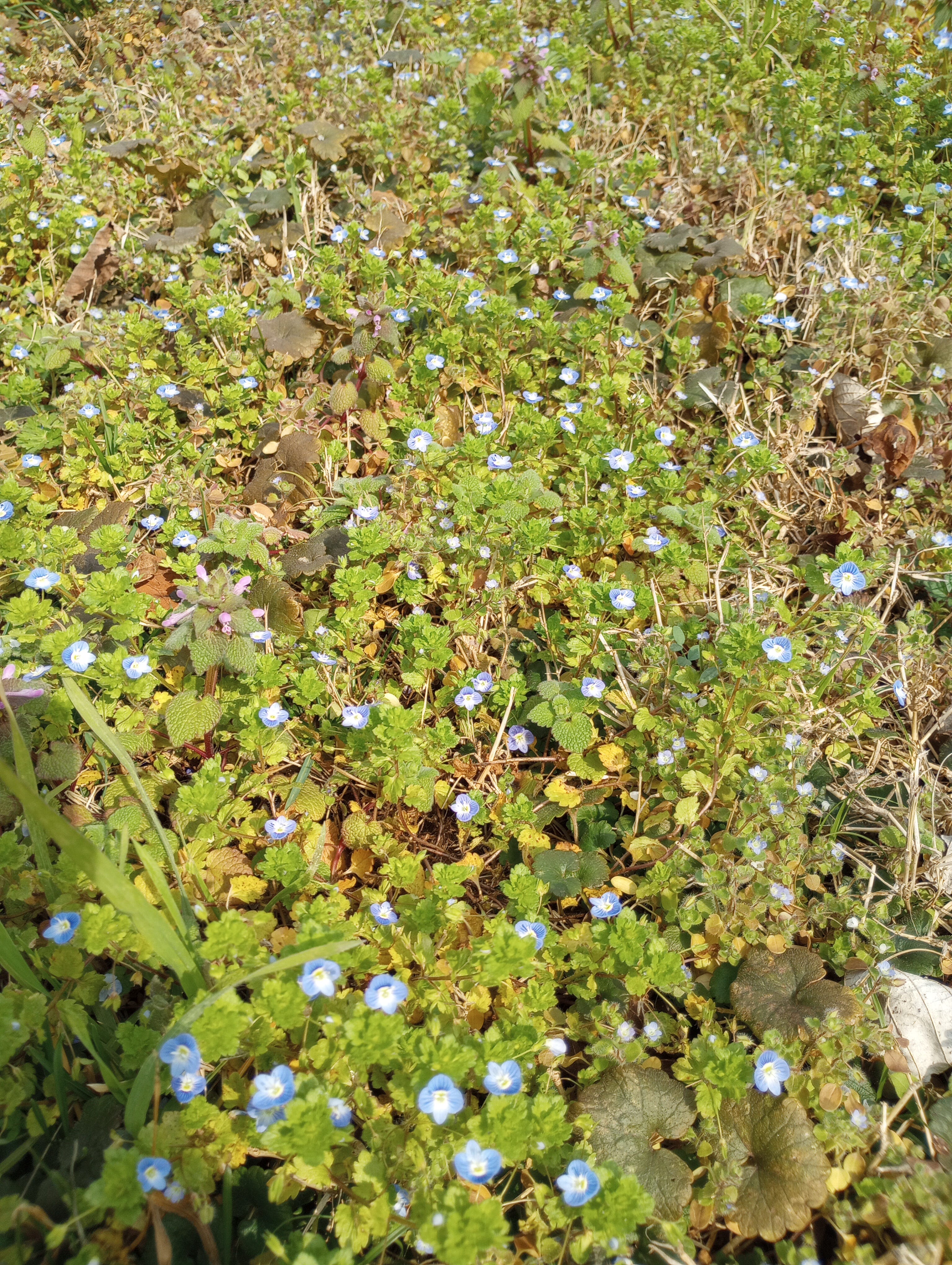
Persian speedwell and purple dead-nettle
Purple dead-nettle
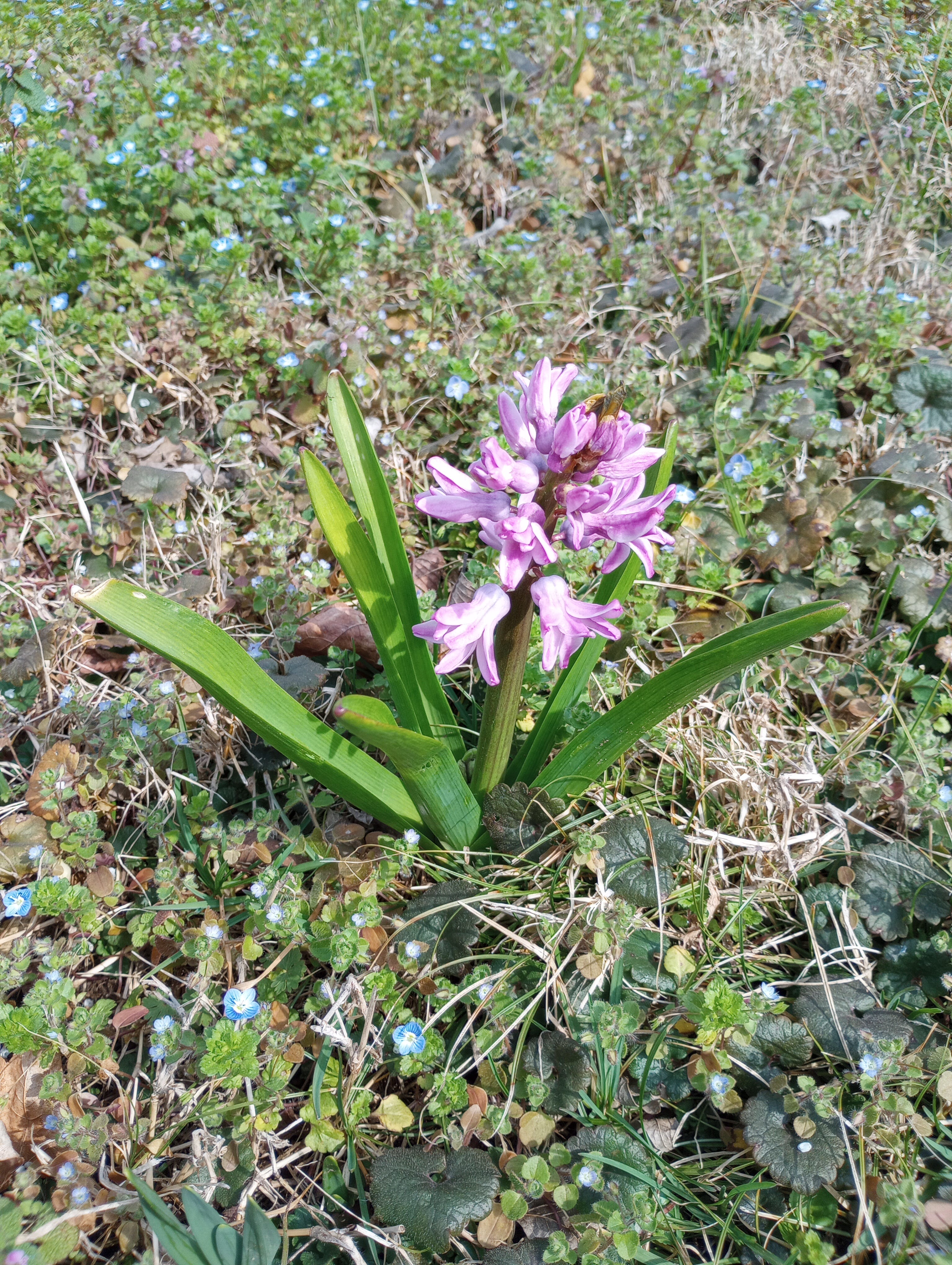
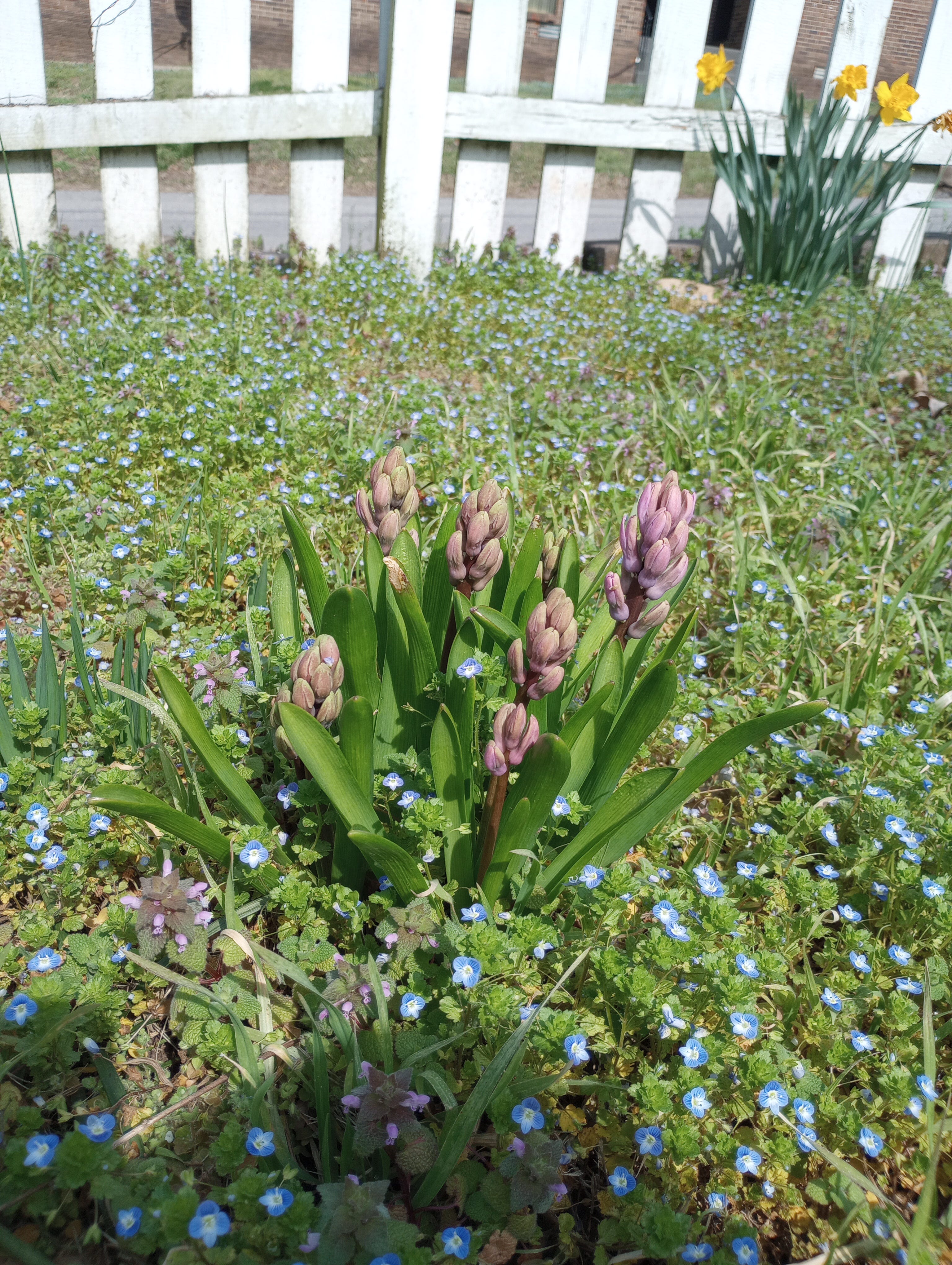
Hyacinth
Hyacinth buds
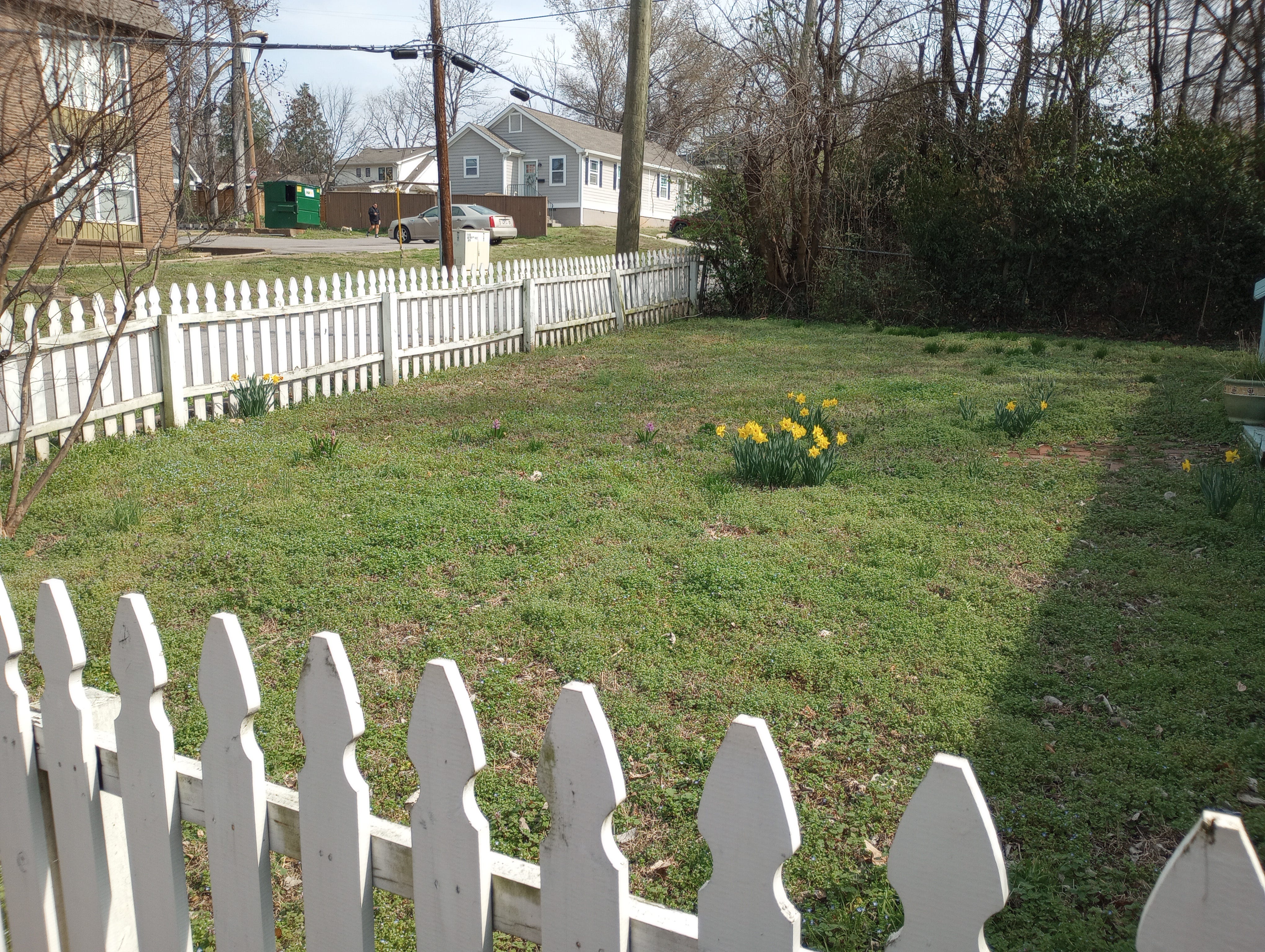
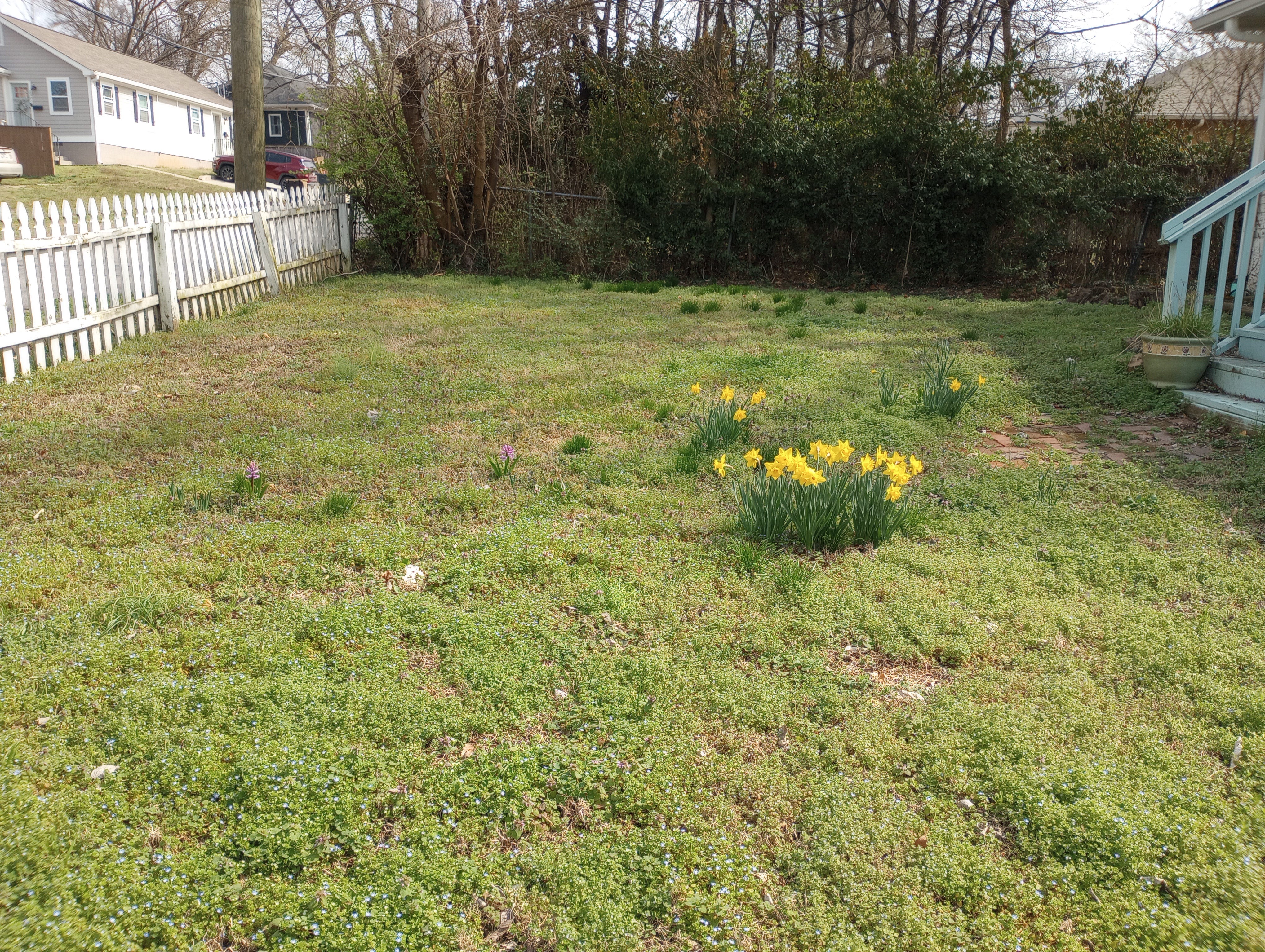
Note the wall of invasive species along the back fence (mostly wintercreeper and bush honeysuckle)

Daffodils all over the neighborhood have popped out. Flowers of all kinds are making their debut, of all shapes and sizes. If I were more knowledgeable about the names of these plants and flowers I would list them all for you… I’m getting there. It’s only March 4th, but spring is happening. The weather is warm, the days are longer, and now the bugs are out.

Interesting that some of these plants, they would flower as soon as the weather got warm, even in the middle of February, and then they would just tuck their flowers closed when it got cold again. They can turn them on and off, basically. There is a plant outside of Ugly Mugs right now that does that, with small yellow flowers run all along the stems, and the Persian speedwell does the same thing.

The neighbor’s yard (currently unoccupied as of about a week ago) is absolutely booming. From a distance it may not look like much is happening, but on closer inspection you will see. When I walked over to inspect and take some photos of these daffodils (which are blooming all over town right now), I was surprised to see that the entire yard was in bloom. There are the daffodils, and then there is some of this purple hyacinth (which I just IDed using Google, and I also just learned what all these yellow flowers were – daffodils – yesterday). But the entire ground is covered in a mat of these little blue flowers, which are Persian speedwell plants. There is also a slightly taller, conical plant that has purple flowers, mixed in with the Persian speedwell. This is purple dead-nettle, Lamium purpureum. Both of these plants are native to Europe and Asia, but they are obviously well established here. In this yard, and in mine as well (in the front, which gets full sun) they dominate the ground cover. They may be non-native (invasive? probably so), but surely there is nothing that can be done about them now. Well, to their credit they are at least feeding the pollinators.

With all this blooming, come the bugs. The bugs are here, in full force. And flitting across this veritable meadow (for some reason when thinking about writing this piece, I had a strong urge to use the word veritable, which is strange because I have thought of veritable as cheesy and basically a useless word) were the flies, and the bees, the hornets, and everybody else. For them, this small, unassuming patch of land is a treasure trove and feast.

This is the difference between a turf lawn and a lawn with flowering plants — clover, deadnettle, speedwell. Such as what we have here. This is a great lawn, and it probably wouldn’t need to be mowed, because these plants won’t get that tall. I have a fear that it will be mowed, unfortunately — I have seen this yard mowed before, when it was in a similar state, and they mowed down the flowers, which were at that time the Mirabilis jalapa, the Marvel of Peru. There is some grass mixed in here, but not much, and it will probably just tuft-up.

That’s what happened in the back of our lawn, which handled free growth very well. The front yard got much wilder, and was full of all kinds of invasive plants, and especially a large mass of something invasive popped up in the front (I THINK it was garlic mustard).


The earth is waking up again. (Here in Tennessee.) About a week or two ago (late February) we had a couple of days that were very warm, 60+ degrees, and it brought many of the spring plants into bloom. I thought, if a frost comes, they will be punished – and lo and behold a frost came the very next day. There were two nights of frost immediately after this warm spell, and the plants were punished. I saw all of the flowers, wilted, burned, or, what some of these plants can do, withdrawn. And I felt like they had been tricked, and was sad for them, but guess what? These flowers are hardier than that. Warm weather is here again, and they have rebounded. I wonder how much of an impact that frost did have. They probably wouldn’t tolerate much snow and ice, but if you’re willing to bloom this early in the year, you must have some built-in resistance to the cold. If you don’t, you’d be in trouble.

There is a beautiful tree in bloom right now, possibly a dogwood? that is completely covered in pink/purple blooms, like a Japanese sakura (cherry tree), and swarming with bees. I need to get a picture of that for you.


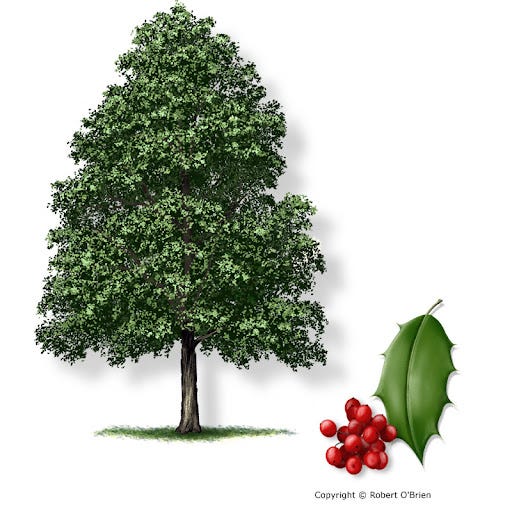
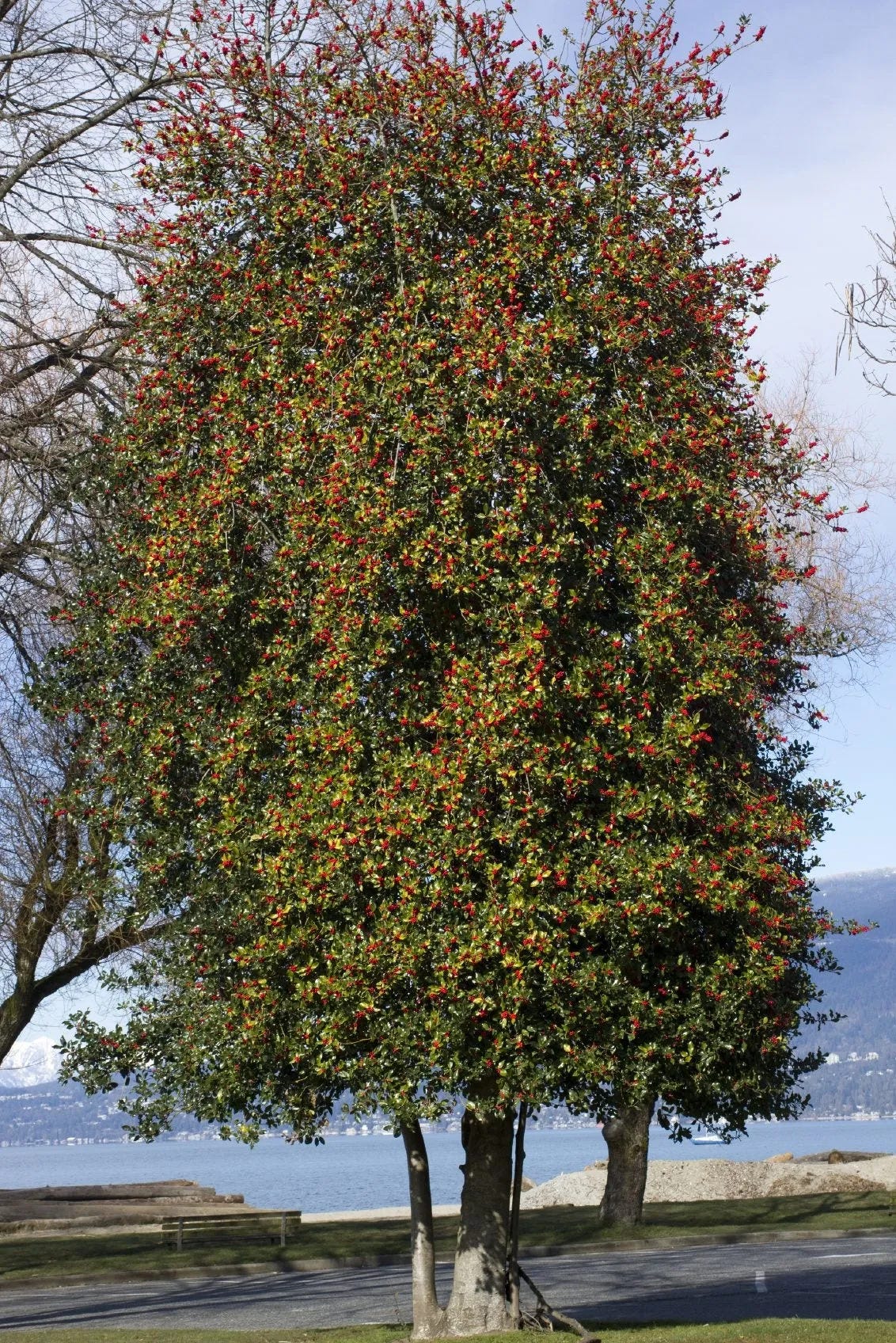
There’s one tree that I’ve been noticing this winter, that’s standing out when everything else has lost the leaves. It’s an evergreen, with spiky leaves, and a cone-shape. It’s a pretty tree, and I’ve been noticing it everywhere now, it’s common in the neighborhood. Once you start to spot something, you see it everywhere. Our duplex neighbor has one in the yard, right in the back (I can see it from my bedroom window) and I finally tried to ID it, and I think I’ve got it. American holly, Ilex opaca. What an awesome tree. It’s unique as an evergreen tree that doesn’t have needles, at least around here.

American holly
American holly

The bush honeysuckle is the first woody plant to really start its growth. It is ahead of the curve, and has been sending forth fresh green leaves for probably two weeks now, when most other woody plants are still dormant. It’s ahead of the game, ahead of the curve. A terrible, horrible invasive. Along the highway, driving back from my Master Gardener class, I saw it—just a long stretch, a wall of bush honeysuckle, exclusively, growing, expanding out of the rock. A nightmare sight.

Along the highways, in the neighborhoods, at the park, massive groves, long walls, all bush honeysuckle. And then, it seems that about one in five trees in the neighborhood is infected with either wintercreeper or English ivy. Some of them are smothered with both (like the trees in our yard). These invasive vines really stand out right now because of most things being dormant. The dark green is striking. You can clearly see the extent of their spread.

Stormwater Management (Rain Garden!)

I have started the Tennessee Extension Master Gardener program. Somehow, they let me, mainly based off of my pure passion, love and desire. Not via my experience. But I’ll tell you what – my brain wants to know every little bit of this information, and finds it fascinating. I am just eating it all up. Who knew? This obsession continues.

They are wonderful people. I feel like, we all feel like, (37 of us), we are in a room full of people who want to talk exhaustively about the same things that we want to talk about. This is an amazing thing, when someone, rather than hitting a limit, is even one-upping you in what they know and how much they can talk about the thing. The thing being, a white strain of cosmos, using peppers as a natural barrier to keep critters out of the garden, growing a pineapple plant, methods of composting, etc. etc. etc.

Our most recent lesson has been about stewardship, which is a term that is mostly interchangeable with sustainability, and specifically, all about water. I’m just going to share a little bit of what I learned here, because I have thought it was very interesting.


The number one source of pollution in our waterways (in TN, at least), is sediment. It’s just dirt. Isn’t that surprising? It mainly comes from human development that results in bare dirt exposure and erosion. Removing trees, or creating impermeable surfaces that rapidly funnel water into the watersheds (creeks, streams, rivers, lakes). This leads to large amounts of sediment ending up in the water, and this is bad for a number of reasons, such as darkening the water, which can cause issues for the fish and result in higher temperatures in the water, and more heavy metals/chemicals in the water, as these better stick to sediment particles.

The below photo is clearly showing the effects of sediment pollution. (The brown in the water is sediment.) This is happening on a large scale and is the #1 source of watershed pollution.

Erosion and Sediment Pollution | Wayne County, PA
Example of sediment pollution of waterways

90% of watershed pollution comes from nonpoint sources, meaning, no specific pollution source. Pollution that is accumulated from all over and ends up in the creek or river, as opposed to being directly dumped into the waterway by a specific pipe or factory. Pollution that comes from our yards, from construction sites, from parking lots, would all be pollution from non-point sources.

The second largest source of pollution, almost as much as sediment, is pathogens. That is, for example, E. coli. The Lower Cumberland (Cheatham Reservior), that is our largest watershed (the river that runs through Nashville), is considered impaired because the E. coli levels are too high. (It is also considered impaired because of high levels of PCBs, a highly toxic, durable, man-made chemical, accumulated in fish tissues.)

The below image is from an EPA website that tracks the health of watersheds: https://mywaterway.epa.gov/ (You can use this to see what your nearest watersheds are, and what their conditions are.)

An impaired watershed is a body of water that does not meet established state water quality standards and fails to support designated use. And there are about 4,000 miles of impaired streams and rivers in Tennessee.

The Middle Fork of Browns Creek, a large creek that runs off of the Cumberland River, is impaired for a similar reason, having high levels of pathogens, but is also considered impaired because the habitat is too degraded (due to human development activies), and because the levels of nitrogen and/or phosphorus are too high (due to fertilizer runoff).

One of the “possible sources” of E. coli pollution for the Cheatham Reservoir is “Combined Sewer Overflows”. That would be from the amount of water flowing through the system overloading the system, and so resulting in overflow. And this is common, and happening because human development is generally not accounting enough for managing and slowing the flow of water to the watersheds. Impermeable surfaces (concrete, asphalt) are major drivers of this, but a house would be contributing as well, by funneling all the water off of the roof and into the stormwater system, as most buildings probably do.

Runoff also carries fertilizers, which are the third largest source of watershed pollution in the state of TN.

So what can we do to protect our waterways? There are many things.

  1. Plant buffer plants, to protect habitat along the shores of creeks and waterways. They will act as buffers, slowing water that flows into the creek as runoff, and protecting the bank from erosion, which contributes to sediment pollution in the water. (They also provide important habitat for wildlife).
  2. Have a rain garden. Put plants that tolerate wet conditions in places where water accumulates. Source water (runoff from your roof, water from the downspouts, water running through the street curb) into a dedicated zone full of plants that can make use of that water, absorbing and filtering it.
  3. Rain barrels. Capture rainwater instead of letting it flow as runoff, and then use it as a resource, for watering.
  4. Permeable surfaces. Gravel instead of concrete, etc.
  5. Protect bare soil. Bare soil easy washes away in rain and contributes to sediment pollution. Covering the soil with mulch (and/or plants) will increase absorption and greatly decrease sediment runoff.
  6. Use less fertilizer.

I have really wanted to plant a Buttonbush, and have been enamored with this plant since discovering it at Shelby Bottoms. I thought my yard wouldn’t be able to tolerate one (or at least, it wouldn’t thrive), because we currently don’t have wetland conditions. But it seems that all you need to do to make a rain garden, and create some wet conditions, where the soil stays wetter for longer, is to dig a small depression, and source your runoff into this area (say, from your downspouts). That is your rain garden. And so, by channeling the water into a dedicated place where it can be stored, you can plant plants there that thrive in these conditions. It seems that this is the concept, and I am very interested in trying to create a rain garden, for one, to capture to the stormwater and decrease the load on the water systems, but two, because it will mean I could plant some plants that otherwise I couldn’t have in the yard.

Buttonbush – iconic TN native!!!
A rain garden – designed to hold runoff water
Rain Gardens – Green Stormwater Infrastructure
Rain garden

The below image is demonstrating the value of a buffer, between a stream/watershed and urban land use. It will help with erosion control, flood control, improve water quality, and of course, will be good for wildlife. As our expert stormwater management scientist said in the lecture, “any amount of buffer is better than no buffer.”

Plant buffer to protect waterway
City of Chattanooga
A rain barrel, to capture runoff water

30 Days Of Japanese Study

I thought it would be interesting to review everything I’ve written down in my study journal in the last month of my Japanese renaissance.

As I set down to do the task, I realized that this was a greater undertaking than I at first imagined. In total I’ve logged about 474 different words and phrases from the last month of intensive Japanese immersion. My sources have ranged from Dragon Ball Z to しくじり先生 (late night Japanese TV), children’s novels, and Perfume (greatest musical act in Japanese history). And, my treasured book of wolf and wild dog ecology, with beautiful, amazing full-page pictures, and all in Japanese. I bought that about 5 years ago now and have held onto it, and I am very glad I did, because I can finally read it now without my head exploding.

This is just a really long list of Japanese words, a snapshot of my Japanese language journey, as I move from N2 to N1 Japanese, and attempt to become a Japanese master.

As I take up language study again, I am once more shocked at just how many words there are in a language. There are just so many, god damn words. And we don’t think about it, native speakers of our language, but we (if you are reading this as an English native speaker) are all English masters. We are all totally fluent, enormous word banks walking around, with a deep lexicon of euphamisms, slang, colloquial language, etc., all of us with our special linguistic blueprint. Whatever your native tongue is, you are a master of a language. When you’re surrounded by your kin, other native speakers, it doesn’t feel like it’s anything special, but it is something incredibly amazing, even if everyone around you can do it too. Language is an amazing power that we have, and the extent to which each of us is able to convey meaning, with the pure number of words and phrases that we know, is, when you really think about it, mind-boggling.

If you are ever sitting around and thinking, “Man I don’t have any skills, I can’t do anything,” think about how you are fluent in a language. You have a superpower, there.


There are many ways in which English and Japanese are different, in the way that they think and express concepts differently. These are more obvious, but the other night as I lay in bed, I was thinking about the similarities between English and Japanese, which are two completely disparate languages.

I was reflecting on how some of our question words are directly mappable onto each other, in use and meaning. These simple question words: where, who, what, when, why = どこ、誰、何、いつ、なぜ.

Let’s think about the word “what” (in Japanese, “nani”). If you think about what “what” means, it is an abstract word, and not easily defined. I just checked the Merriam-Webster dictionary, out of curiosity, and they don’t really give a definition as much as various explanations for how the word “what” is used. “What” has many uses, such when someone wants to inquire about some knowledge, “What is that?” “あれ何?”, or as an exclamation, as in “What a beautiful day!” “なんと素敵な日!” In these cases, in Japanese and in English, “what” functions and is used exactly the same.

Isn’t that interesting? That between two completely different cultures, we have the same concept of this abstract “what/何”, and use it in the same way.

Why is that? My guess is that “what” (and the other question words) are just very fundamental to human understanding. From the earliest days we would have been using language to communicate knowledge, and how do you do that? Who, what, when, where, why. And these abstract words all develop naturally out of that basic necessity.


From a short piece in a literary magazine (called 二重, futae):

整形する

たるみ

二重

増える

まじまじと見つめる

喫茶店

物思いに耽る

憧れる

それでいて

視界

恥じる

揺れる愛

帯びる

あっけらかん

迷いを失う

年相応

あやふや

輪郭

引きずる

思い至る

先々月

From Aladdin:

兵隊

谷川

温泉場

馬車

向かわれる

象牙

白百合 (しらゆり)

いくど

もったうちなら

着飾る

召使

項垂れる (うなだれる)

お供

大理石

From Kevin’s English Room (about receiving otoshidama):

ここの点

上空

幸先

一発目

せこい

駆使

組める

冷静

赤字

一旦

目をつむる

現金

希少

使い物にならない

生々しい

無限錬成

時差

日付変更線

境目

余裕を持つ

タイムゾーンが重ねる

ほぼ自由に出入りできる

EU加盟国

通過する

一日 (ついたち)

想定

厳格

スムーズ

攻める

跨ぐ

天を突き上げる

From 鋼の錬金術師 (Full Metal Alchemist, 1st chapter):

汝ら

足元

諸々

御座

御業

お供え (供える)

大道芸人

加護

身寄り

覚悟

From オオカミと野生イヌ (Wolves and Wild Dogs):

それゆえ

崇拝する

文明

駆逐

蘇る

迫害

脅威

詰まる

懐の深い

系統

緊密

語が付く

呼称

身近

用いる

元来

にすぎない

祖先

保つ

一派

あくまでも

ゆえ

同士

さて

解説

すなわち

解析

種同士

罰する

信仰

全貌

中核をなす

儀式

土地

適した

獲得

崇拝

いつしか

共生

生息

後半

世紀

以降

肉体

監修

包容力

に属する

冬場

食物連鎖

捕食者

褐色

雪原

交雑

子孫

多岐にわたる

がかる (黄色がかった種もいる)

北極

具合

低緯度・高緯度

同様に

全般

目元

引き締まる

端正

立ち姿

頂点

接近する

春先

山脈

荒い

一色

緯度

属する

個体

固体

体毛

かかわらず

北極圏

From 霧の向こうの不思議な町:

うっそうとする

無理によこす

一斉に

しげる  (木が茂っている)

あざわらう

思いがけない

出来事

まっさお

たちすくむ

こらえる (涙をこらえる)

立ち止まる

むき出し (むき出しの腕)

元気をふるいおこす

足踏みをする

〜まい

心細い

精一杯

下宿屋

食いぶち

縮み上がる

縮む

念を押す

きょとんとする

往復

肝心なこと

からっきし(からっきしだめ)

お構いなし

決心がつきかねる

引きつける(リナを引きつけるところがあった)

たんす

浮き彫り

団地住まい

百日紅 (さるすべり)

乱れる

ゆいなおす

たるみをなおす

髪を編む

巻きつける

くるぶし

顔をしかめる

自身心

見当がつく・見当もつかない

占領

引けをとる

片目をつぶる

しどおし (びっくりのしどおしだった)

交わす

例の調子

とびきり

意味ありげ

えんとつ (煙突)

ご覧のように

取り込み中

From Dragon Ball Z:

標的

戦闘

警戒

故障

信用

征服

世界征服

恨む

事情

浮かばれる

無駄死に

気迫

あの世

わずか

攻撃に移る

いずれにしても

先制

仕掛ける

こざかしい

臆病者

手立て

始まらない (始まらんぞ、hahaha!!!)

後悔

不死身

寿命

利口

一か八か

人類

命運

果たして

生死

見せしめ

数値

いい気になる

舐める 「地球を舐めるな!」

しぶとい

託す

跳ね返す

接着剤

プライド

素人

単純

がっくり

誤算

操縦

異常気象

死に絶える

記憶

繁栄

分析

希望が見える

From a blog post by an aquarium:

水槽

見る目

仰天

何気ない

知能

驚異的

From Kevin’s English Room:

初歩

腫瘍

腫れる

遭遇

千羽鶴

親知らず

付近

錠剤

離脱

順応

用語

一軍 (一軍ではないけど)

見下す

粗末

陽気

異国

監修

要素

素材

融合

主食

絞る

得体が知れない

From Perfume songs:

ありのまま

後ずさり

揺らぐ

凍りつく

気楽

引力

視界

定期的

閉じ込める

視線

時間外

引きずりこむ

ため息をつく

いつもより

惑わす

傘をしまる

メールを打つ

ほどほどに

メイクする

石畳

遊歩道

路地

探る

評判

サクサク

用意する

触れる

抱きしめる

気のせい

目が眩む

From an interview with Perfume:

品がある

清潔感

教養

ハプニング

共通

思い入れ

乗り切る

所属

抱える

楽曲

体型

琢磨

全編

媒体

演じる

立ち位置

会場

拝見

一体感

空気を読む

素直

本心

特性

前に出る

From aomi3 (blogger, bird-lover, photographer):

名前を告げる

荷解き

湾曲

爬虫類

省く

目撃

先を急ぐ

気づき

河原

そのもの

フィットする

手が届く

眺望

敷地内

散策

頼りない

窪み

大惨事

不慮

風景

泣ききれない

問い合わせる

望遠

劣る

前置き

触れる

前記

破損

気力

諸島

所有権

和解

決着

感情的

From しくじり先生:

追及

風俗

うつ伏せ

恥部

タメ口

考察

遠ざかる

経緯

揉める

女優

振られる

側面

収まる

燥ぐ

お笑い

将棋

囲碁

乱入

染める (髪染めた)

見出し

深まる

公言

店舗

広報

無礼

ピン芸人

炎上

中和

過激 (過激な意見)

From JLPT study:

敬う

衣装

受講

名選手

衰える

次第に

剥げる

忘れがたい

見方

Sidewalk Doodles

For no particular, discernable reason, today is a day of happiness. We could try to explore and unpack why exactly that is, if we so desired (and by we, I use the Queen’s we here, of course). The sun shines, weather is warm, that always matters. But of course, it goes much deeper. I could expound upon it, but for what purpose? It is not necessary.

It is so fascinating, the human psychology, that fluctuates so much between days, weeks, months. The periods that we go through, that influence us all, the ebbs and flows. They are mysterious, and they are explainable. And they come, and they go, and that is how we are.

I wake up today, and I feel at peace. I feel no pressure to be, or to do, and I feel content with where I am, and what I have ahead of me for the day, and in my near future. And that is a great feeling, that we probably all yearn for and wish to have.

I am happy to be feeling this feeling, I’ll tell you that. Prolonged feelings of yearning and striving and restlessness do not make for feelings of deep peace and joyfulness.

I’m happy to be here at the gym today. I have no reason not to be. I have my books, I can read them. The chocolate mint protein bars have expired, and I can eat ten of them and get 200g of protein, if I wish, and this is very unfortunate and a terrible temptation, because simply one of them makes me feel sick to my stomach, possibly because they are manufactured on a machine line like bricks at a factory (that’s how I imagine they’re made, anyway). Well, at least they have an expiry date. They certainly seem like the kind of food that would stay the same for ten years or a century.

I have taken up making doodles, drawing them on the sidewalk in front of the gym. This is something that I have thought a lot about, and has mattered much more than I ever thought it would. But actually, I am just doing the same thing that the kids that climb here do, when they create their little works of art on sticky notes and leave them around for people to enjoy and interact with. It is a mode of personal expression, of being and being seen, and bringing something to others. And then, it is an important part of the process, that there is some recognition, and validation, that these works are approved of and appreciated, and yet – most of that, the artist will not see. Those little artworks will go on to live a life of their own, they will be left behind by artist, and then someday, they will cease to exist. They are only temporary, but we make them anyway. To be enjoyed for an indefinite but brief period of time.

My sidewalk doodles lasted for much, much longer than I expected them to. I came back to the gym after a week away, and they were still there, nearly perfectly intact. Without rain, they don’t go anywhere. Rain, the bringer of life, is their particular destroyer. These chalk doodles are living long lives, and my second round of doodles that live on the chalk now, they have existed since last Saturday – come tomorrow they will have lived yet again an entire week. And I know that they have brought people delight.

My first round made children stop and stare, were photographed, examined by a couple. I saw this from the window. My second round, Luke tells me, someone was trying to translate the Japanese I wrote on the ground. My doodles are being observed, interacted with, and appreciated, which is everything that we could ever ask for from our doodles.

What is interesting to me, shocking even, is how much enjoyment and meaning I have gotten out of seeing other people enjoying my doodles. Did I make them for others? Maybe I did. I think that subconsciously I have made them for others, and have desired that others like them. Because, I want to create these works for others, to bring them something interesting and joyful. That is their purpose.

Yet, I also made them for me. For fun, really, being bored, but I think also to decorate my environment. Perhaps this particular space is just lacking in that way, and I have felt a need to spruce it up. That could be. As well as, that I felt a need to be seen, and be witnessed, in some way. I think that is part of it too. To leave my mark. There are many reasons why I have wanted to make these doodles.

The chalk comes from the hair salon next door. They have a bucket of chalk in various colors attached to their front door. It was months before I had the idea to go out and make some chalk doodles, in some serious depths of boredom. And one of the people I saw smiling and photographing the doodles, a young woman wearing a red beret and an interesting black and white checkered coat, I saw her and thought, maybe she works at the hair salon. Maybe the chalk was her idea. And then, this would be bringing her special delight, to see her chalk put to good use. Well, I saw her later, coming out of the salon, and I know that she does work there, and I bet the chalk was her idea. And that made me happy, to know that she was happy.

Thinking about subjectivity of art – I was feeling quite energetic and pent up, on my second round of doodles. The first time, I felt tranquil and inspired. I think this could be seen in the work, looking at the characters and the writing, although perhaps less than you would think. And the second round, I made some creatures that were a little more exotic and strange, for me. I made a dark-grey octopus creature, and little round guys with wicked smiles and horns, and a strange guy, with pinpoint eyes and a small smile, and no other discernable features. I wrote some more Japanese, and overall I thought it was an eclectic display, and not my best work, but I did it at least, and it was art. And then, as I have seen them several times since, I think that I actually like these doodles much more than I did when I first made them, and that they are interesting. See how subjective we are about our work, and the way our mood affects our perception of things, of all things.

A long time ago I read a book called Never Let Me Go, by Kazuo Ishiguro. I was not in a mature enough place to really understand and appreciate the themes in this book, I think. I remember not being very impressed by it. It did not mean that much to me. And I remember when looking at some questions that were meant to be used in classroom discussions regarding the book, that were included in the book I think, for educators, that one of the questions was, “Why does Tommy draw his creatures? Why does he keep drawing his creatures even when he finds out _____?” (No spoilers, but it’s a bad thing he finds out.) I thought that question was so interesting, and I have been thinking about that, since I’ve been thinking about my doodles. I’ve been thinking about Tommy’s doodles.

At the time, when I saw that question, I thought, “It’s not that deep. Tommy likes to make creatures, so he makes creatures.” But, now, with my doodles, and thinking about what they mean to me, and how much they have meant, I see now that there is more to it. There is much more to it.

Why did Tommy doodle? For freedom of expression? As an act of defiance? Because it gave him a sense of control? To escape reality? Probably all of these things. And why does he keep doing it, in the face of a bad thing? Because otherwise he would be losing himself, and he would be admitting defeat. He would be letting life beat him, and he wasn’t going to be beaten. That’s why Tommy drew his creatures, and kept drawing them, despite a bleak reality.

I wrote a bit about how I was so indignant when, at the job that I lasted three weeks at, one of the employees told me to be careful with my doodles, because if the managers saw it they would chew me out. This outraged me greatly. Why? Why should that matter so much, the simple drawing of little creatures to entertain and bring delight to my friends? I think at the time, I inherently knew that was a threat, and wasn’t right, but I see now very clearly, what that implication was.

A ban on doodling – that was a threat to self-expression, and freedom – basically, to living. That’s what was on the line.

The same, with Tommy’s doodles.

Translation As Language Study

I spent some time this morning attempting a translation of this short passage, a caption from an ecological book about wolves (オオカミと野生のイヌ, published by X-Knowledge), beneath a photo of an Arctic Wolf.

The original Japanese:

北極圏に生息するハイイロオオカミの亜種で、体毛は白い。アルビノや白変種など白色の個体は、さまざまな種でみられるが、季節にかかわらず種や亜種に属するすべての個体の体毛が常に白い肉食哺乳類は、シロクマと並んで極めて珍しい。

My translation:

A subspecies of Grey Wolf with white fur that inhabits the Arctic Circle. Individuals with white coloration due to albinism and leucism can be seen in a variety of species. However, along with the polar bear, it is extremely rare for all individuals within a species or subspecies of carnivorous mammals to have white fur year-round, regardless of season.

Translating is a great way to study language. Even in translating a short passage such as this, there is so much to chew on.

I find that in translating, as opposed to simply reading, I’m forced to check my own comprehension of the language. In translating, by actually transcribing the words into English, you are forced to choose and explicitly state the meaning of each word, phrase, or passage. And each time I’ve translated a piece now, especially these harder passages, I discover that, when I take this critical, close look, I have actually assumed some meaning that was not correct. I was close enough to understand generally, but I was not understanding specifically, perfectly. And ultimately, we do want to understand exactly what is being said. Translating forces you to take it word by word, to break it down and confirm your understanding.

For example, in the above passage, there is the word 個体. When I first read this passage, several times, I assumed 個体 to be another word that I have seen, 固体. They are similar, and have the same reading (kotai). In my initial reading of the passage, I misread this word. They are close in appearance and pronounced exactly the same, but 固体 means “solid”, and 個体 means “individual” or “specimen”. In reading the passage and misreading this word, I understood the meaning to be “the physical body” (of the wolf). My interpretation of meaning did work somewhat in my reading, but it was not correct. First of all, my understanding of 固体 was not accurate, as it really just means “solid”, and then, I was reading the wrong word anyway, because in the passage the word was 個体, and these are totally different words. However, I only truly realized this when I started to break the passage down for translation.

I also initially translated 北極圏 as “North Pole”. I caught this mistake later, when checking my accuracy, as I realized that it isn’t exactly North Pole. “North Pole” is, precisely, 北極. I wasn’t paying mind to the 圏 part, but it is there for a reason. 北極圏 is actually “Arctic Circle”. I think I just saw the 北極 part of 北極圏 and immediately thought, “North Pole”, and that is close – but not precise. It’s a subtle difference, and for general understanding, not lethal. But ultimately, 北極 and 北極圏 are fundamentally different words and concepts, and for translation purposes, “North Pole” is not precise enough, and is incorrect.

A few days ago, I had ChatGPT check a previous translation I did (a passage from the same book), and I found it caught mistakes I had made that I hadn’t even considered. I had made assumptions and was confident about some words/phrases, or I had completely misread them, and was ultimately wrong in the translation. In most cases, close, but wrong. It was startling to see that what I had assumed to be true was wrong, and how sneakily I had been misled. Because of this experience, I’m now checking even the Japanese that I think I know. And, for example, in the above passage, when I first read the line, “シロクマと並んで極めて珍しい”, I took it to mean, literally, “incredibly rare to see wolves standing together with polar bears”. In my reading of the passage, that did somewhat make sense, and is a plausible statement. However, in taking the passage line by line, I realized that was not what was meant. Having a better grasp of the passage, I saw that 並ぶ was not being used literally, but figuratively. So again, looking at this example, my initial comprehension was wrong, and that was revealed only after the close examination required in translating.

In these dense, academic passages, there is a lot of information conveyed in a short span. It’s really crucial to have an accurate understanding of every word, vocabulary and grammar, because even a slight misunderstanding can change your entire interpretation of the meaning. It’s interesting that our brains are so good at making meaning and filling in gaps in understanding, and so you can really think you understood something, or come up with a plausible interpretation. You can form a narrative that feels right, and yet you didn’t understand at all – or not perfectly. I read completely the wrong word, 固体, with a separate meaning, and yet I was able to integrate it into a plausible meaning in my interpretation of the passage.

In today’s translation exercise, I felt very clearly the value of translation as a tool for language study.